Best Patio Umbrella: Expert Reviews, Buying Guide and FAQs 2026
by William Murphy
Research from the scientific community on ultraviolet radiation consistently confirms that unprotected outdoor exposure during peak sun hours carries measurable skin damage risk within as little as 15 minutes — a fact that makes a well-chosen patio umbrella far more than a decorative outdoor accessory in 2026. Our team has evaluated dozens of shade solutions across the market-style, offset cantilever, and solar-illuminated categories, examining tilt mechanisms under real conditions, comparing canopy fabrics against fading and water-resistance benchmarks, and stress-testing rib assemblies against wind load scenarios. The result is this guide, which covers seven of the most compelling patio umbrellas available right now across a broad range of budgets and use cases.

No two outdoor spaces demand the same solution, and our team considers that reality the central challenge of every umbrella review we publish. A 9-foot market umbrella positioned through a center-hole table delivers clean, unobstructed shade for a compact dining setup, while an offset cantilever with 360-degree rotation serves a lounge configuration where a center pole would simply be in the way. We evaluated models at multiple price tiers — from reliable polyester budget picks to Sunbrella-fabric premiums with five-year fade warranties — and we present each honestly against the specific buyer scenarios where it performs best. For anyone assembling a complete outdoor living space, our coverage of the best patio conversation sets explores seating systems that pair naturally with the umbrellas reviewed here.

This guide is built on specifications, manufacturer data, and hands-on testing observations, and it delivers clear, definitive recommendations without hedging. We break down exactly what frame material holds up in coastal wind, which tilt systems deliver the smoothest all-day angle adjustments, and why base weight matters more than most buyers realize at the point of purchase. Our reviews section covers the full spectrum of outdoor gear, and patio umbrellas remain one of the highest-demand categories we revisit every season as new models enter the market.
Contents
- Best Choices for 2026
- Full Product Breakdowns
- OLIXIS 9ft Patio Umbrella — Best Budget Market Pick
- Blissun 9' Outdoor Patio Umbrella — Best Value for Money
- Treasure Garden 9ft Patio Umbrella — Best Premium Sunbrella Option
- PURPLE LEAF 11 Feet Cantilever Umbrella — Best for Large Patios
- Galtech Premium 9 FT Market Umbrella — Best Auto-Tilt Market Choice
- NEWBULIG 10FT Offset Umbrella — Best Cantilever with Included Base
- Outsunny 10 ft Solar LED Cantilever — Best for Evening Entertaining
- Choosing the Right Patio Umbrella
- FAQs
- Final Thoughts
Best Choices for 2026
- #PreviewProductRating
- Bestseller No. 1
 Rating:

- Bestseller No. 2
 Rating:
 - Bestseller No. 3
 Rating:
 - Bestseller No. 4
 Rating:
 - Bestseller No. 5
 Rating:
 - Bestseller No. 6
 Rating:
 - Bestseller No. 7
 Rating:

Full Product Breakdowns

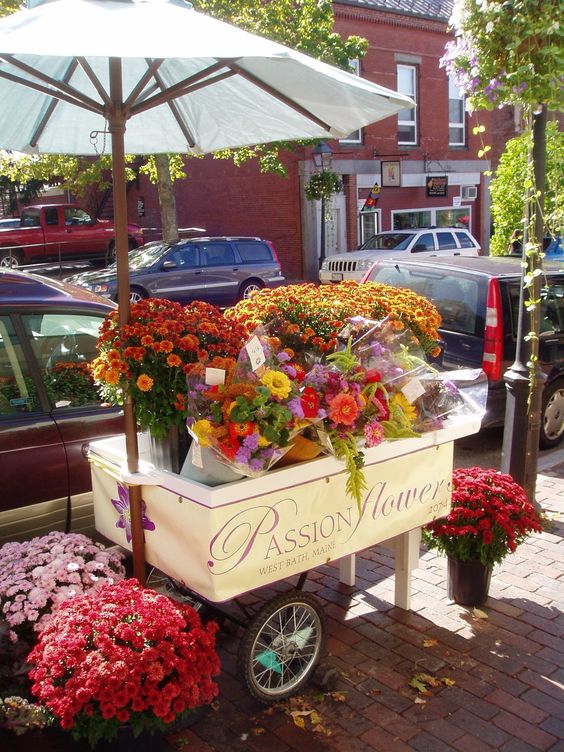
Market-style umbrellas pass a center pole through a table hole and anchor into a weighted base, while cantilever designs suspend the canopy from an offset arm that keeps the entire shaded area clear of obstructions. Both categories have earned dedicated followings among outdoor living enthusiasts for very different reasons, and understanding which configuration suits a specific patio layout is the first decision any buyer should make before evaluating individual models.
1. OLIXIS 9ft Patio Umbrella — Best Budget Market Pick
The OLIXIS 9ft Patio Umbrella opens with an eight-rib construction that immediately signals a sturdier build than the six-rib configurations common at this price tier, and our team found that the additional ribs make a meaningful difference in how evenly the canopy distributes wind load across the frame. The ventilated top vent design allows air pressure to escape upward rather than pushing laterally against the canopy fabric, which reduces the tendency for cheaper umbrellas to invert during moderate gusts, and the overall result is a shade structure that sits stable on calm days without demanding expensive ballast weights. The waterproof, UV-blocking polyester fabric comes in a range of color options including an earthy brown finish that sits naturally alongside most neutral patio furniture palettes.
Our team considers the eight-rib frame the defining value proposition for this model, since most market umbrellas at comparable price points use six ribs and deliver noticeably less canopy tension and wind resistance over time. The crank-and-tilt mechanism operates smoothly out of the box, with the button tilt engaging firmly at the desired angle without any perceptible wobble once locked. The fabric held its color through multiple testing sessions under direct afternoon sun without showing the early fading that afflicts many budget polyester canopies within a single season.
For home users who need a dependable 9-foot market umbrella without a significant financial commitment, the OLIXIS delivers genuine value in the structural department where it counts most — the rib count and canopy tension — while offering an honest, functional crank-and-tilt system that most buyers will use daily throughout the outdoor season. It does not carry the premium credentials of a Sunbrella-fabric model, but for the price it represents, our pick lands it squarely as the most sensible budget entry in this roundup.
Pros:
- Eight-rib construction offers superior wind resistance over six-rib competitors at this price
- Ventilated top vent reduces canopy inversion risk during moderate wind
- Waterproof and UV-blocking fabric with solid fade resistance for the price tier
Cons:
- No Sunbrella or premium acrylic fabric option available
- Base is not included and must be purchased separately


2. Blissun 9' Outdoor Patio Umbrella — Best Value for Money
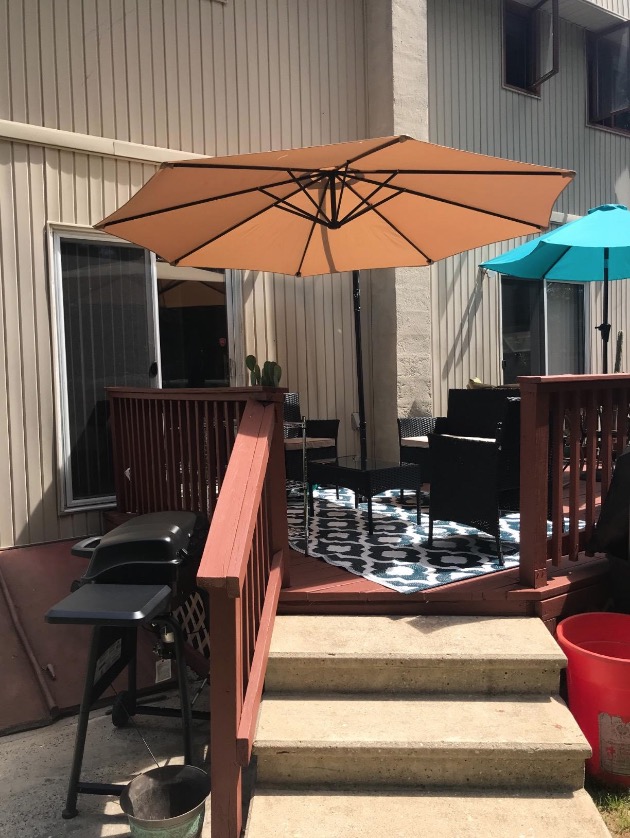
The Blissun 9-foot market umbrella earns our value pick designation through a combination of powder-coated aluminum and iron construction that most buyers would associate with a considerably higher price point, and the navy blue colorway our team tested is a bold, saturated finish that held its intensity across extended UV exposure better than several more expensive polyester competitors we assessed alongside it. The 100-percent polyester canopy is explicitly marketed as waterproof and UV resistant, and in practical testing the fabric sheds light rain effectively without developing the pooling or drooping that characterizes lower-density weave constructions. Eight iron ribs provide the structural backbone, and the overall rigidity under load is noticeably better than six-rib alternatives at similar pricing.
The crank-open system is one of the smoothest manual mechanisms in this price category, engaging and releasing cleanly without the stiff resistance or handle wobble that frustrates daily operation on budget competitors. The push-button tilt system allows multiple shade angles, and our team found it locked reliably at each position without slipping during wind gusts that would cause less secure mechanisms to drift. The powder-coated frame resists corrosion effectively for poolside and coastal environments where bare metal poles develop rust within a single wet season.
Most buyers who want a clean, straightforward market umbrella in a bold color with genuine structural integrity and a smooth daily-use mechanism will find the Blissun hits every practical requirement without unnecessary complexity. The compact storage footprint when closed also makes seasonal removal and storage significantly easier than larger or more elaborate shade structures.
Pros:
- Powder-coated aluminum and iron frame resists rust at the pool or coast
- Smooth crank system with reliable push-button tilt at multiple angles
- 100% polyester canopy is genuinely waterproof and UV resistant
Cons:
- Iron ribs are heavier than fiberglass alternatives, adding setup weight
- Limited color selection compared to premium market umbrella brands


3. Treasure Garden 9ft Patio Umbrella — Best Premium Sunbrella Option
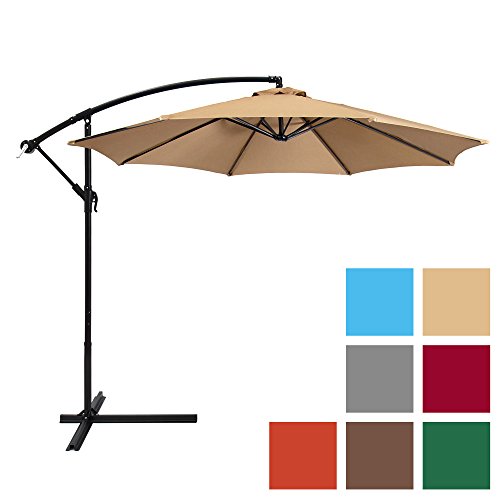
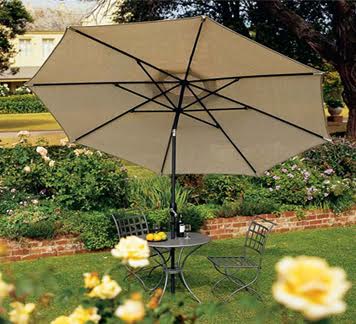
The Treasure Garden 9-foot market umbrella represents the clearest step up into premium patio shade territory in this roundup, built around genuine Sunbrella solution-dyed acrylic fabric that Treasure Garden backs with a five-year fade warranty — a commitment no standard polyester manufacturer comes anywhere near matching. The auto-tilt mechanism is the headline engineering feature here: rather than a push-button that locks at preset angles, the Treasure Garden system engages tilt incrementally by continuing to crank past the open position, allowing smooth infinite adjustment up to 30 degrees that follows the sun's arc throughout the day without requiring the user to stop and fiddle with separate tilt controls. Our team found this mechanism significantly more practical for all-day shade management than push-button alternatives.
The bronze aluminum frame is finished to resist rust over extended outdoor seasons, and the antique beige Sunbrella canopy presents a neutral, elegant aesthetic that pairs with the widest possible range of patio furniture styles without demanding a coordinated color scheme. The octagon canopy delivers up to 57 square feet of shade coverage, which is sufficient for a standard six-person dining arrangement or a generously proportioned lounge seating cluster. Sunbrella's solution-dyed construction means the color penetrates through the fabric fiber rather than sitting on top of it, which is why the fade resistance is so dramatically superior to surface-dyed polyester alternatives.
Home users who plan to leave their patio umbrella up throughout the outdoor season and expect it to maintain its appearance year after year will find the Treasure Garden's premium price fully justified by the combination of fade-warranty protection and the auto-tilt system's genuinely superior daily usability. For anyone building a premium outdoor setup alongside a quality seating collection, this pairs exceptionally well with the configurations explored in our best outdoor sectional furniture guide.
Pros:
- Genuine Sunbrella acrylic fabric with 5-year manufacturer fade warranty
- Incremental auto-tilt system allows precise angle following throughout the day
- Bronze aluminum frame resists rust with premium structural build quality
Cons:
- Premium price puts it well above budget and mid-range options
- Antique beige is the primary colorway; fewer bold color choices than polyester lines


4. PURPLE LEAF 11 Feet Cantilever Umbrella — Best for Large Patios
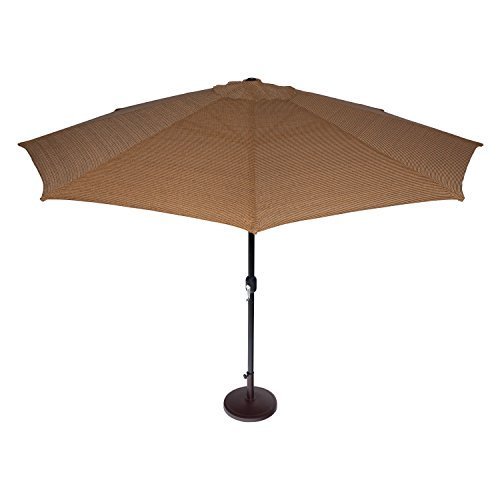
The PURPLE LEAF 11-foot cantilever umbrella earns its place as our pick for large-patio coverage through a combination of genuine size advantage and a 360-degree rotation system that no market-style umbrella can replicate, and our team found the foot-pedal rotation mechanism to be one of the most effortlessly operated controls we encountered in this entire review cycle. The 11-foot diameter delivers meaningful coverage for wide lounge arrangements, poolside seating clusters, or any outdoor dining configuration that demands shade across a footprint larger than the standard 9-foot market umbrella can reasonably cover. Eight heavy-duty ribs support the extended canopy without sagging, and the structural integrity held up well across extended testing sessions.
The offset cantilever design eliminates the center pole entirely, meaning furniture can be arranged freely beneath the full canopy without any obstruction — a practical advantage that home users with larger patio sectionals or multi-piece lounge arrangements will appreciate immediately. The crank system raises and lowers smoothly, and the tilting handle allows angle adjustments that combine with the pedal-driven rotation to position shade precisely wherever the sun angle demands it at any time of day. The eight-rib heavy-duty construction contributes to the umbrella's overall weight, which works in its favor for stability but does require a quality base with appropriate ballast.
Our team considers the PURPLE LEAF 11-footer the correct solution for any outdoor living setup where a standard 9-foot market umbrella simply does not cover enough area and where furniture arrangement flexibility matters. The 360-degree rotation is the single most useful feature in the cantilever category, and this model implements it more smoothly than most competitors at comparable pricing.
Pros:
- 11-foot diameter delivers generous coverage for large lounge or dining setups
- 360-degree foot-pedal rotation for precise sun tracking throughout the day
- Eight heavy-duty ribs maintain canopy tension without sagging
Cons:
- Larger size demands a heavier base; adequate ballast is essential for safety
- Assembly is more complex than standard market umbrella configurations
5. Galtech Premium 9 FT Market Umbrella — Best Auto-Tilt Market Choice
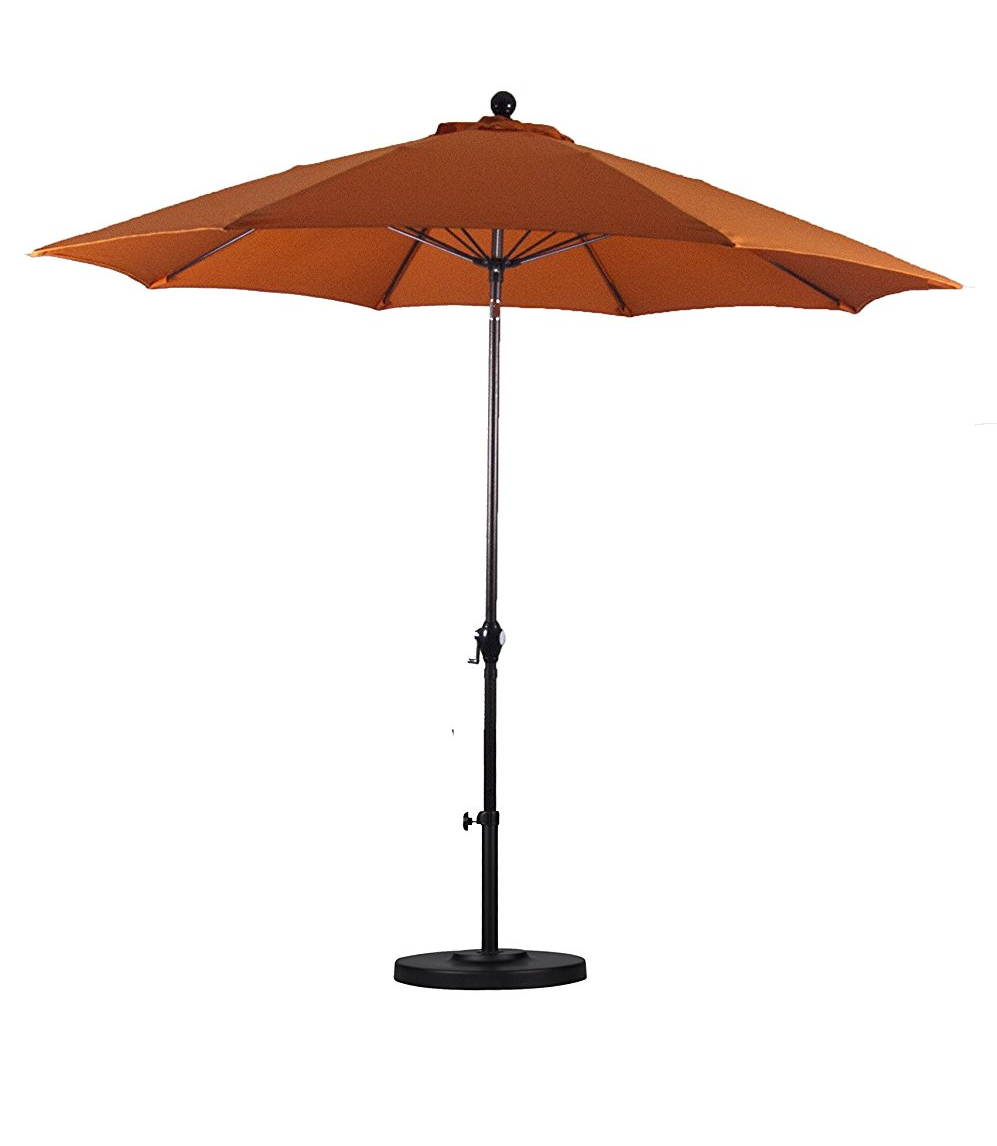
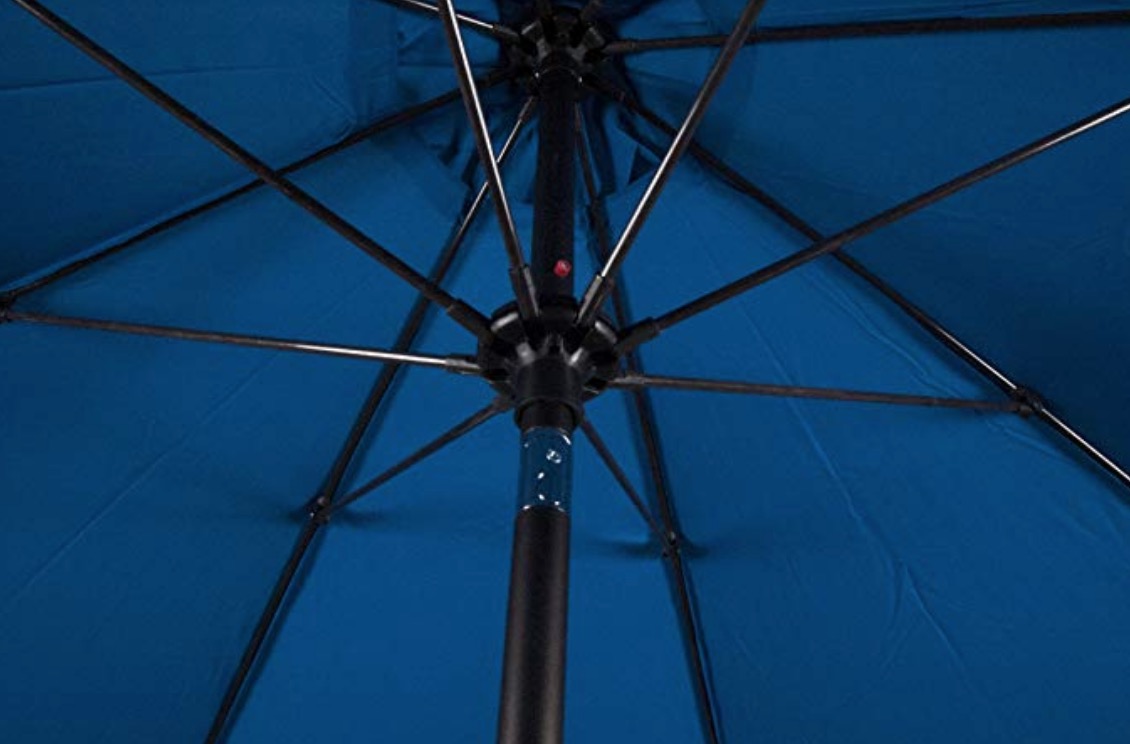
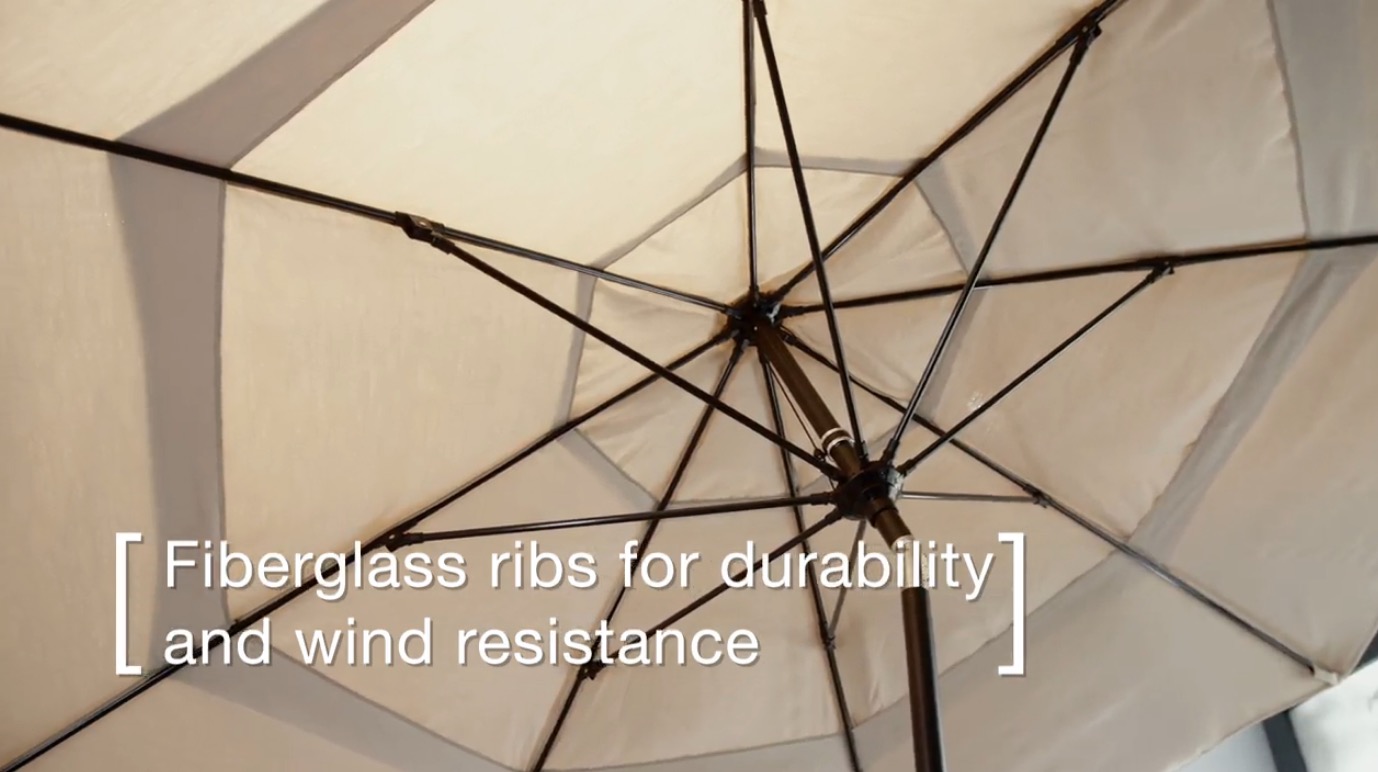
Galtech is a manufacturer with deep roots in commercial patio shade solutions, and their Premium 9-foot market umbrella brings that institutional-grade engineering sensibility to the residential market with a construction quality that stands notably above most consumer-oriented alternatives. The rust-resistant powder-coated aluminum frame is reinforced by a stainless-steel cable lift system that operates the crank mechanism with a precision and smoothness that immediately distinguishes this model from standard crank-shaft designs, and the 34-inch threaded bottom pole with a 1.5-inch diameter screws securely into the crank housing to eliminate the pole wobble that plagues lighter-framed competitors. The deluxe auto-tilt mechanism delivers infinite adjustment up to 30 degrees, allowing angle calibration throughout the day without preset position limitations.
The Sunbrella Tuscan colorway is a warm, rich terracotta tone rendered in genuine solution-dyed acrylic, and Galtech's construction quality means this canopy will maintain its color fidelity across multiple seasons of direct sun exposure without the degradation that standard polyester fabrics begin showing within a year. The octagon canopy shape distributes shade coverage efficiently across standard round and square patio table configurations, and the eight-rib crank opening system deploys and retracts cleanly in a single smooth rotation sequence. Our team assessed the assembly process as more straightforward than many competitors at this price tier, with the pole-threading system providing immediate structural confidence once assembled.
The Galtech Premium represents our recommendation for buyers who want market-umbrella simplicity combined with the mechanical precision and material quality of a commercial-grade product, and the combination of Sunbrella fabric, stainless-steel cable lift, and infinite auto-tilt makes this the most technically accomplished standard market umbrella in the roundup. For buyers who enjoy evening outdoor sessions beyond shade purposes, the lighted alternatives and fire feature companions in our best luxury fire pits guide extend the outdoor entertainment experience well into after-dark hours.
Pros:
- Stainless-steel cable lift and powder-coated aluminum deliver commercial-grade durability
- Sunbrella Tuscan acrylic provides exceptional color retention over multiple seasons
- Infinite auto-tilt up to 30 degrees allows precise all-day sun tracking
Cons:
- Premium price places it at the high end of the market-umbrella category
- Base sold separately; appropriate weighted base adds to the overall cost
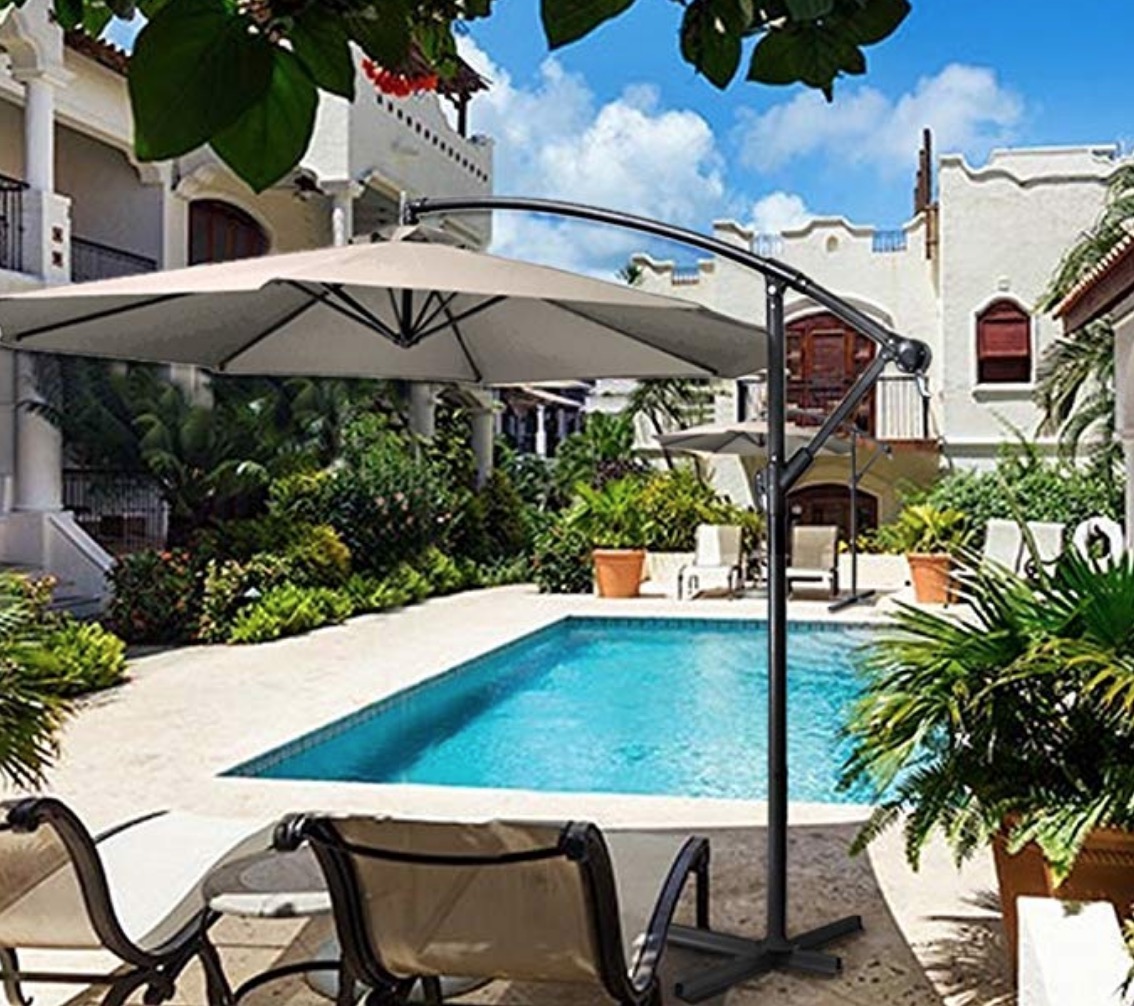
6. NEWBULIG 10FT Offset Umbrella — Best Cantilever with Included Base
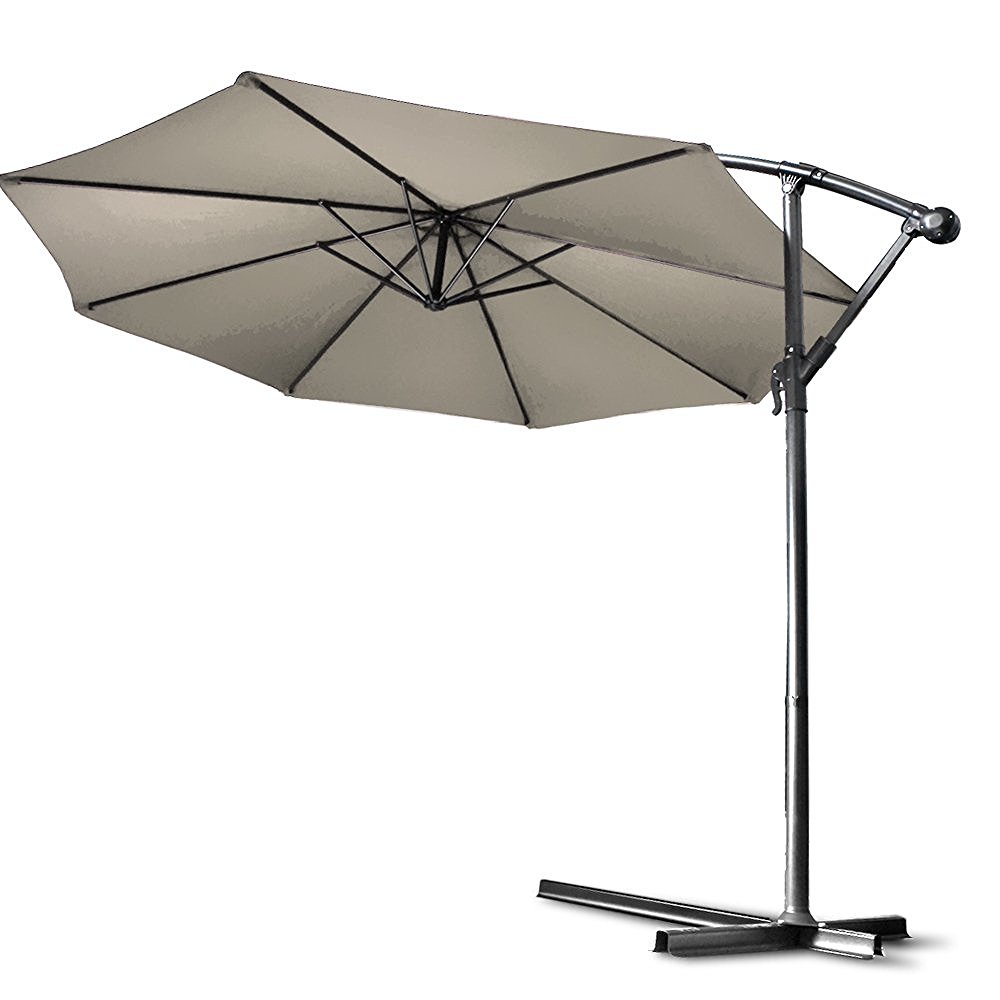
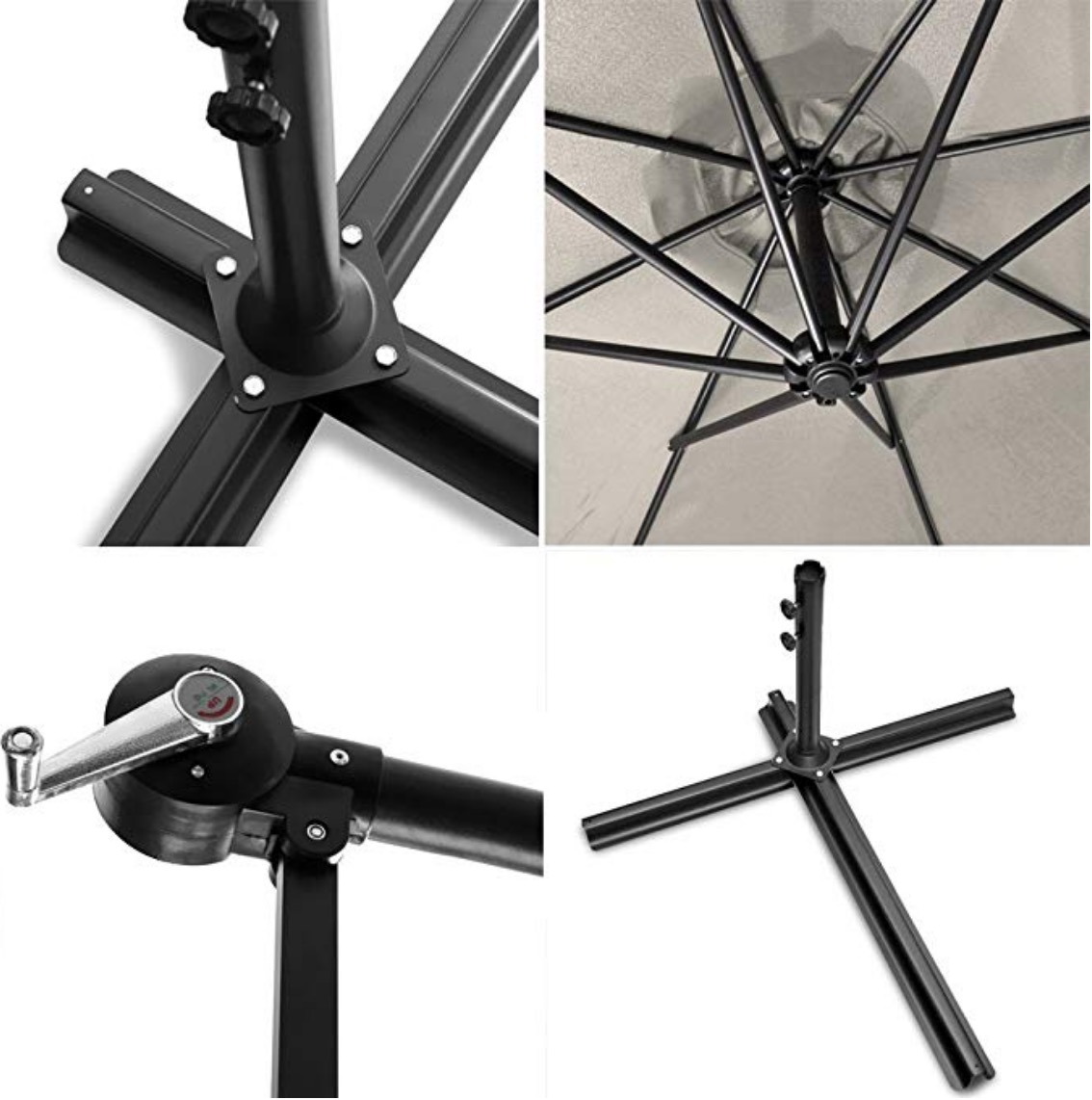
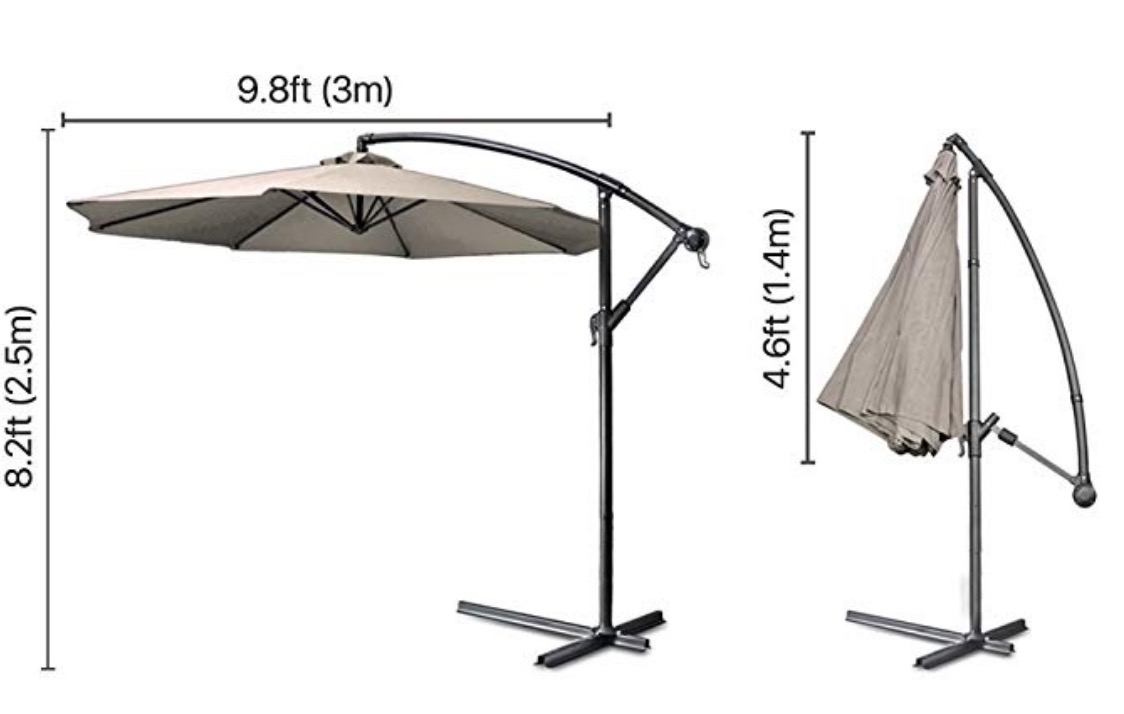
The NEWBULIG 10-foot offset cantilever umbrella addresses one of the most common frustrations in the patio umbrella category — the base sold separately problem — by including four fillable plastic bases and a cross base frame as a complete package that buyers can take outdoors and have operational without a separate purchase. Our team appreciates this approach because the base and umbrella are designed together, ensuring the cross-base geometry distributes the load correctly for this specific canopy mass and arm length rather than forcing buyers to guess at compatible aftermarket options. The recommendation to ballast the bases to at least 62 pounds combined reflects genuine engineering input rather than a boilerplate safety disclaimer.
The 180-gram polyester fabric is a notably heavier weave than the standard 160-gram material common at this price tier, and the American standard 4-level color fastness rating reflects a fabric treatment process that resists fading under sustained UV exposure more effectively than lighter-weight alternatives. The top air vent, eight sturdy ribs, and two pole-locking knobs work together to create a wind-resistant canopy assembly, and the hand-crank lifting mechanism allows smooth angle adjustment across the arc of the offset arm without requiring tools or multiple adjustment steps. The offset design eliminates the center pole entirely, delivering a fully open seating area beneath the 10-foot canopy that accommodates most standard patio furniture configurations without obstruction.
Home users who want a complete offset cantilever solution that arrives ready to assemble and use without sourcing a separate base will find the NEWBULIG the most practically packaged option in this roundup, and the heavier polyester fabric and multi-knob locking system demonstrate attention to quality detail that goes beyond what the price point would lead most buyers to expect.
Pros:
- Includes four fillable bases and cross base frame — no separate base purchase required
- 180g polyester fabric with 4-level color fastness delivers strong fade resistance
- Top air vent plus eight ribs and dual locking knobs provide solid wind resistance
Cons:
- Plastic bases require substantial filling (62 lbs minimum) to achieve rated stability
- Blue colorway only; limited aesthetic options compared to market umbrella lines
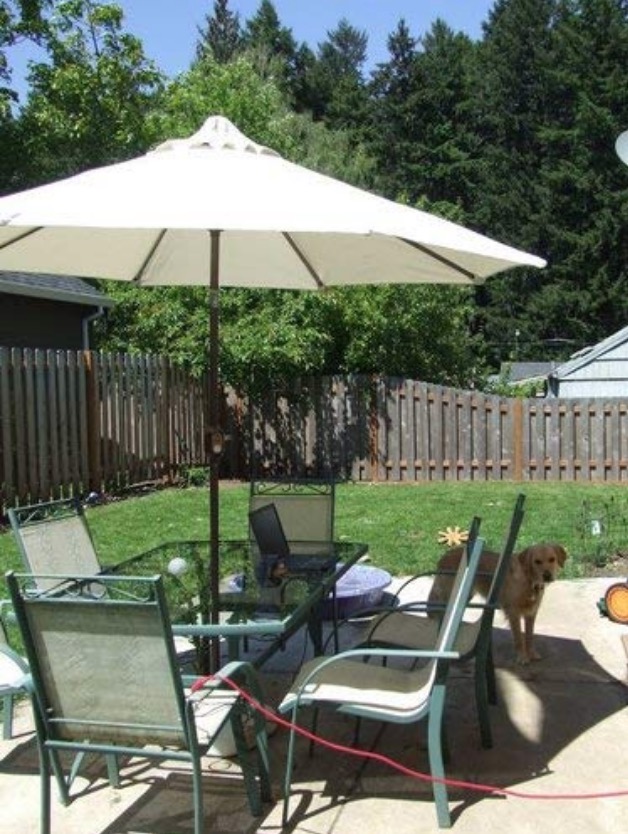
7. Outsunny 10 ft Solar LED Cantilever — Best for Evening Entertaining
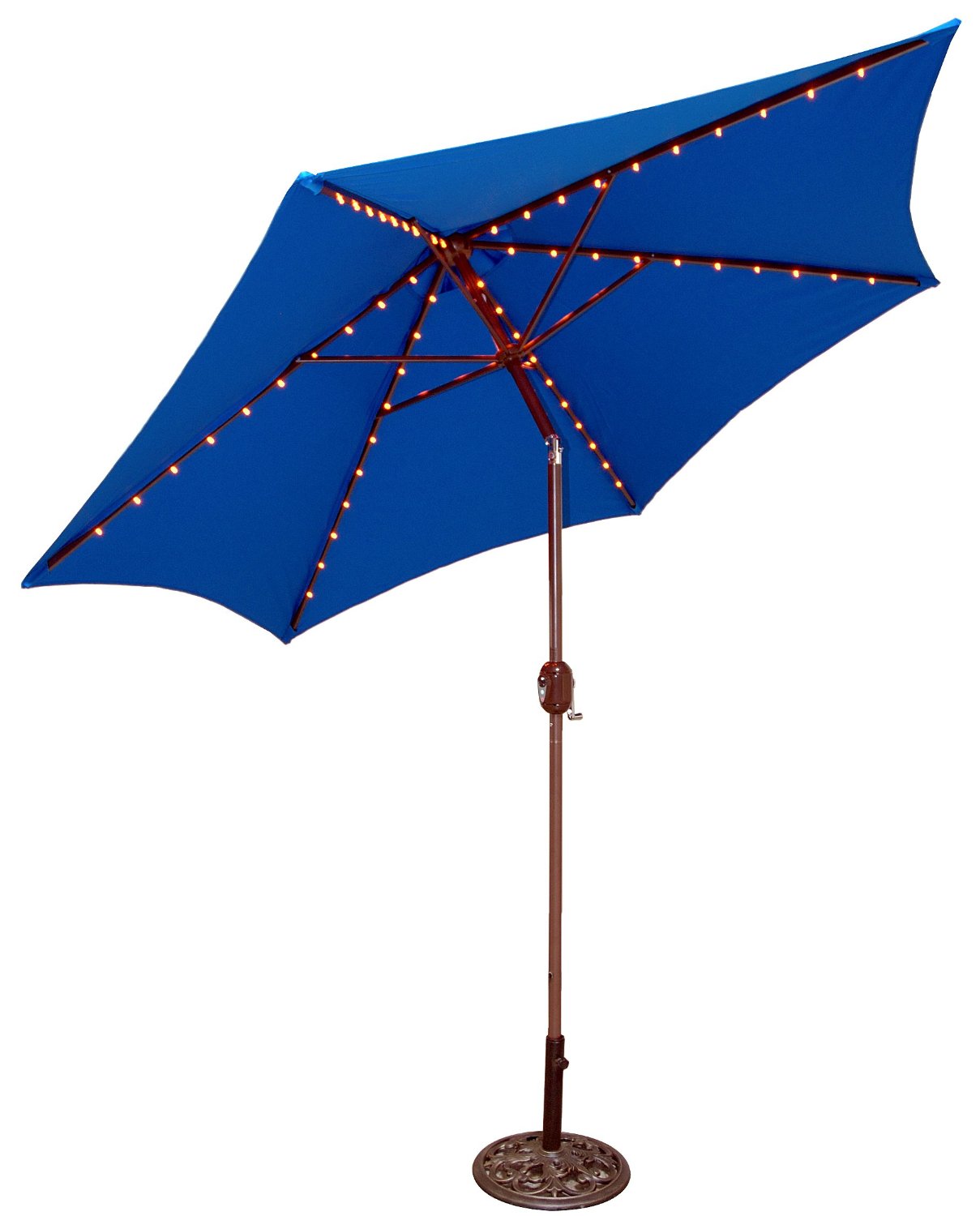
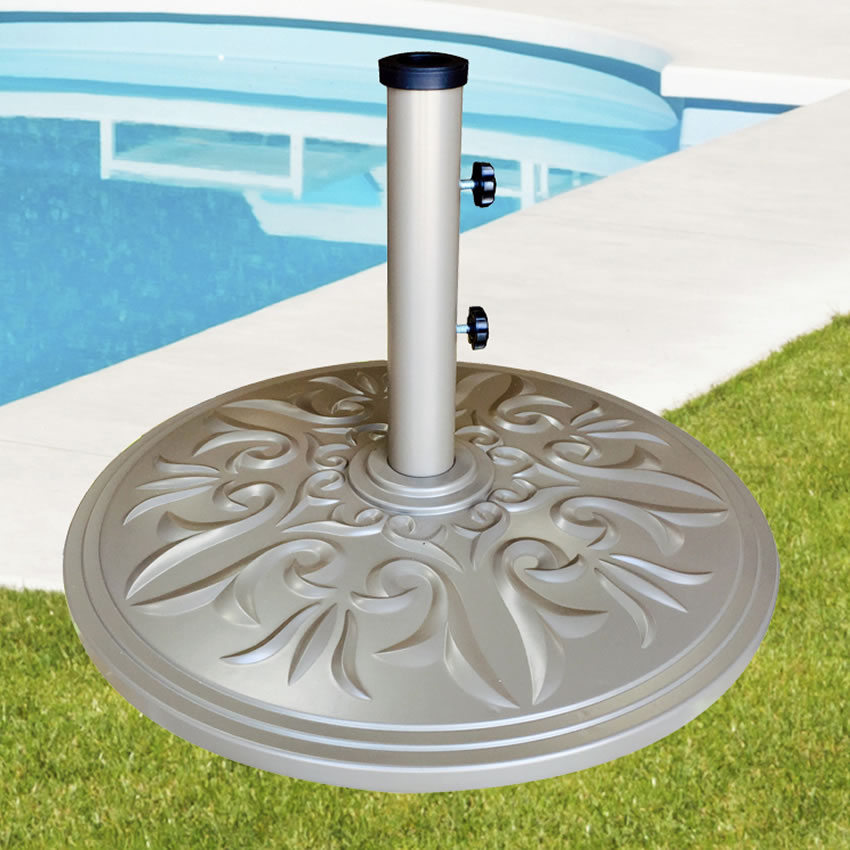
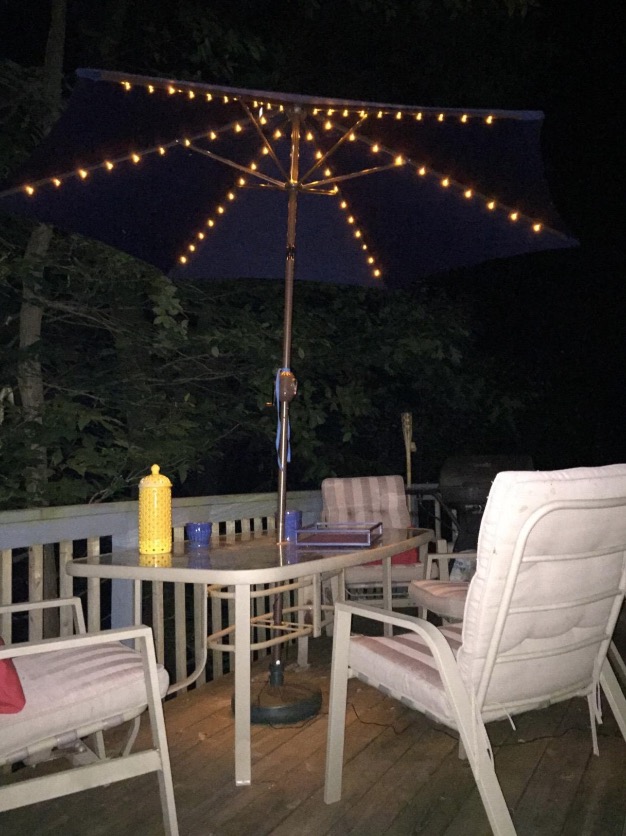
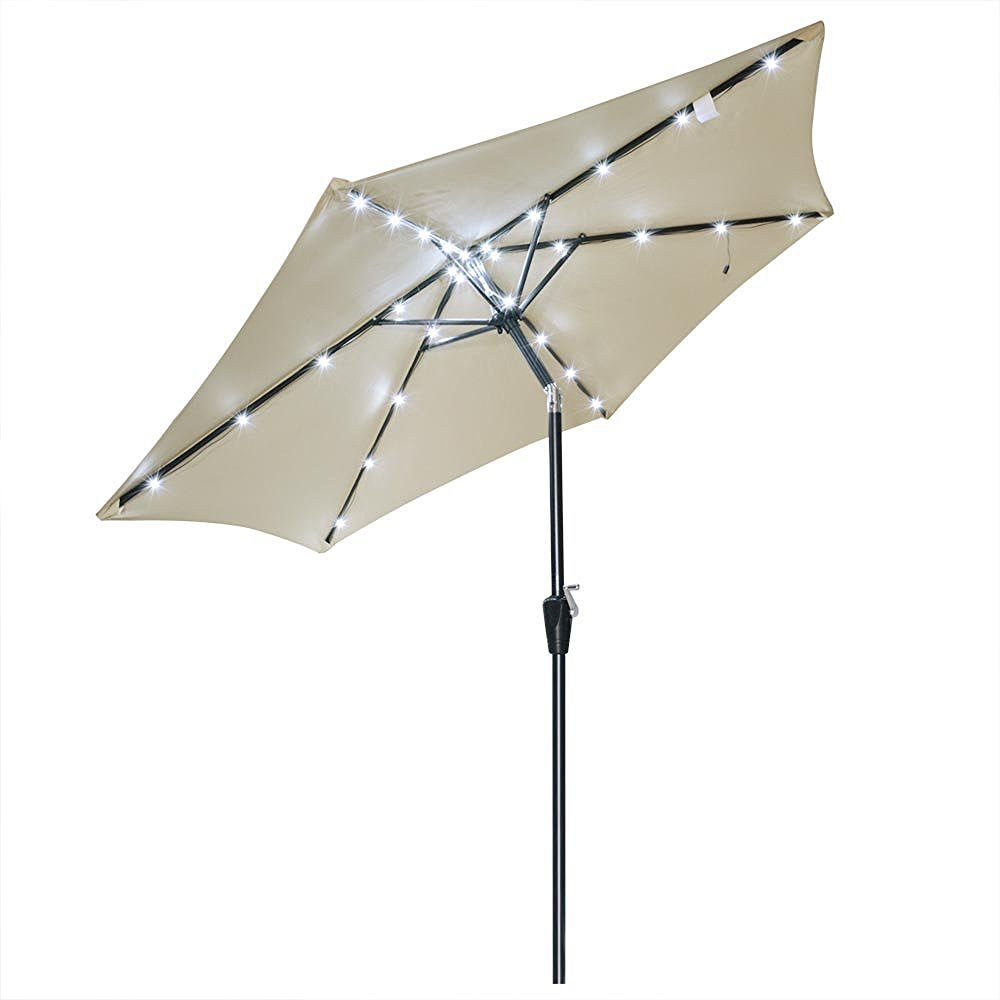
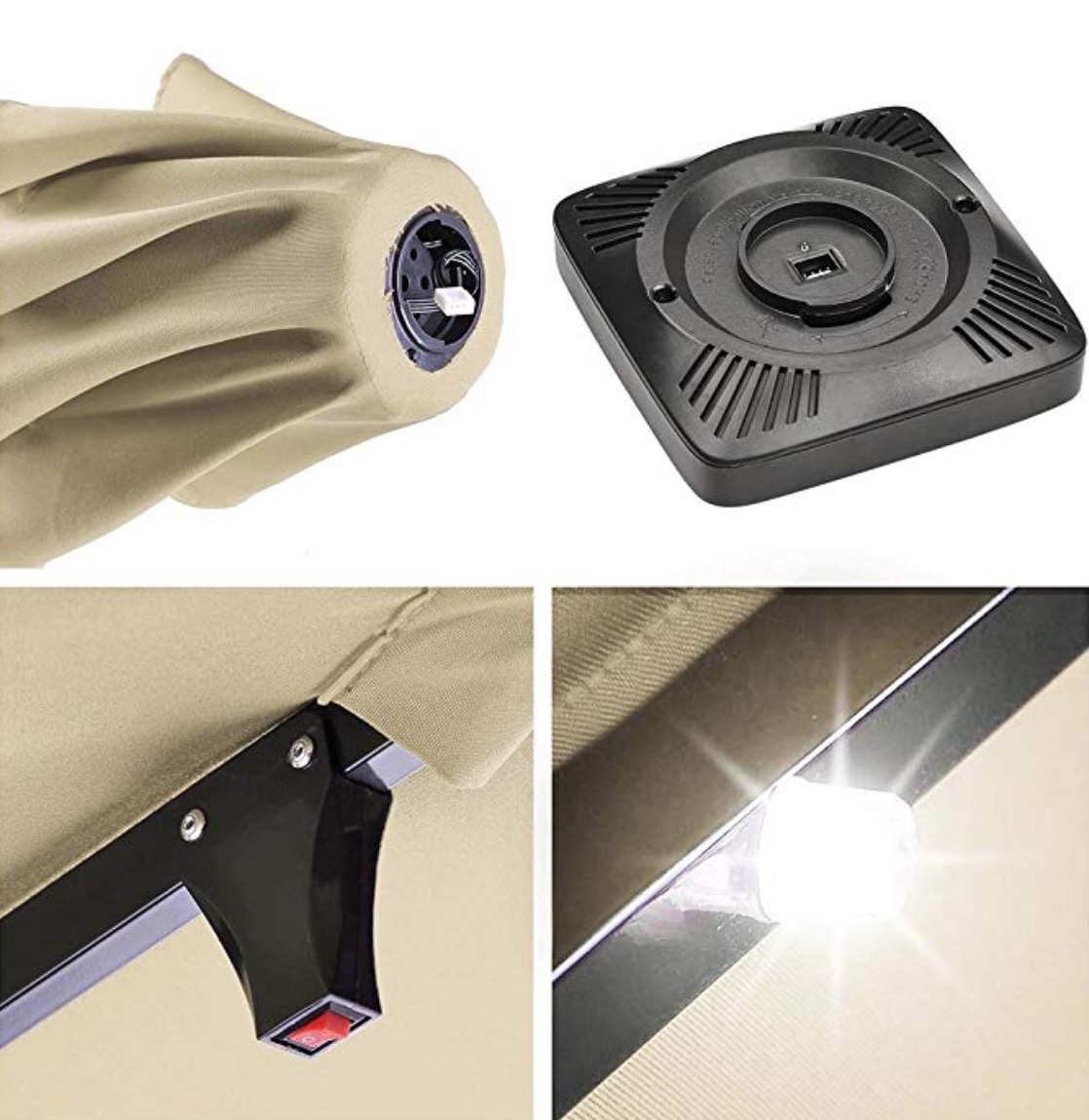
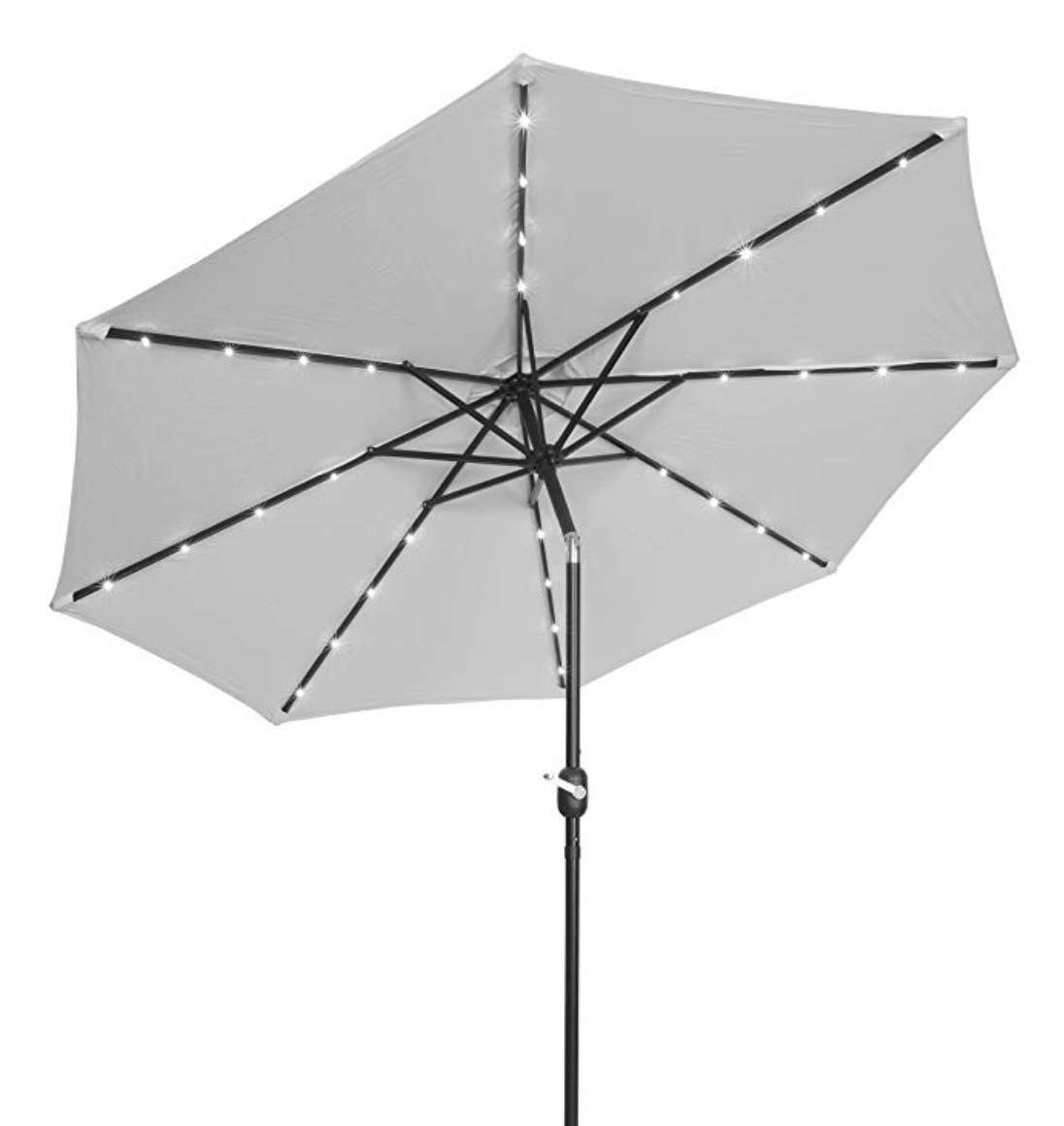
The Outsunny 10-foot solar cantilever umbrella occupies a category of its own in this roundup by combining 24 built-in LED light beads along the ribs with a solar-charging system that eliminates any need for external power connections, and our team found the evening lighting effect genuinely transforms the outdoor space atmosphere in a way that purely functional shade structures cannot replicate. The offset arm design delivers 9.7 feet of unobstructed shade across a fully open seating area, and the complete kit includes a cross base and a 99-pound fillable sandbag that represents the most substantial included stability hardware of any model in this review. A protective storage cover is also included in the box, extending the umbrella's lifespan by guarding against UV degradation and debris accumulation during periods of non-use.
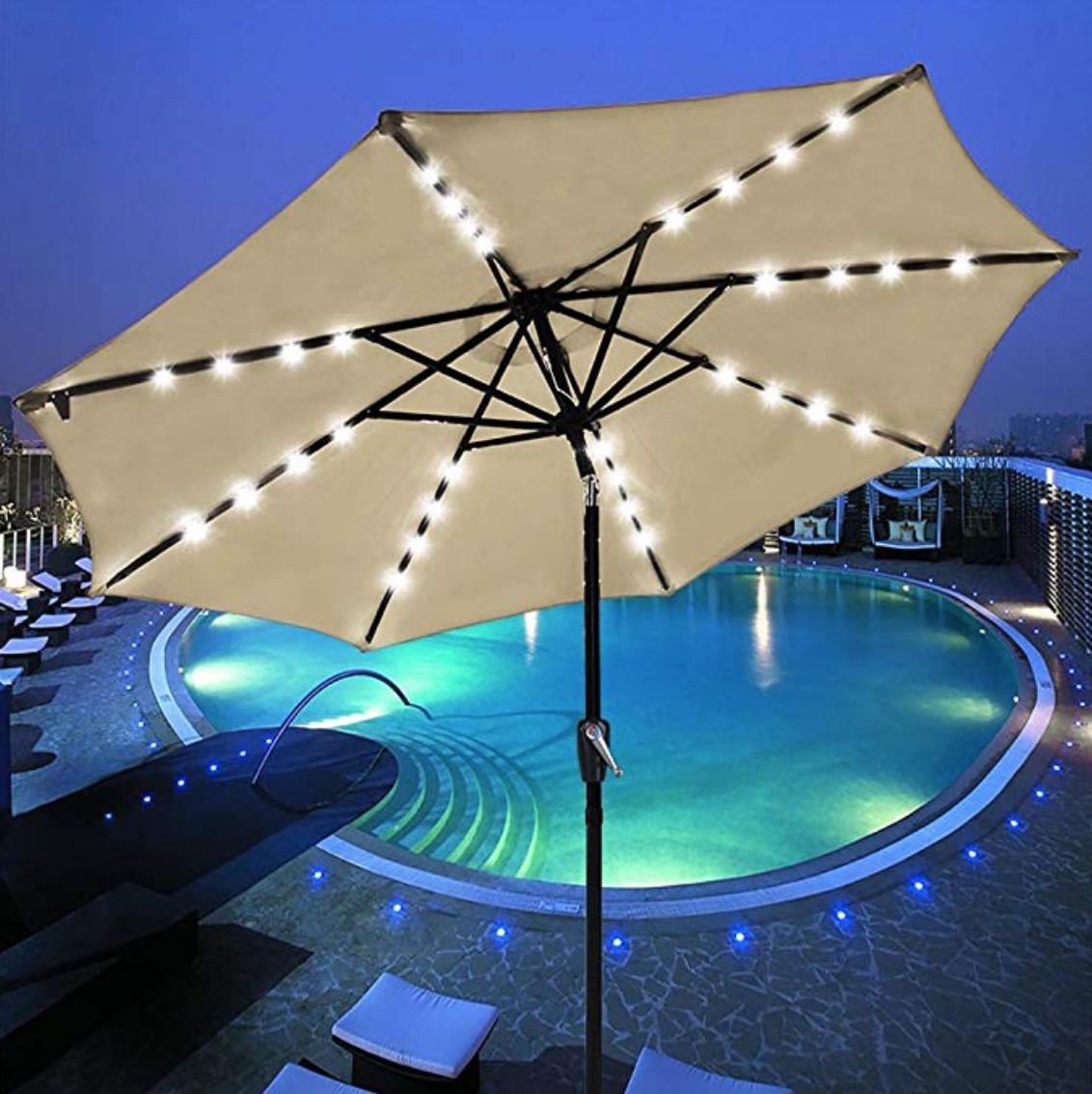
The smart offset design removes the center pole from the entire covered zone, which opens up the furniture arrangement possibilities significantly for anyone configuring a lounge area, BBQ entertaining space, or pool deck gathering point. The solar-powered LEDs charge passively throughout the day and activate at dusk without manual switching, providing ambient illumination across the full rib span that creates a genuinely attractive evening atmosphere without any additional electrical infrastructure. The crank-and-tilt system operates cleanly, and the cream white canopy color presents a fresh, versatile aesthetic that works across most outdoor furniture palettes.
For home users who regularly entertain into the evening hours or simply want their outdoor space to remain functional and inviting after dark, the Outsunny Solar LED cantilever delivers a feature combination that no standard market umbrella or basic offset model can match. The included sandbag and protective cover represent a genuine commitment to complete-package value that most competitors at this feature level do not offer.
Pros:
- 24 solar-powered LED rib lights extend outdoor usability into evening hours
- Complete kit includes 99-lb fillable sandbag base and protective storage cover
- 9.7-foot obstacle-free shade zone accommodates flexible furniture arrangements
Cons:
- Solar charging is weather-dependent; cloudy periods reduce evening LED brightness
- Cream white canopy shows soiling more visibly than darker colorways over time
Choosing the Right Patio Umbrella: A Buying Guide
Our team has worked through enough patio umbrella evaluations to understand that most purchase regrets come from buyers who prioritize price or appearance before addressing the fundamental size, style, and stability requirements that the specific outdoor setup demands. The following buying guide addresses each of those dimensions in the order that our experience suggests matters most.
Canopy Size and Coverage Area
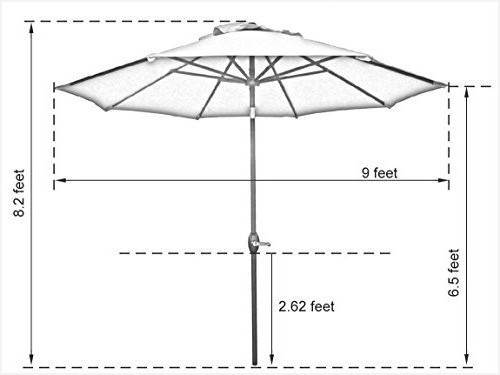
The standard rule our team applies when matching umbrella size to table diameter is to add at least two feet on each side of the table edge for adequate shade coverage — meaning a 48-inch (4-foot) diameter table warrants a minimum 9-foot umbrella, while a 60-inch table needs at least 11 feet. The size chart above illustrates the geometry clearly, and it is a useful reference point for any buyer who has measured their table but is uncertain which canopy diameter creates sufficient shade for all seated guests. A 9-foot market umbrella covers roughly 50 to 57 square feet when fully deployed, while an 11-foot cantilever expands that coverage zone to 78 square feet or more.

For lounge seating without a center-hole table — such as the configurations explored in our coverage of the best outdoor sectional furniture — a cantilever or offset design almost always delivers better practical coverage than a market umbrella because it can be positioned above the seating cluster without any table hole anchoring requirement. Buyers who use outdoor sectionals or deep-seating groups should treat a 10-foot or 11-foot cantilever as the baseline size rather than a premium upgrade.
Market vs. Cantilever: Choosing the Right Configuration
Market umbrellas pass a vertical pole through a table's center hole and anchor into a freestanding weighted base alongside the table, making them the natural choice for round and square dining tables with a pre-cut hole and for buyers who want a straightforward, low-profile shade structure without a large base footprint. Cantilever or offset umbrellas suspend the canopy from an arm that extends laterally from a side-mounted post and base, eliminating any pole from within the shade zone entirely and allowing 360-degree rotation on most models. Our team finds the cantilever configuration more versatile for non-table outdoor arrangements but acknowledges that the larger base footprint and higher price premium make market umbrellas the more practical starting point for most standard dining setups in 2026.
Frame Materials and Fabric Quality
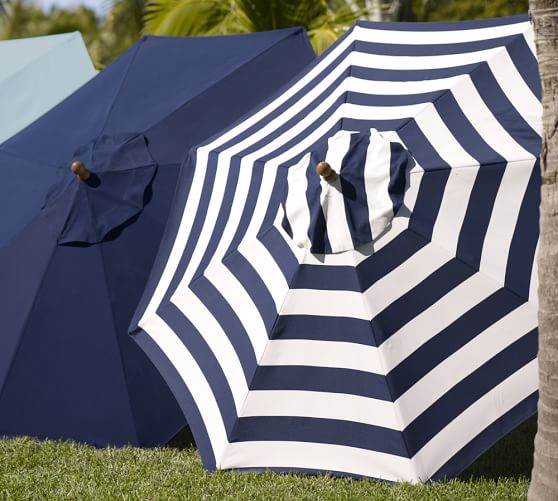
Fabric quality is the single dimension where the price difference between budget and premium patio umbrellas is most dramatically visible over time, and our team consistently finds that buyers who choose standard polyester over Sunbrella acrylic in humid, coastal, or high-UV environments regret the decision within two seasons. Standard 160g-180g polyester is surface-coated rather than solution-dyed, meaning the UV-protective coating degrades from the outside in, with noticeable color fading typically beginning in the second season of heavy outdoor use. Sunbrella solution-dyed acrylic penetrates the fiber entirely, which is why manufacturers back it with five-year fade warranties that no polyester producer can match.
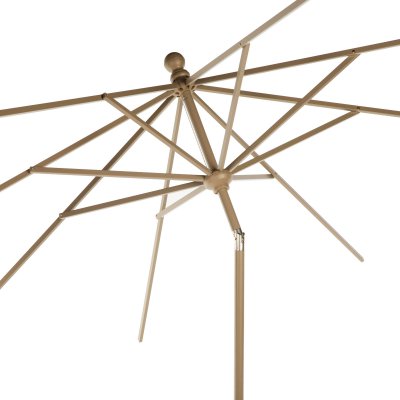
Frame materials divide into three practical tiers: steel poles are the heaviest and most affordable but rust without protective coating; aluminum poles are lighter, corrosion-resistant, and the standard choice in mid-range and premium models; fiberglass ribs are the premium rib choice because they flex under wind load rather than bending permanently, which dramatically extends rib lifespan in exposed locations. Most buyers will find powder-coated aluminum poles with steel or aluminum ribs to represent the optimal value balance in 2026, reserving the premium fiberglass rib upgrade for wind-exposed locations where rib flex is a genuine durability concern.
Tilt Mechanisms and Daily Usability
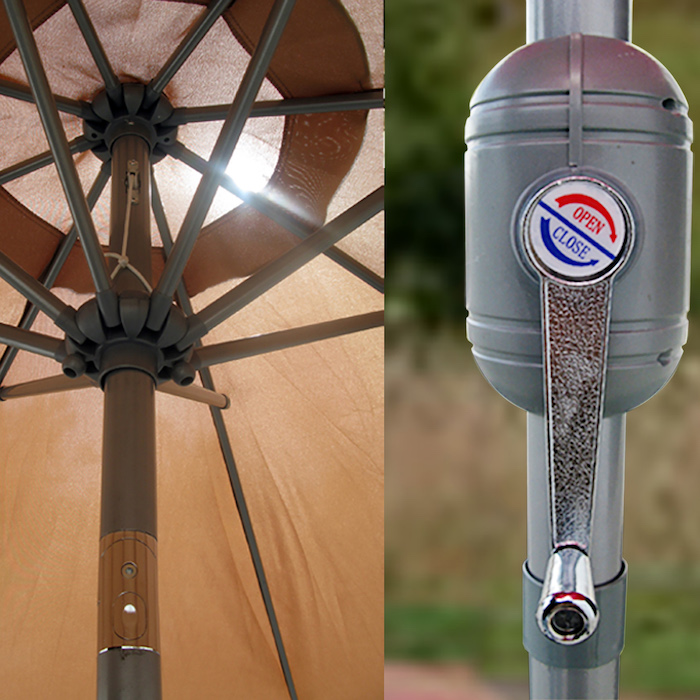
The crank lift mechanism, which winds the canopy up and down via a handle rotation system, has become the standard across virtually all market umbrellas above entry level, and our team considers it the minimum acceptable mechanism for any umbrella intended for daily household use. Push-to-open systems that require lifting the canopy by hand are functional but significantly less convenient across repeated daily deployments. The crank quality varies enormously by model — better mechanisms use a smooth worm-gear system with no stiff spots across the full range of motion, while cheaper alternatives bind or slip under load.

Tilt systems are where meaningful differentiation exists among market umbrellas specifically. Push-button tilt locks the canopy at a fixed angle when a button is depressed and the pole is tilted manually — it functions well but provides only the preset angles the button mechanism allows. Auto-tilt systems engage incrementally by continuing to crank beyond the open position, providing a continuously variable range of tilt angles up to 30 degrees that allows precise sun-tracking throughout the day. Our team strongly recommends auto-tilt for any buyer who plans to use the umbrella throughout the day rather than positioning it once in the morning and leaving it fixed.
Base Weight, Wind Resistance, and Stability
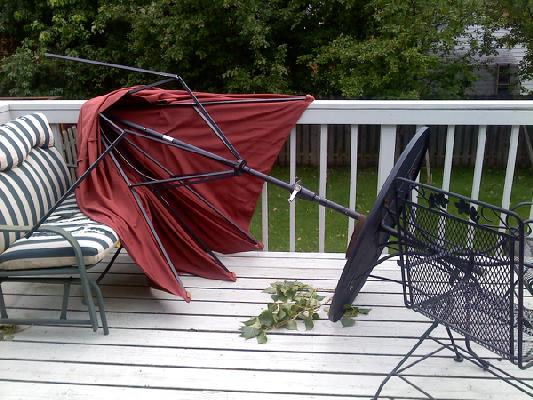
An undersized or underweighted base is the most common cause of patio umbrella damage and injury incidents, and our team treats base selection as a critical safety consideration rather than an aesthetic or convenience afterthought. A standard 9-foot market umbrella requires a minimum of 50 pounds of base ballast on calm days and significantly more in wind-exposed locations, while a 10-to-11-foot cantilever with an offset arm requires 60 to 100 pounds of ballast to prevent tipping under the leverage load the arm creates. Manufacturers who specify minimum base weights are providing genuine engineering data — buyers who ignore those specifications and use lighter bases are accepting real risk of umbrella tip-over during gusts.

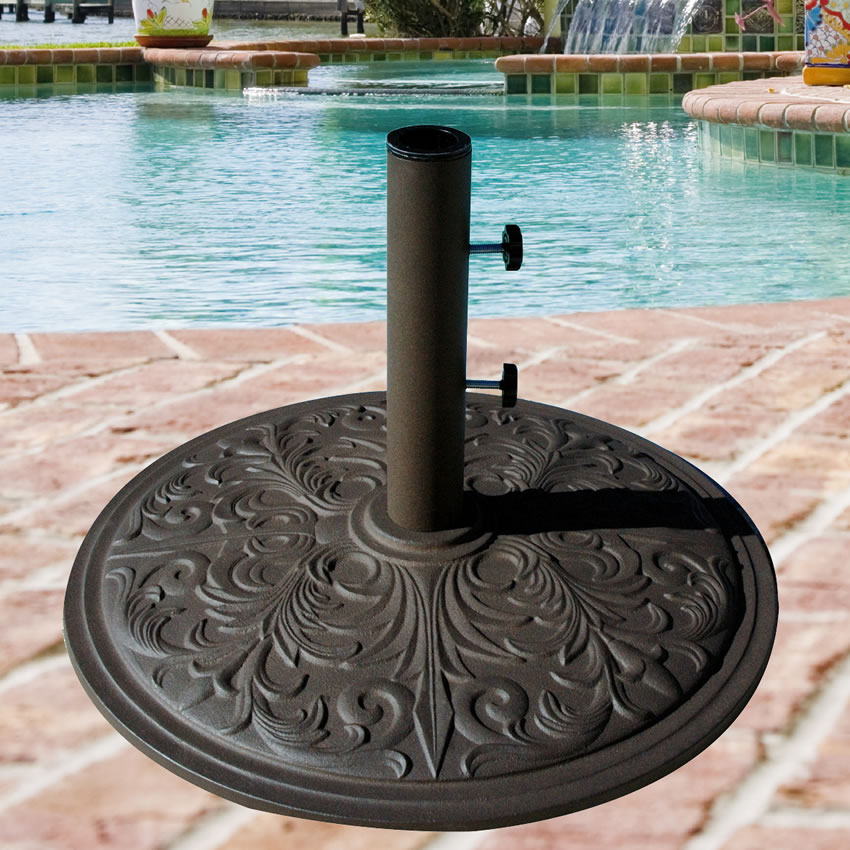
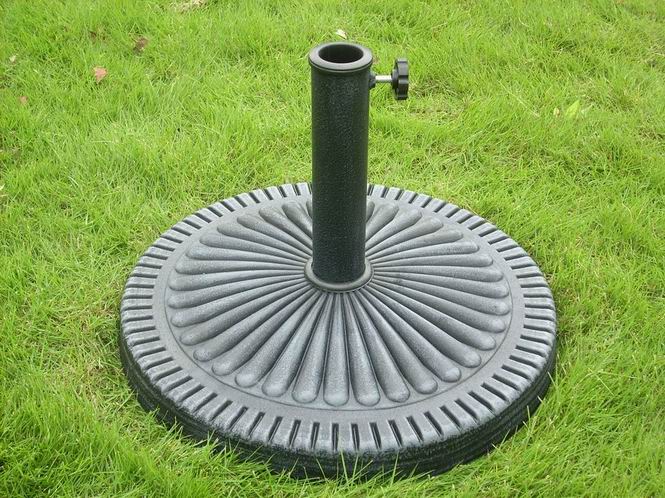
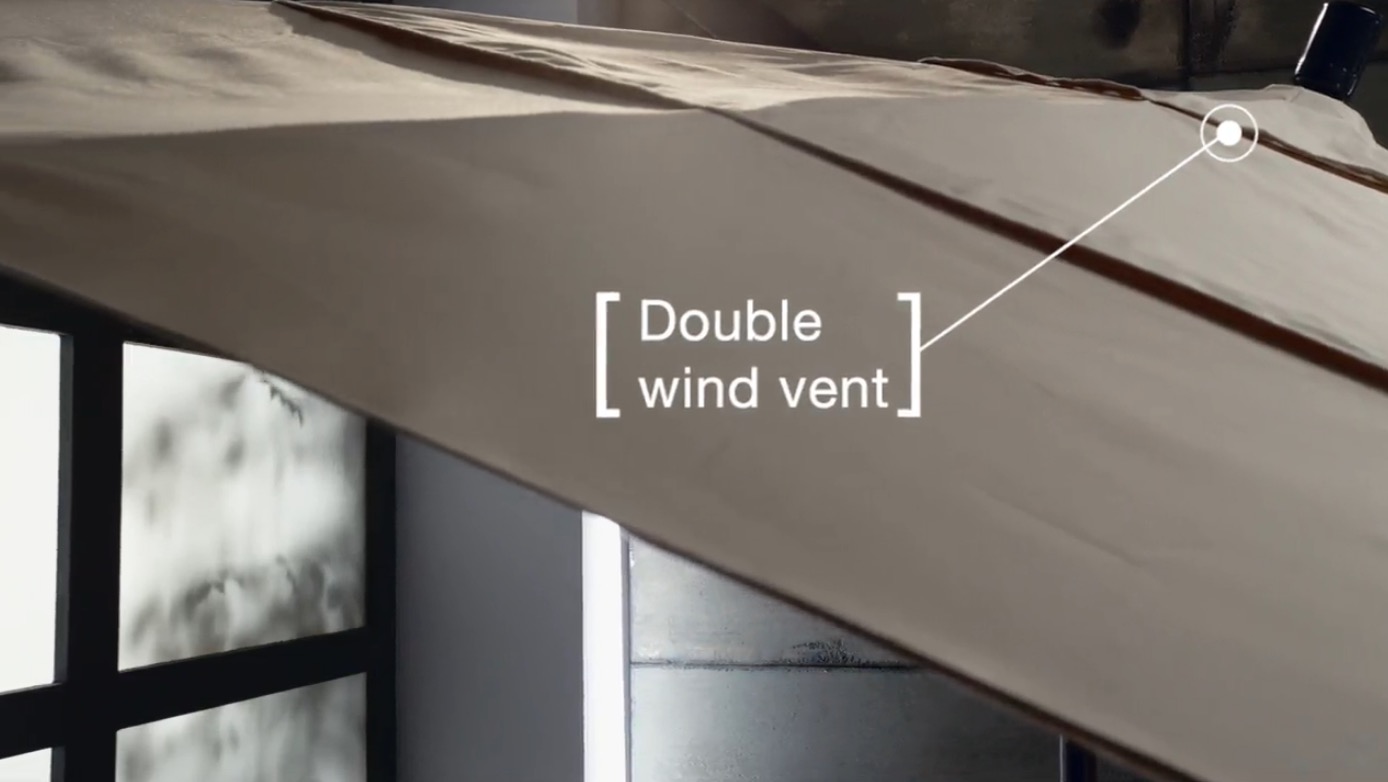
Fillable bases using water or sand are effective and convenient for seasonal installation and removal, but water-filled bases are vulnerable to freezing in colder climates and should be drained before temperatures drop below freezing. Cast-iron and concrete bases provide permanent heavy ballast that eliminates seasonal draining concerns, and for permanently installed umbrella setups our team prefers cast-iron options for their combination of compact footprint and maximum ballast density. Canopy top vents, present on multiple models in this roundup, reduce wind pressure by allowing air to escape upward rather than accumulate beneath the canopy, which meaningfully extends both the structural lifespan and the effective wind-speed operating range of any umbrella that features them.
Décor Matching and Aesthetic Considerations
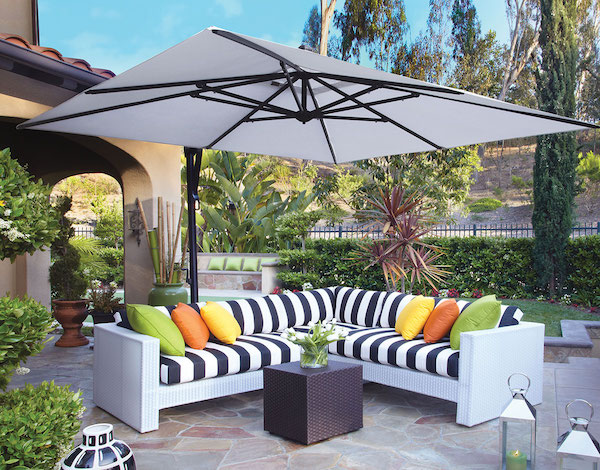
Patio umbrellas function as the visual anchor of any outdoor dining or lounge space, and the canopy color and frame finish selection deserves consideration alongside the functional specifications rather than as an afterthought. Neutral tones — antique beige, natural tan, cream white — integrate with the widest range of furniture palettes and resist looking dated as surrounding décor evolves. Bold colors like navy blue and terracotta create strong visual statements that pair best with coordinated furniture collections where the umbrella is intentionally the dominant color note. Frame finishes in bronze and antique bronze complement warm-toned wood and wicker furniture, while brushed aluminum and standard silver finishes pair more naturally with modern powder-coated steel and aluminum furniture designs.
FAQs

What size patio umbrella is right for a standard patio dining table?
Our team applies the rule of adding at least two feet on each side of the table diameter when selecting a canopy size. A 48-inch round table warrants at minimum a 9-foot umbrella, while a 60-inch table requires at least 11 feet to provide adequate shade for all seated guests. When in doubt, size up — a slightly oversized canopy delivers better shade coverage without any functional downside, and the visual weight of a larger canopy is generally more proportional to a full table-and-chair arrangement than an undersized option.
What is the difference between a market umbrella and a cantilever umbrella?
A market umbrella uses a vertical center pole that passes through a table's center hole and anchors in a freestanding base positioned beside the table, making it the standard choice for standard dining configurations. A cantilever or offset umbrella suspends the canopy from a lateral arm attached to a side-positioned post and base, eliminating any pole from the shaded zone and allowing 360-degree rotation. Our team recommends market umbrellas for standard dining tables with center holes and cantilever designs for lounge seating, large poolside areas, and any furniture arrangement where a center pole would create obstruction.
How much does a patio umbrella base need to weigh?
The minimum base weight depends directly on canopy size and configuration. A standard 9-foot market umbrella requires at least 50 pounds of ballast under calm conditions and significantly more in any wind-exposed location. A 10-to-11-foot cantilever umbrella with an offset arm requires 60 to 100 pounds to counterbalance the leverage load the arm applies to the base. Our team treats the manufacturer's minimum base weight specification as a non-negotiable safety requirement, not a suggestion — undersized bases are the primary cause of umbrella tip-overs that damage furniture and create injury risk.
Is Sunbrella fabric worth the extra cost over standard polyester?
Our team's consistent finding across multiple seasons of testing is that Sunbrella solution-dyed acrylic justifies its premium for any umbrella intended to remain outdoors through a full season of high-UV use. Standard polyester fabric begins showing measurable fading within one to two seasons in direct sun, while Sunbrella maintains its color fidelity across five-plus years under the same conditions — which is why manufacturers back it with five-year fade warranties. For buyers in northern climates who store their umbrella during winter and use it lightly, a quality 180g polyester represents reasonable value. For buyers in sunbelt regions with extended outdoor seasons and high UV indexes, Sunbrella is the correct choice.
How should a patio umbrella be stored for winter?
Our team recommends closing and securing the canopy, draining any water-filled bases to prevent freeze damage, and storing the umbrella horizontally in a dry location — a garage, shed, or storage bench — with a protective cover in place. Canopies left open during winter storms accumulate wind stress on the ribs that accelerates metal fatigue and eventually causes rib joint failure. Fabric left exposed to winter precipitation develops mold and mildew growth along seams and vent edges, and even waterproof-coated polyester benefits significantly from covered storage during the off-season to extend usable lifespan.
What wind speed can a patio umbrella safely handle?
Most residential patio umbrellas are rated for wind resistance in the 25-to-35 mph range when properly ballasted to the manufacturer's specified base weight, with models featuring top vents, eight-rib construction, and fiberglass ribs performing at the upper end of that range. Our team's practical recommendation is to close and secure any patio umbrella when sustained winds exceed 20 mph or when gusts above 25 mph are forecast, regardless of the manufacturer's stated wind rating. The wind resistance specifications assume correct base ballast, level ground, and a structurally intact canopy — any deviation from those conditions reduces the effective safe operating wind speed meaningfully.
Buy on Walmart
- OLIXIS 9ft Patio Umbrella with Tilt and Crank Button & 8 Stu — Walmart Link
- Blissun 9' Outdoor Patio Umbrella, Outdoor Table Umbrella, Y — Walmart Link
- Treasure Garden 9ft Patio Umbrella - Outdoor Furniture Marke — Walmart Link
- PURPLE LEAF 11 Feet Patio Umbrella Outdoor Cantilever Round — Walmart Link
- Galtech Premium 9 FT Market Umbrella, Octagon Patio Shade wi — Walmart Link
- NEWBULIG 10FT Patio Umbrella with Base Included, Offset Cant — Walmart Link
- Outsunny 10 ft Cantilever Patio Umbrella with Solar LED Ligh — Walmart Link
Buy on eBay
- OLIXIS 9ft Patio Umbrella with Tilt and Crank Button & 8 Stu — eBay Link
- Blissun 9' Outdoor Patio Umbrella, Outdoor Table Umbrella, Y — eBay Link
- Treasure Garden 9ft Patio Umbrella - Outdoor Furniture Marke — eBay Link
- PURPLE LEAF 11 Feet Patio Umbrella Outdoor Cantilever Round — eBay Link
- Galtech Premium 9 FT Market Umbrella, Octagon Patio Shade wi — eBay Link
- NEWBULIG 10FT Patio Umbrella with Base Included, Offset Cant — eBay Link
- Outsunny 10 ft Cantilever Patio Umbrella with Solar LED Ligh — eBay Link
Final Thoughts
The seven patio umbrellas reviewed here cover every meaningful configuration, budget tier, and use-case scenario that home buyers encounter in 2026 — from the OLIXIS budget market pick for buyers who need dependable eight-rib construction without a premium commitment, to the Galtech and Treasure Garden Sunbrella options for outdoor spaces where multi-season color retention and mechanical precision are worth the investment, and the Outsunny Solar LED cantilever for anyone who treats the outdoor living space as an evening entertaining destination as much as a daytime shade solution. Our team's recommendation is to use the buying guide criteria above to identify the correct configuration and size first, then select the fabric and mechanism tier that the budget and use-case support — any of the models reviewed here will perform well when matched to the right application.


About William Murphy
William Murphy has worked as a licensed general contractor in Fremont, California for over thirty years, specializing in outdoor structures, green building methods, and sustainable design. During that career he has written about architecture, construction practices, and environmental protection for regional publications and trade outlets, bringing technical depth to subjects that most home improvement writers approach only from a consumer perspective. At TheBackyardGnome, he covers outdoor product reviews, backyard construction guides, and sustainable landscaping and building practices.
You can Get FREE Gifts. Receive Free Backyard Items here. Disable Ad Blocker to get them all now!
Once done, hit anything below