Best Cast Iron Chiminea: Reviews, Buying Guide and FAQs 2026
by Simmy Parker
The SAFSTAR Outdoor Cast Iron Chiminea earns its place at the top of this list for 2026, thanks to its premium cast iron build, 360° spark-retardant mesh, and thoughtful ash-collection tray that makes cleanup genuinely painless. Cast iron chimineas have a well-earned reputation for outlasting clay and steel alternatives by years, and the five models reviewed here represent the best of what the market has to offer right now.
Outdoor living spaces have become a serious investment for homeowners, and a chiminea is one of the most effective ways to extend the usable season of a patio or backyard well into autumn and even winter. Unlike an open fire pit, a chiminea's tall chimney column channels smoke upward and away from seated guests, making it a more social-friendly heat source. The cast iron versions, in particular, hold heat exceptionally well and develop a seasoned patina over time that actually improves their performance. Buyers who have wrestled with a cracked clay chiminea — a frustratingly common outcome after a single heavy rain or temperature swing — often find the switch to cast iron to be a permanent one. For more information on chiminea history and design, the Wikipedia entry on chimineas provides a solid overview of their Mexican origins and evolution into modern backyard fixtures.
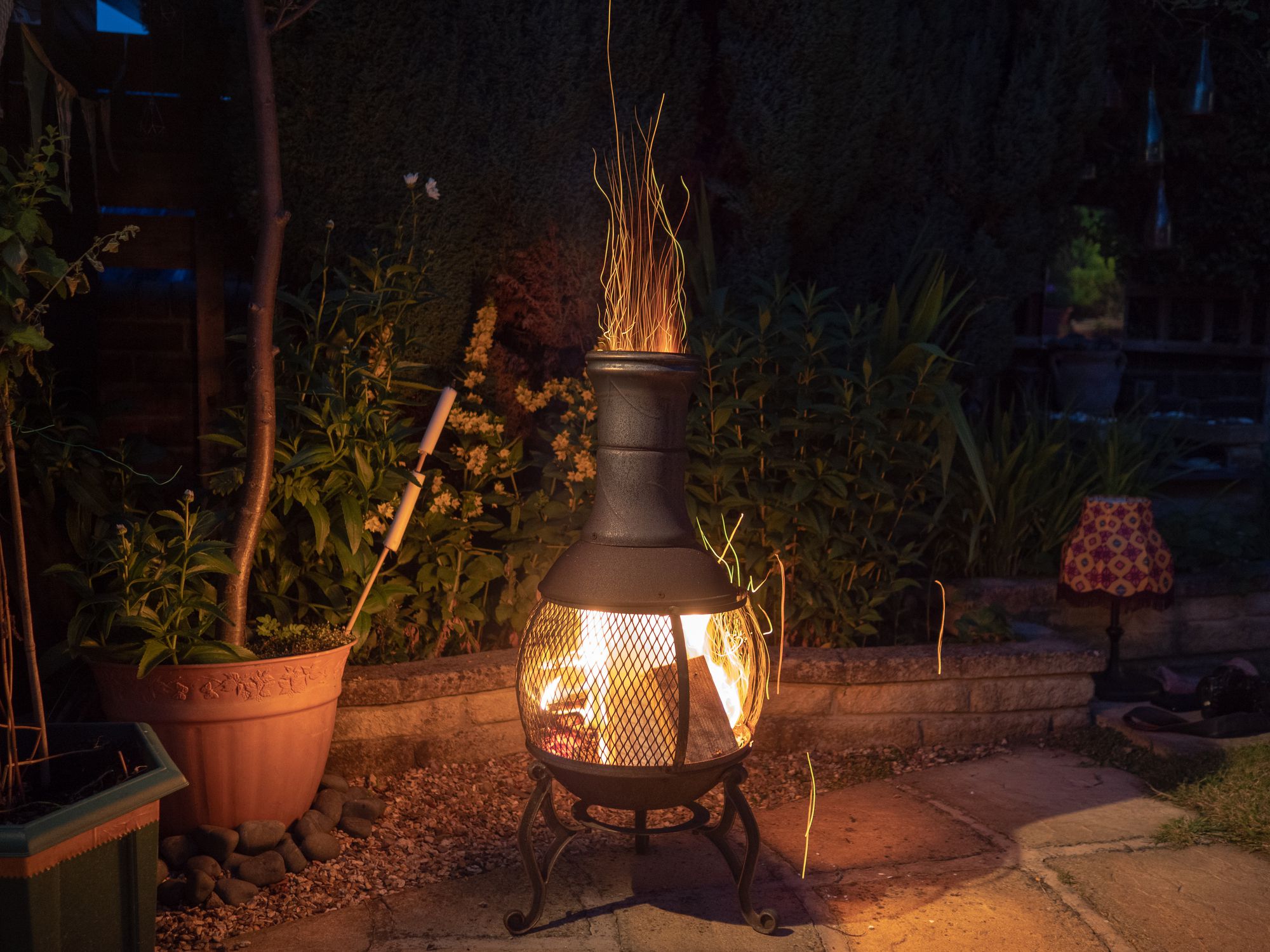
This guide covers five of the most compelling cast iron and heavy-gauge metal chimineas available in 2026, drawn from a wider survey of product reviews across all backyard categories. Each pick has been evaluated for material quality, smoke management, assembly experience, and overall value. Whether the goal is a decorative focal point for a compact urban patio or a functional heat source for large backyard gatherings, there is an option on this list worth serious consideration.
Contents
Editor's Recommendation: Top Picks of 2026
- #PreviewProductRating
- Bestseller No. 1
 Rating:

- Bestseller No. 2
 Rating:
 - Bestseller No. 3
 Rating:
 - Bestseller No. 4
 Rating:
 - Bestseller No. 5
 Rating:
Full Product Breakdowns

1. SAFSTAR Outdoor Cast Iron Chiminea — Best Overall
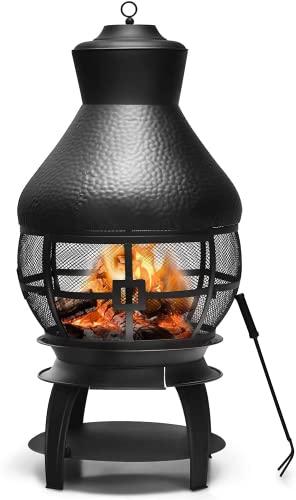
The SAFSTAR Outdoor Cast Iron Chiminea is one of the more complete packages available in 2026, combining a dense cast iron body with a high-temperature copper finish that resists flaking and discoloration through repeated fire cycles. The build quality here is notably above average for the price range — the reinforced iron legs sit wide and low, creating a stable base that does not wobble on flagstone, brick, or compacted gravel surfaces. The 360° fire-retardant mesh enclosure is a standout safety feature, wrapping the entire firebox with a fine-gauge screen that catches embers even when the wind shifts unexpectedly, making it considerably safer for use near wooden deck furniture or on a patio with overhead shade structures.
Assembly follows a logical sequence and most buyers complete the process in under thirty minutes using the included hardware. The removable cap at the top of the chimney column is a practical addition, keeping rainwater out of the firebox between uses and preventing the rust acceleration that uncapped chimineas suffer during wet months. An included fire poker allows for safe adjustment of logs and easy removal of the spark cover without requiring the user to lean close to the heat source. The metal ash tray slides out from the base cleanly, collecting the bulk of debris in a single removable piece — a detail that saves considerable time compared to chimineas that require scooping ash from a fixed interior bowl.
For buyers who are transitioning away from clay models, the SAFSTAR represents a meaningful upgrade in durability without a steep jump in cost. The copper finish develops an attractive aged character over time rather than fading to a dull grey, which keeps the unit looking intentional rather than weathered. This model pairs well with a quality chiminea cover to extend the finish's life through off-season storage.
Pros:
- Premium cast iron with high-temperature copper finish resists heat damage and discoloration
- Full 360° spark-retardant mesh provides consistent ember containment from all angles
- Removable ash tray simplifies cleanup significantly compared to open-bottom designs
- Included fire poker keeps users safely clear of the firebox during operation
Cons:
- The copper finish requires periodic treatment to prevent patina from advancing to corrosion in high-humidity climates
- Assembly instructions, while adequate, lack detail on certain hardware placements
2. 56.1 Inch Tall Outdoor Chiminea — Best for Portability
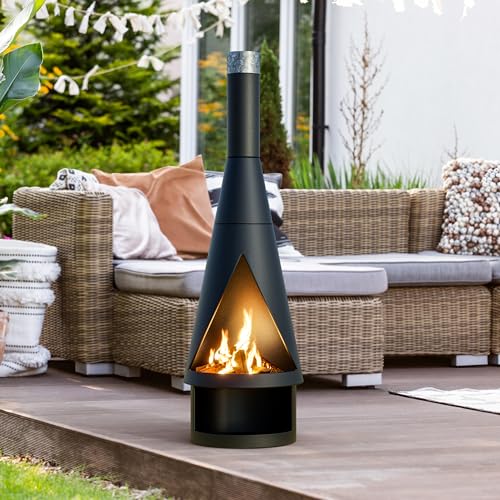
Standing at 56.1 inches tall and weighing just 14 pounds, this lightweight outdoor chiminea is aimed squarely at buyers who want the visual impact and smoke-directing function of a full-sized unit without committing to a permanently stationed fixture. The slender profile fits comfortably on smaller patios and garden corners, and the light weight means it can be repositioned for different gathering arrangements or brought indoors for winter storage without requiring additional help. The elevated chimney column does a creditable job of directing smoke upward and away from seating areas, which is the primary functional advantage a chiminea holds over a simple open fire ring.
The design draws on traditional Mexican chiminea aesthetics, with cultural roots in communal gathering and outdoor celebration that give the unit a sense of authenticity beyond mere function. The unit is suited for backyard entertaining, poolside evenings, and garden parties where a mood-setting centerpiece matters as much as raw heat output. At 14 pounds, it is genuinely portable in a way that cast iron models are not — buyers who move frequently, rent rather than own, or share outdoor spaces with others will appreciate the flexibility. The trade-off is that the lighter construction produces less radiant heat per fire than heavier cast iron alternatives, and the unit may require more frequent tending during extended burns.
This model is best understood as a style-forward, versatile option rather than a primary heat source for cold evenings. Buyers expecting the same thermal mass performance as a full cast iron chiminea may find it underwhelming in temperatures below 50°F, but for mild-season outdoor entertaining it is a compelling choice at its price point.
Pros:
- Exceptionally light at 14 pounds — easy to reposition or store between uses
- Tall 56-inch chimney column effectively channels smoke away from seating areas
- Traditional aesthetic suits a wide range of outdoor design styles
Cons:
- Lighter construction limits heat retention compared to full cast iron models
- Less suitable as a primary heat source in cooler temperatures
- Detailed assembly instructions are not always included
3. Oakland Living Elite Chimenea — Best Classic Design
Oakland Living has been one of the more consistently reliable names in cast metal outdoor furniture and fire features for years, and the Elite Chimenea reflects that track record in its sturdy steel construction and refined finishing. The built-in spark screen eliminates one of the most common aftermarket purchases buyers make — the separate spark guard — by integrating it directly into the hinged door assembly. The hinged door with latch mechanism allows for precise control over airflow and burn rate, a practical advantage over open-faced or mesh-only designs where fire management relies entirely on wood positioning.
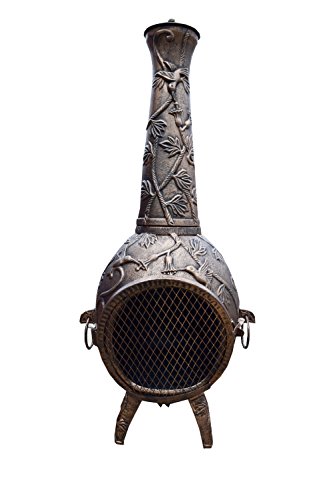
The durable steel construction is optimized for heat output, channeling radiant warmth efficiently outward from the firebox while the chimney stack manages combustion gases. Oakland Living's designs in this category have traditionally favored clean, classic silhouettes that blend into established patio schemes without demanding attention, making the Elite a strong choice for buyers who want their chiminea to complement rather than compete with existing outdoor furniture arrangements. The unit is also a natural fit for patio setups described in resources like these patio furniture arrangement ideas, where the chiminea serves as an anchor point around which seating can be positioned.
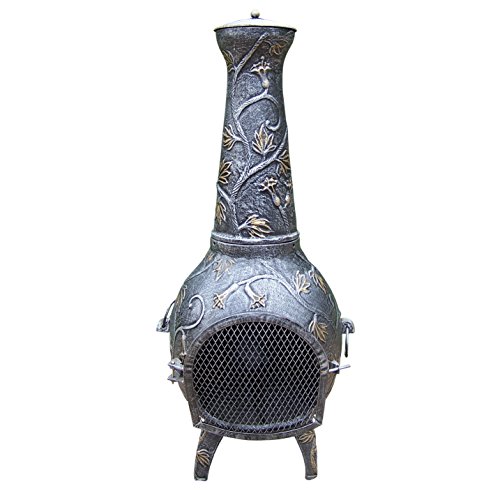
For buyers who appreciate the established reliability of a brand with a long catalog in this space, the Oakland Living Elite delivers on fundamentals — solid construction, integrated spark protection, and a traditional form factor — without unnecessary complexity. Those interested in alternative materials may also want to explore the copper and aluminium cast chiminea options reviewed separately on this site.
Pros:
- Built-in spark screen eliminates the need for a separate aftermarket guard
- Hinged door with latch gives precise control over airflow and burn intensity
- Durable steel construction designed for optimal heat output
- Classic design integrates easily with most existing outdoor décor styles
Cons:
- Product listing details are minimal — buyers should confirm current dimensions before purchase
- Fewer decorative finish options compared to competitors in the same price range
4. Sunnydaze Santa Fe 50-Inch Chiminea — Best Rustic Style
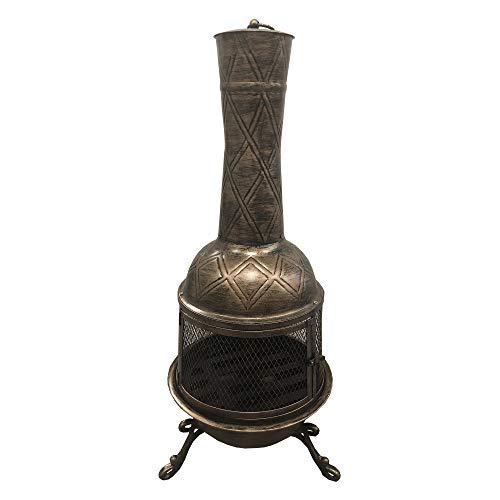
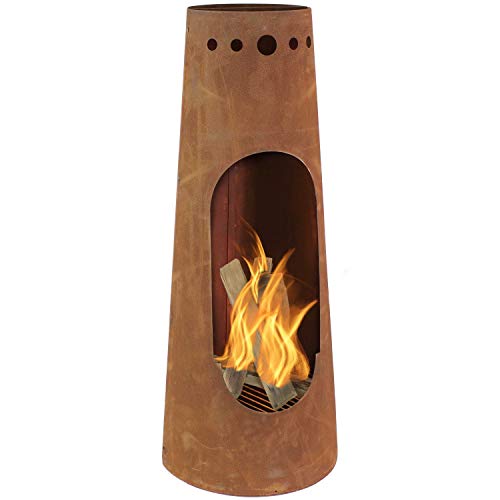
The Sunnydaze Santa Fe arrives in a rustic patina finish that has a lived-in, weathered character straight out of the box — an aesthetic quality that appeals strongly to buyers styling a Southwestern or cottage-inspired outdoor space. At 50 inches tall and 19.75 inches at the base, it occupies a confident footprint without overpowering smaller patios, and the 32.4-pound weight gives it enough mass to sit solidly on a paved surface without anchoring. The 17.75-inch diameter log grate sits six millimeters thick, providing a solid elevated burning platform that promotes airflow beneath the wood and contributes to a cleaner, more complete combustion cycle.
Sunnydaze includes all assembly hardware and tools in the box, so setup requires no separate tool kit — a thoughtful inclusion that reflects the brand's attention to the unboxing experience. The firebox opening measures 26.75 inches high by 11.25 inches wide, which is generous enough to accept standard-split firewood without requiring additional cutting. The tall chimney stack is dimensioned specifically to guide smoke upward and away from the seating perimeter, and in calm conditions it performs this function reliably. In windier environments, as with most chimineas, some smoke intrusion into the seating area can occur when the breeze shifts direction toward the open firebox mouth.
The rustic patina finish is more than cosmetic — it also provides an initial layer of oxidation protection that slows further corrosion in the early months of use. Over time and with regular fire cycles, the steel develops a natural seasoning layer from smoke and heat exposure that further stabilizes the surface. Buyers who want a chiminea that looks authentically aged from the start, rather than requiring years of weathering to achieve that character, will find the Santa Fe immediately satisfying.
Pros:
- Rustic patina finish provides authentic weathered character and initial rust protection
- Complete hardware and tool kit included — ready to assemble immediately
- Thick 6mm log grate supports proper airflow for cleaner, more efficient burns
- Tall 50-inch chimney effectively manages smoke direction in calm conditions
Cons:
- At 32.4 pounds, repositioning the unit solo is awkward and requires care
- Wind can push smoke toward the seating area through the open firebox mouth on gusty evenings
5. Trumbeak 24-Inch Chiminea Fire Pit — Best for Grilling
The Trumbeak 24-Inch Chiminea Fire Pit takes a distinctly different approach from the other models on this list, treating the chiminea form as a cooking platform as much as a heat source. The three-door design allows simultaneous access from multiple sides of the unit, meaning that multiple people can tend to the fire or adjust food on the grill simultaneously — a feature that transforms the unit into a genuinely interactive centerpiece for group gatherings. The adjustable rotating grill rack operates across three height levels and rotates freely, allowing for both slow-cooking and higher-heat searing without requiring the user to reach over the firebox or manipulate the grill with long tools.
The metal mesh spark screen is integrated across the full firebox perimeter, and the triple-lock safety door prevents accidental opening during active fires — a meaningful safety detail for households with children or pets. The combustion chamber geometry appears to be designed with airflow efficiency in mind, producing a more complete burn at lower wood volumes than might be expected from a 24-inch unit. Buyers who enjoy cooking outdoors over wood fire will find this model's multi-access design and rotating grill considerably more practical than attempting to work around a single-door chiminea, a topic explored in more depth in this guide to grilling with cast iron in a fire pit.
At 24 inches, the Trumbeak is the most compact chiminea on this list, which limits its heat radius but makes it a practical choice for smaller patios, balconies, or settings where spatial constraints rule out larger units. The black powder-coat finish is durable and resistant to high-heat discoloration in normal use conditions. For buyers who want one outdoor fire feature that handles both warming and cooking duties without compromising on safety, this model makes a genuinely strong case.
Pros:
- Three-door wraparound design allows multi-person access and social group fire tending
- Adjustable rotating grill rack supports both slow-cooking and high-heat grilling modes
- Triple-lock safety door prevents accidental firebox opening during active burns
- Compact 24-inch form factor fits smaller patios and balcony spaces
Cons:
- Smaller firebox produces a more limited heat radius than 50-inch+ alternatives
- The shorter chimney stack offers less smoke direction than taller models
Key Features to Consider When Choosing a Cast Iron Chiminea
Material: Cast Iron vs. Steel vs. Clay
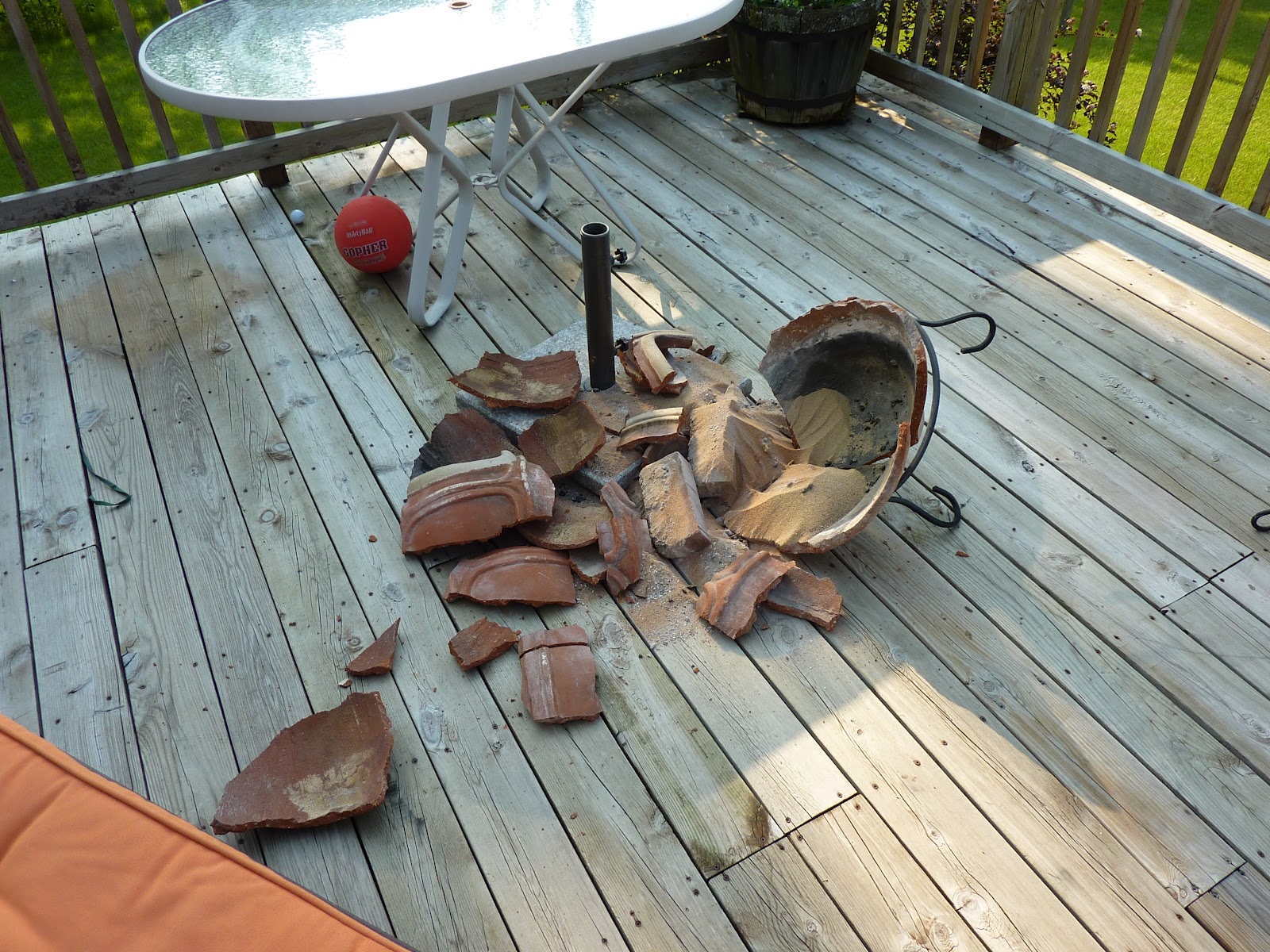
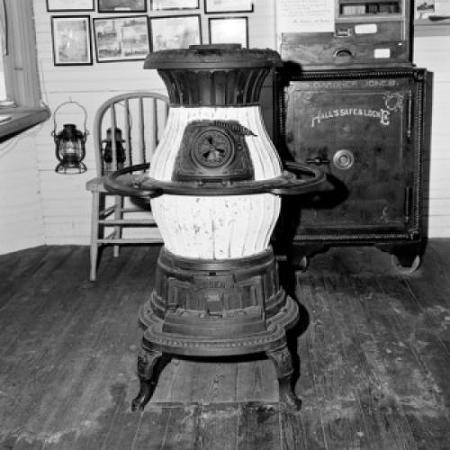
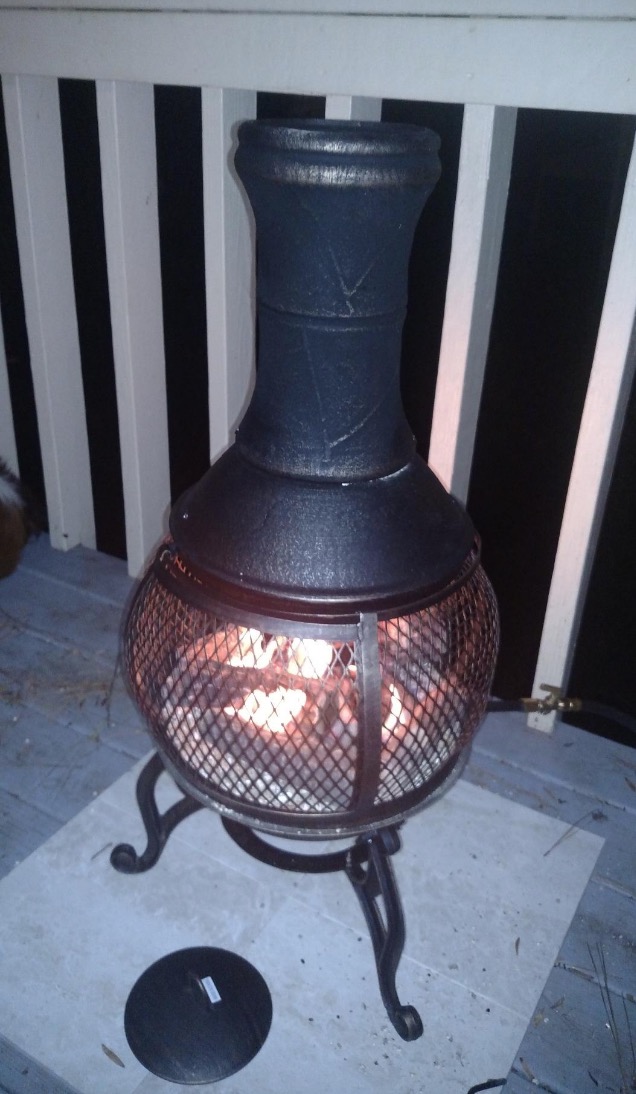
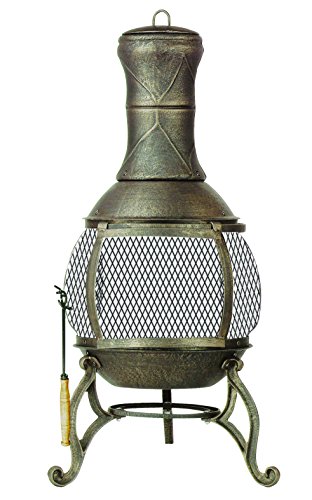
The material choice in a chiminea has long-term consequences that go well beyond initial appearance. Cast iron is the gold standard for heat retention — the dense material absorbs heat slowly and radiates it steadily for an extended period after the fire dies down, which means the warmth continues to reach nearby seating even as the wood burns to embers. Steel chimineas heat up faster but release that heat more quickly, making them better suited for situations where brief, intense warmth is the goal rather than sustained ambient heat. Clay chimineas, while historically common and visually distinctive, carry a significant practical liability: thermal shock from rapid temperature changes or exposure to rain can crack the body, often catastrophically and without warning, as illustrated above with that characteristic post-rain failure mode.
Cast iron's durability advantage is particularly meaningful for buyers in climates with variable weather, where a chiminea may be exposed to rain shortly after a fire. The material's mass also contributes to stability — heavier units are less susceptible to tipping in wind events, a safety consideration that lightweight alternatives cannot match. For buyers exploring the full range of metal options, including cast copper and aluminium variants that offer corrosion resistance advantages, a broader comparison is available in the related review of copper and aluminium cast chimineas.
Size and Heat Output
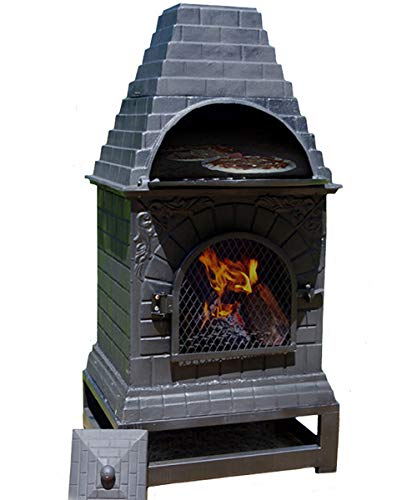
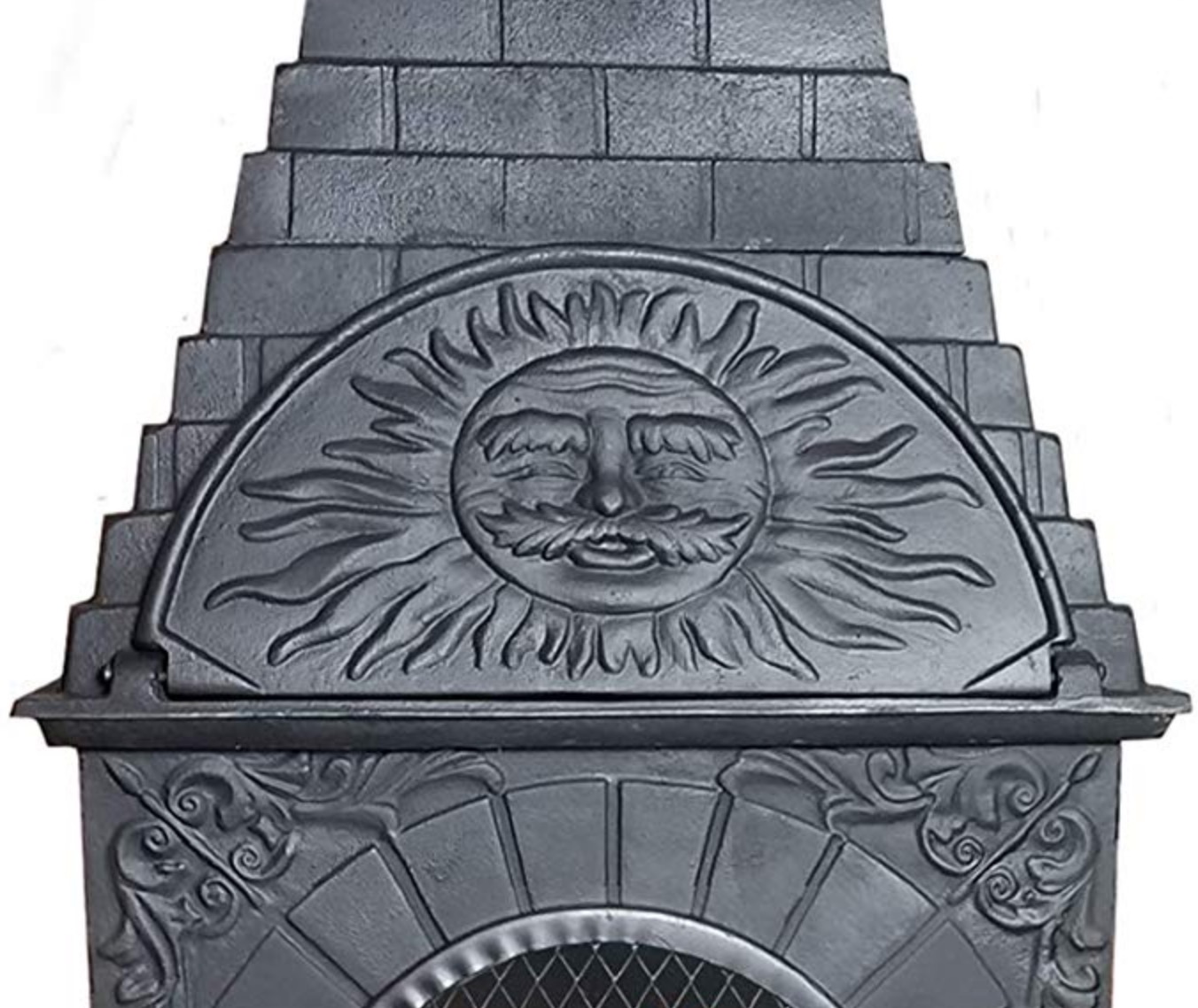
Chiminea sizing should be matched to the intended gathering space. A 24-inch unit like the Trumbeak is appropriate for a two- to four-person setting on a compact patio, while a 50-inch model like the Sunnydaze Santa Fe can realistically warm a six- to eight-person seating arrangement under mild conditions. The firebox volume — not just the external height — determines how much wood can be loaded per burn cycle, which in turn determines how long the fire lasts between additions. Buyers who want low-maintenance evening fires where the wood does not need constant replenishment should prioritize firebox volume over external height alone.
Chimney height directly affects smoke management: taller stacks generate a stronger draft, pulling combustion gases upward more efficiently and reducing the likelihood of smoke drift into the seating area at low wind speeds. Models under 36 inches tall often struggle with smoke in anything other than perfectly calm conditions, which is why the 50- and 56-inch options on this list are generally better choices for regular entertaining use. The firebox opening width also matters — a narrower opening limits the practical size of logs that can be loaded, which affects both convenience and the type of wood burning most efficiently.
Safety Features and Spark Control
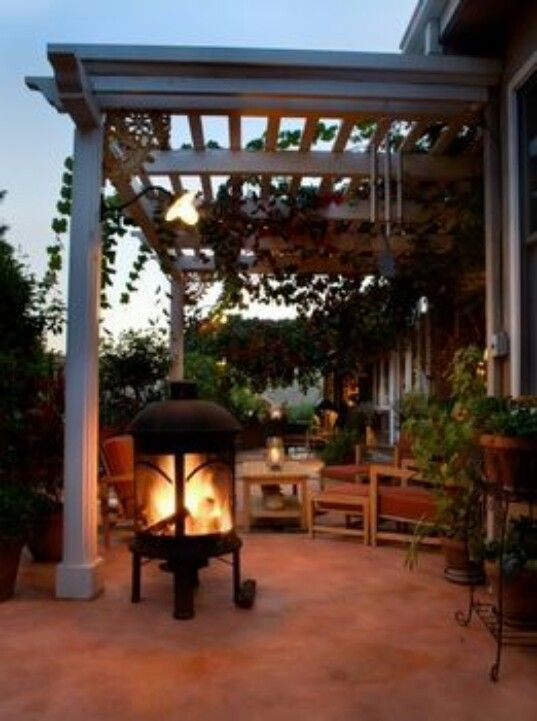
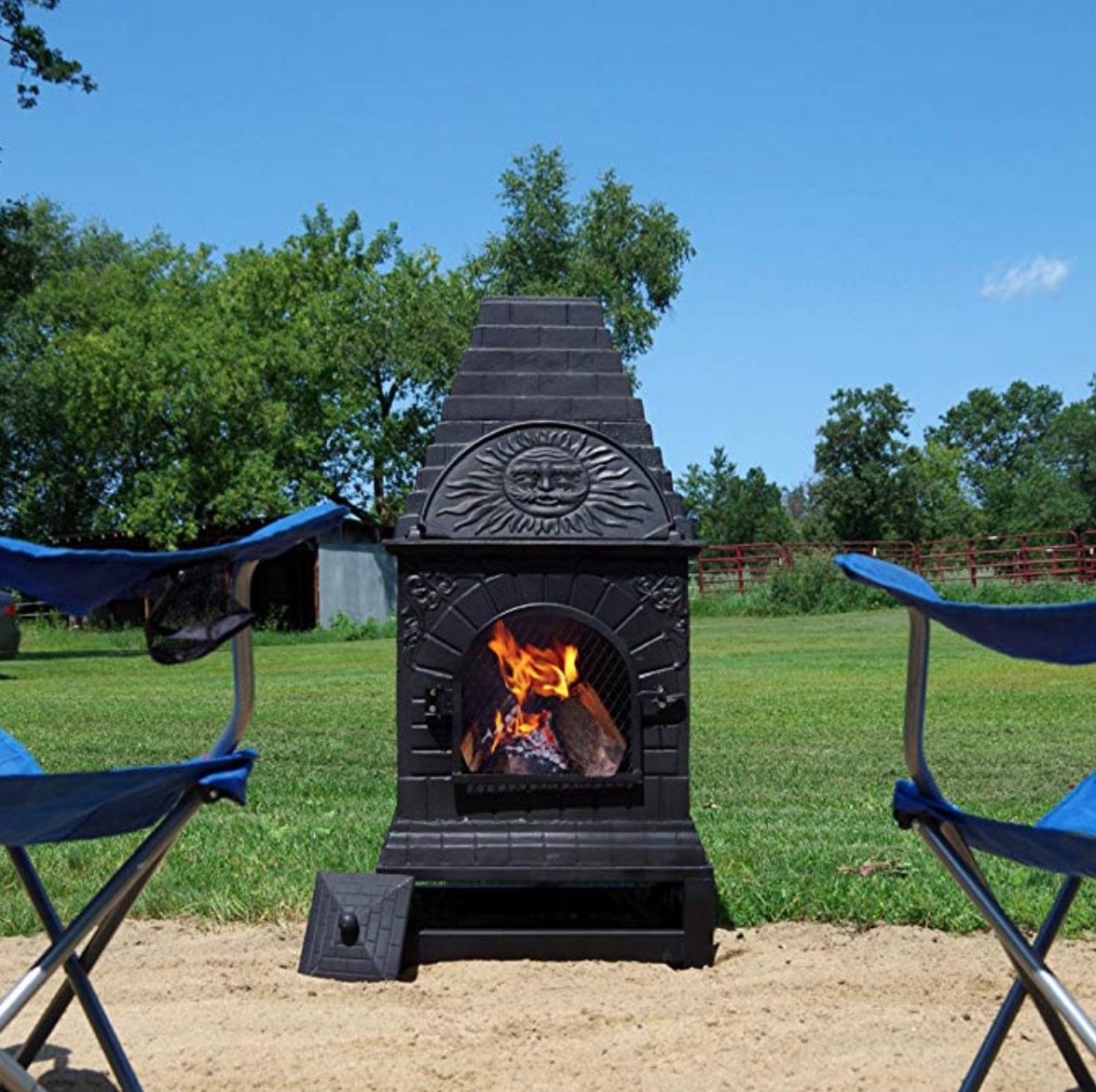
Spark containment is among the most important functional criteria for any outdoor fire feature, and chimineas vary considerably in how thoroughly they address it. A bare open-faced firebox without any spark screen represents the minimum acceptable configuration — functional but requiring attentive fire management and clearance from combustible surfaces. Full 360° mesh enclosures like the SAFSTAR's represent the most comprehensive approach, catching embers from the primary opening and from gaps around the firebox body simultaneously. Hinged door designs with built-in screens, like the Oakland Living Elite, offer a middle path: controlled access with integral spark protection that does not require a separate cover to handle.
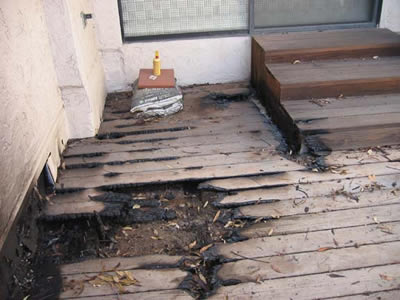
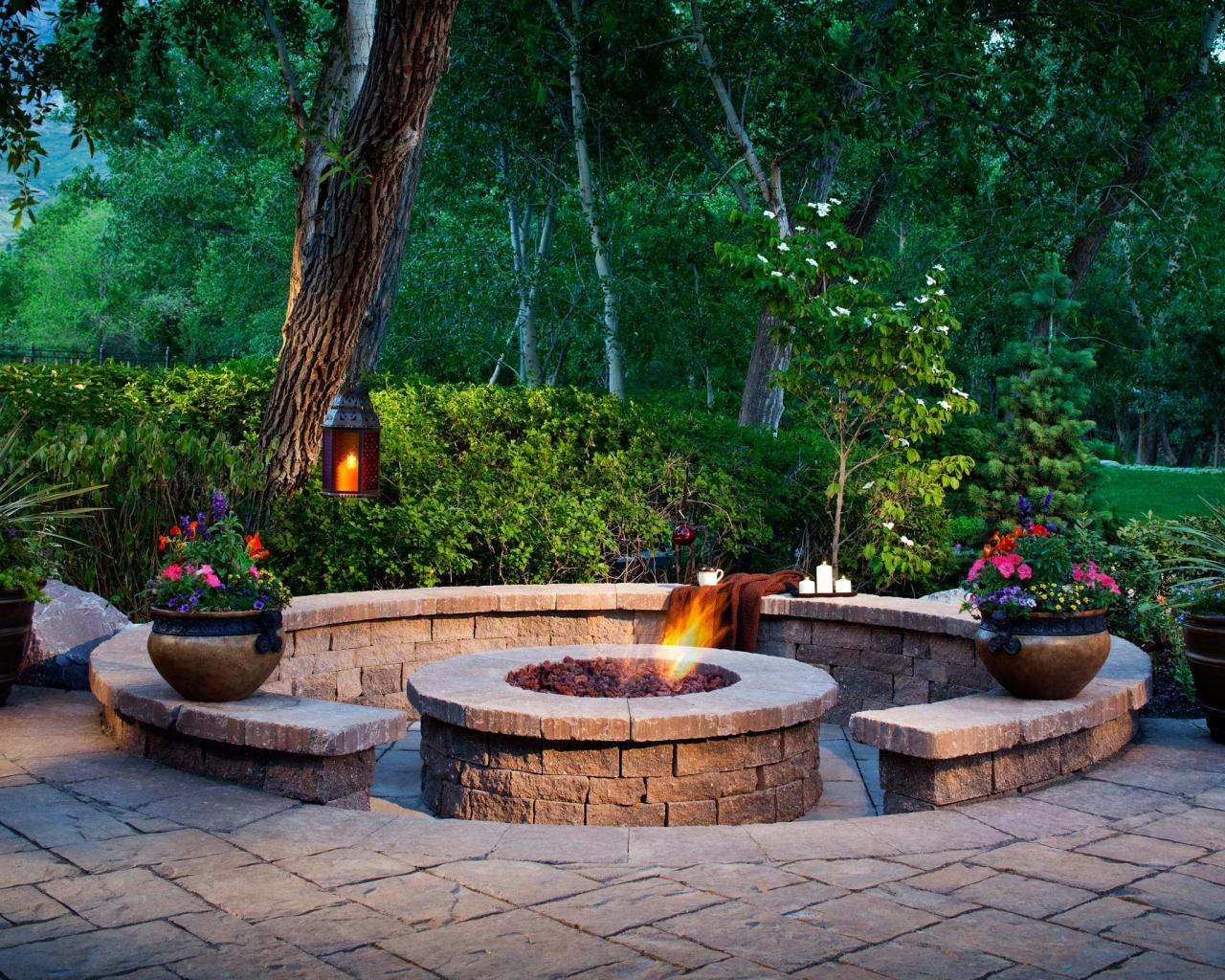
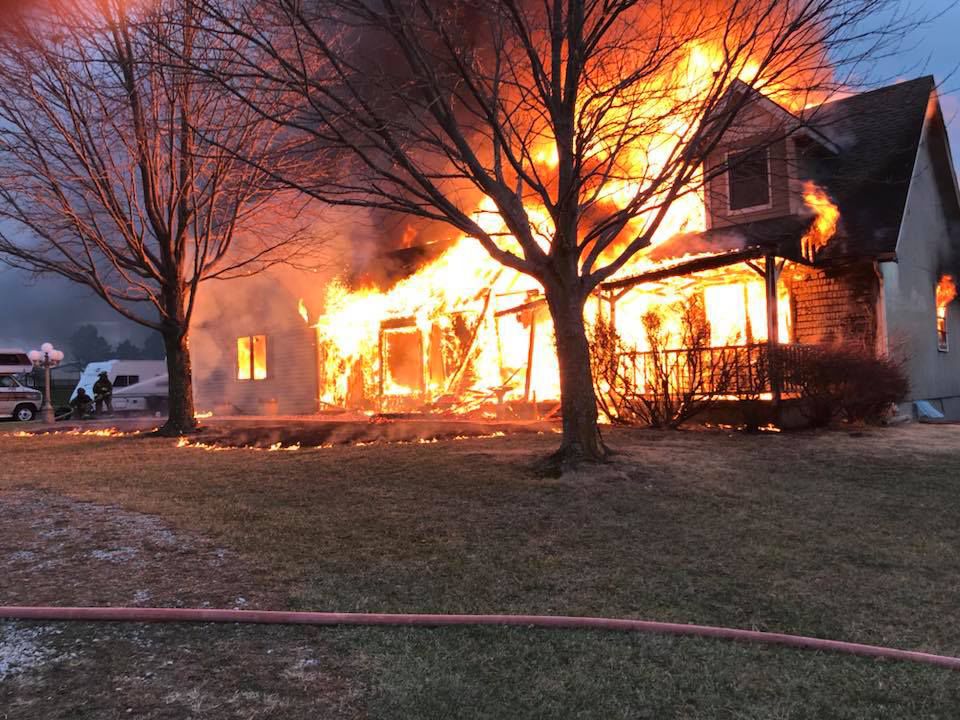
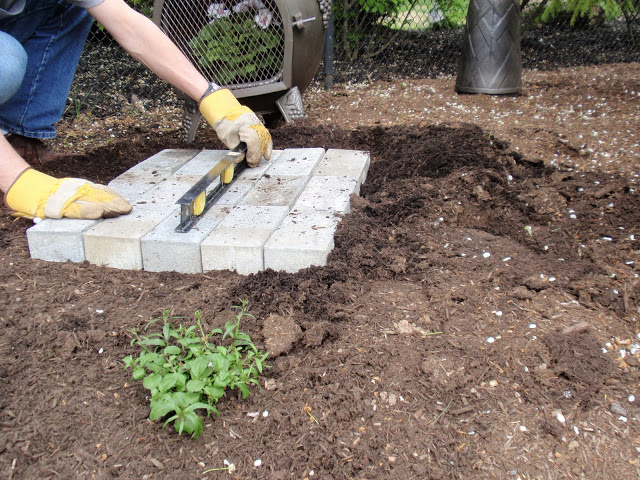
Placement is the other critical safety variable. Chimineas should never be positioned directly on a wood deck without a proper heat shield or fire-safe pad beneath them — even cast iron models transfer significant heat downward through their base legs over an extended burn. The image above illustrates exactly the kind of proximity to structure that should be avoided. Concrete, flagstone, or purpose-made deck protector pads are the appropriate surfaces. Similarly, overhead clearance of at least ten feet from any structure — including pergola beams, tree branches, and awnings — is the minimum safe margin for a chiminea in active use.
Maintenance, Storage, and Longevity
A cast iron chiminea that receives basic routine care will outlast steel and clay alternatives by a considerable margin — units that are cleaned, covered, and occasionally treated with high-temperature paint or oil can remain structurally sound for a decade or more. The primary maintenance tasks are straightforward: remove accumulated ash from the firebox after every few burns to prevent moisture retention at the base, apply a thin coat of vegetable oil or purpose-formulated cast iron seasoning to the exterior before and after the burn season to suppress surface rust, and keep the unit covered during extended periods of non-use with a well-fitted weather cover.
Proper seasoning during the first use is the single most impactful maintenance step for cast iron models specifically: building a small starter fire before the first full burn allows the metal to expand and contract uniformly, and any existing finish coating to cure properly, which reduces the risk of surface cracking or flaking during subsequent high-temperature fires. Buyers who purchase a chiminea in autumn for immediate use should take the time to complete this curing process even if conditions feel rushed. The investment in a quality cover also pays dividends quickly — a model comparison of fitted covers suited to the units reviewed here is available in the best chiminea covers roundup.
Common Questions
Are cast iron chimineas better than clay chimineas?
For most buyers in 2026, cast iron chimineas represent a more practical long-term investment than clay models. Clay chimineas are visually distinctive and have a traditional character, but they are vulnerable to cracking from thermal shock — a single heavy rain shortly after a fire can fracture the body irreparably. Cast iron is substantially more durable, retains heat longer after the fire diminishes, and handles weather exposure without the structural fragility that makes clay ownership frustrating over time. The weight is higher, but that mass also contributes to stability and sustained radiant warmth.
How far should a chiminea be placed from a house or structure?
A minimum clearance of ten feet from any structure — walls, fences, overhanging branches, pergola beams, and roof overhangs — is the commonly recommended safe distance for a chiminea in active use. This accounts for the fact that even well-contained chimineas can throw occasional embers during high-burn periods, and the chimney draft can carry sparks higher than expected in windy conditions. On a deck, a fire-rated protective pad beneath the unit is essential, and the clearance standard still applies horizontally to any adjacent combustible surface.
Can a chiminea be used on a wood deck?
A chiminea can be positioned on a wood deck only if a proper heat-resistant barrier is placed between the unit's base and the deck surface. The legs of a cast iron chiminea transfer significant heat during extended burns, and the risk of char damage or ignition to untreated wood decking is real. Purpose-made deck protector pads, thick flagstone tiles, or composite fire-safe mats are appropriate barriers. It is also worth noting that most deck surfaces sit within five to eight feet of a home's exterior wall, which can make the ten-foot clearance standard difficult to achieve — situating the chiminea on a paved patio surface away from the structure is the safer default.
What wood burns best in a cast iron chiminea?
Seasoned hardwood — oak, hickory, ash, and fruitwoods like apple or cherry — produces the cleanest, most consistent burn in a cast iron chiminea. Hardwoods burn longer and produce more sustained heat than softwoods, and the lower moisture content of properly seasoned wood reduces creosote buildup inside the chimney column. Green or unseasoned wood produces excessive smoke and incomplete combustion, which dirties the unit faster and contributes to the smoke-intrusion problem that frustrates chiminea users most frequently. Avoid treated lumber, composite wood products, and anything with paint or chemical coatings, as these produce toxic combustion gases in a partially enclosed firebox.
Do chimineas need to be covered when not in use?
Covering a cast iron chiminea between uses is one of the most effective ways to extend its service life, particularly in climates with significant rainfall or seasonal humidity. Moisture infiltrating the firebox can accelerate internal rust, promote ash-based corrosion at the base, and, in freeze-thaw climates, cause mechanical stress as trapped water expands and contracts. A fitted weather-resistant cover that secures at the base and accommodates the chimney column keeps moisture out while allowing ventilation to prevent condensation buildup. The one exception is the period immediately after a fire — covers should not be placed on a hot chiminea and should only be applied once the unit has fully cooled.
Can a cast iron chiminea be used for cooking?
Several cast iron chimineas are designed to support cooking, and the Trumbeak model reviewed above was specifically engineered with an adjustable rotating grill rack for that purpose. More traditional chiminea designs can also support simple cooking — a cast iron skillet or Dutch oven placed inside the firebox on a grate can handle slow-cooked foods effectively, and the enclosed environment creates a rudimentary oven effect. The key limitations are fire management precision and access to the firebox, both of which purpose-built cooking chimineas like the Trumbeak address directly. For a deeper exploration of technique, the guide to grilling with cast iron in a fire pit covers methods that translate directly to chiminea cooking.
Buy on Walmart
- SAFSTAR Outdoor Cast Iron Chiminea, Fireplace Wooden Chimine — Walmart Link
- 56.1 Inch Tall Outdoor Fireplace for Patio,Outdoor Wood Burn — Walmart Link
- Oakland Living Elite Chimenea — Walmart Link
- Sunnydaze Santa Fe 50-Inch Chiminea Outdoor Fire Pit - Wood- — Walmart Link
- Trumbeak Outdoor Wood Burning Chiminea Fire Pit,24 Inch Meta — Walmart Link
Buy on eBay
- SAFSTAR Outdoor Cast Iron Chiminea, Fireplace Wooden Chimine — eBay Link
- 56.1 Inch Tall Outdoor Fireplace for Patio,Outdoor Wood Burn — eBay Link
- Oakland Living Elite Chimenea — eBay Link
- Sunnydaze Santa Fe 50-Inch Chiminea Outdoor Fire Pit - Wood- — eBay Link
- Trumbeak Outdoor Wood Burning Chiminea Fire Pit,24 Inch Meta — eBay Link

Key Takeaways
- The SAFSTAR Outdoor Cast Iron Chiminea stands out as the most complete overall package in 2026, combining a 360° spark-retardant mesh, removable ash tray, and high-temperature copper finish in a single well-priced unit.
- The Trumbeak 24-Inch Chiminea is the strongest choice for buyers who want a fire feature that doubles as a functional outdoor grill, thanks to its rotating adjustable rack and multi-door access design.
- For buyers prioritizing maximum portability and ease of repositioning, the 56.1 Inch Tall Outdoor Chiminea delivers full-height smoke management at just 14 pounds — a genuine differentiator in this category.
- Regardless of which model buyers select, pairing the unit with a fitted weather cover and maintaining a safe clearance of ten or more feet from structures are the two highest-impact steps for long-term safe enjoyment.


About Simmy Parker
Simmy Parker holds a Bachelor of Science in Civil Engineering from Sacramento State University and has applied that technical background to outdoor structure design, landscape planning, and backyard improvement projects for over a decade. Her love for the outdoors extends beyond design — she regularly leads nature hikes and has developed working knowledge of native plants, soil conditions, and sustainable landscaping practices across Northern California. At TheBackyardGnome, she covers backyard design guides, landscaping ideas, and eco-friendly outdoor living resources.
You can Get FREE Gifts. Receive Free Backyard Items here. Disable Ad Blocker to get them all now!
Once done, hit anything below