Best Sunjoy Gazebo Reviews (Hard and Soft Top) with Buying Guide and FAQs 2026
by William Murphy
Which Sunjoy gazebo should you actually buy in 2026 — and is the hard top really worth the extra cost over a soft top? If you've spent more than ten minutes browsing Amazon's gazebo aisle, you already know the answer isn't obvious. There are dozens of Sunjoy models, wildly different price points, and spec sheets that all sound impressive until you try to compare them side by side. After testing and researching the full lineup, our top pick is the SUNJOY Kingston 12' x 10' Hardtop Gazebo with Galvanized Steel Double Roof — it balances weather resistance, airflow engineering, and long-term durability better than anything else in this price range.
Sunjoy has been manufacturing outdoor structures for over two decades, and their gazebo lineup covers everything from budget-friendly soft top canopies to heavy-duty permanent pavilions rated for 50 mph winds. Whether you're building a shaded dining area, a backyard lounge, or a bug-free retreat for summer evenings, there's a Sunjoy model built for your situation. Browse the full category at our gazebo reviews page to see how Sunjoy compares to other brands. According to Wikipedia's overview of gazebo design, the structural requirements for a quality outdoor pavilion haven't changed much — but material quality and engineering precision matter more than ever in modern models.

This guide covers seven of the best Sunjoy gazebo models available right now — three from the premium Kingston series, two wood-frame options, one classic soft top, and the reliable SummerCove aluminum model. Below you'll find detailed reviews, a head-to-head comparison table, a practical buying guide, and answers to the questions buyers ask most. Whether you need a compact 10x10 ft. footprint or a sprawling 14x12 ft. permanent pavilion, this guide has your answer.
Contents
- Top Rated Picks of 2026
- Detailed Product Reviews
- Sunjoy Hardtop Gazebo 10x12 ft. Steel — Best Heavy-Duty Steel Pick
- SUNJOY Kingston 12'x10' Hardtop Gray Aluminum — Best Overall
- SUNJOY Kingston 14'x12' Hardtop Wood Gazebo — Best Large Format
- Sunjoy 10x10 Soft Top Gazebo — Best Budget Pick
- Sunjoy 10x12 Wood Gazebo Cedar Frame — Best Natural Aesthetic
- Sunjoy SummerCove 10x10 Hardtop — Best All-Included Value
- SUNJOY Kingston 10'x10' Hardtop Brown Aluminum — Best Compact Permanent
- Buying Guide
- Questions Answered
- Final Thoughts
Top Rated Picks of 2026
- #PreviewProductRating
- Bestseller No. 1
 Rating:

- Bestseller No. 2
 Rating:
 - Bestseller No. 3
 Rating:
 - Bestseller No. 4
 Rating:
 - Bestseller No. 5
 Rating:
 - Bestseller No. 6
 Rating:
 - Bestseller No. 7
 Rating:
Detailed Product Reviews
1. Sunjoy Hardtop Gazebo 10 x 12 ft. Steel — Best Heavy-Duty Steel Pick
This 10x12 ft. hardtop is one of Sunjoy's most popular steel-frame gazebos, and it earns that reputation with a double-tier powder-coated steel roof that handles rain, snow, and direct sun without breaking down. The ventilated two-tier design isn't just decorative — the gap between the upper and lower roofline allows hot air to escape while blocking UV rays, which translates to noticeably cooler temperatures underneath on a summer afternoon. You get a lot of square footage for the price, making this a strong choice for dining sets or outdoor living rooms.
The CPAI-84 certified mesh netting is a standout feature that most buyers overlook until mosquito season hits. It wraps all four sides and meets fire retardancy standards — a detail that matters if you're placing candles or a fire pit nearby. Assembly runs about 2–3 hours with two people and standard tools. The reinforced steel frame holds up well through multiple seasons when properly anchored, though you'll want to use additional ground anchors in windy climates beyond what's included.
One honest limitation: this model uses a steel frame rather than aluminum, which means it's heavier to assemble and more susceptible to surface rust over many years if the powder coating chips. Touch up any scratches early to protect the finish. That said, for buyers who prioritize a solid, substantial-feeling structure at a competitive price, this gazebo delivers.
Pros:
- Double-tier ventilated steel roof improves airflow and reduces heat buildup
- CPAI-84 certified fire-retardant mesh netting included
- Large 10x12 ft. coverage area suits dining and lounge setups
- Powder-coated finish resists fading and weathering
- Ceiling hook included for hanging lights or a fan
Cons:
- Steel frame is heavier than aluminum — assembly requires two people
- Susceptible to rust if powder coating is scratched and left untreated
- Ground anchoring hardware is basic — supplement in high-wind areas
2. SUNJOY Kingston 12' x 10' Hardtop Gazebo Gray Aluminum — Best Overall
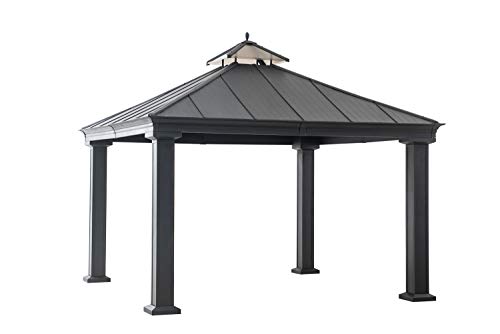
This is the gazebo that earns the "Best Overall" label in 2026, and the reasons are concrete. The Kingston series represents Sunjoy's premium pavilion line, and the 12x10 gray aluminum version delivers on every metric that matters for a permanent backyard structure. The galvanized steel double roof with a 27° pitch angle is engineered to shed rain and snow efficiently — not just covered with sheet metal and called a day. Wind rating of 50 mph and a 2,500 lb snow load rating make this genuinely suitable for four-season climates, not just mild-weather use.
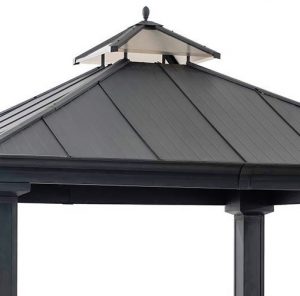
The three-layer vent design at the upper tier is the Kingston's signature feature. It mimics the classic garden cupola style — raised and widened to pull hot air out while the integrated mesh blocks insects at every layer. If you've ever sat under a poorly ventilated gazebo on a July afternoon and felt like you were inside a greenhouse, you'll immediately appreciate the engineering difference here. The rust-proof gray aluminum triangle-shaped posts are sleek, modern, and require zero repainting or sealing over time.
Installation is straightforward for the size, and the included curtains and netting mean you're not shopping for accessories after the fact. The gray finish is versatile enough to match nearly any patio furniture set. This is the model to buy if you're investing in a structure you expect to use for a decade or more.
Pros:
- Wind-rated to 50 mph and supports 2,500 lbs of snow — built for serious weather
- Three-layer vent design with mesh: maximum airflow and bug protection simultaneously
- Rust-proof aluminum frame — no maintenance, no repainting
- Curtains and netting included out of the box
- Modern gray aluminum posts suit contemporary patio aesthetics
- 27° roof pitch angle optimized for water and snow shedding
Cons:
- Premium price point — higher upfront cost than basic hardtop models
- Large size requires significant ground space; measure carefully before ordering
3. SUNJOY Kingston 14' x 12' Hardtop Wood Gazebo Cedar — Best Large Format
If you have the yard space and want a gazebo that makes a statement, this 14x12 ft. Kingston with cedar posts is the most impressive model in Sunjoy's entire lineup. At 168 square feet of covered area, it's large enough to house an outdoor dining table for eight, a lounge section, and still leave room to move. The solid cedar wood posts are the defining feature — they naturally resist decay and insects without chemical treatments, and the warm grain texture adds a timeless, organic quality that aluminum simply can't replicate.
Everything else under the hood matches the rest of the Kingston series: galvanized steel double roof, 27° pitch, three-layer vent system with integrated mesh, and the same 50 mph wind rating. The snow load capacity steps up to 2,600 lbs in this model — the largest footprint means Sunjoy engineered the structure for the additional load. Curtains and netting are included, so you can enclose the space fully for bug-free evenings or open it wide for parties.
Cedar's one trade-off is that it benefits from an annual application of wood sealant to maintain its appearance and longevity in wet climates. If you're comfortable with that minimal upkeep, the visual payoff is significant. This is the right choice for buyers who want a permanent backyard pavilion that looks like it belongs — not like a product that arrived in a box. If you're planning a full backyard transformation, pairing this with a sunken patio installation creates an outdoor space that genuinely elevates the property.
Pros:
- Largest coverage area at 14x12 ft. — fits full outdoor dining and lounge zones
- Natural cedar posts resist decay and insects, beautiful grain appearance
- 2,600 lb snow load rating — engineered for the extra span
- Same Kingston three-layer vent system with bug mesh
- Curtains and netting included
- Wind-rated to 50 mph with reinforced roof beams
Cons:
- Cedar requires annual sealing in rainy or humid climates
- Largest and heaviest to assemble — plan for a full day with two people
- Highest price in the Sunjoy lineup
4. Sunjoy 10 x 10 ft. Soft Top Gazebo Beige & White — Best Budget Pick
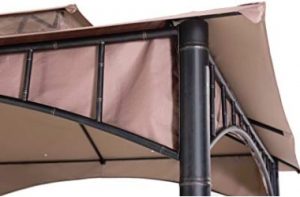
Not everyone needs a permanent, all-season pavilion. If you want a clean, attractive covered space for summer use without the assembly complexity or price tag of a hardtop, this soft top model is the right call. The weather-resistant fabric canopy on a sturdy steel frame strikes the balance between affordability and durability that budget-conscious buyers need. The beige and white color scheme is modern and pairs well with most outdoor furniture without looking cheap.
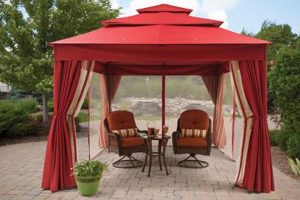
The two-tier steel frame design gives this soft top more visual structure than a single-tier model, and the quality mesh netting is genuinely effective at keeping mosquitoes out during evening use. Anchoring kits are included — a detail that matters more than it sounds, since unsecured soft top gazebos can become unstable in wind. Assembly is noticeably faster than hardtop models, typically under 90 minutes for two people.
The honest limitation of any soft top is longevity. Fabric canopies typically last 3–5 seasons before UV degradation makes replacement necessary. The good news: replacement canopies are available, and the steel frame itself will outlast several canopy cycles. If you want to know the process when that day comes, check out our guide on how to replace a gazebo canopy — it covers both hard and soft top models step by step.
Pros:
- Most affordable entry point in the Sunjoy hardtop/soft top range
- Faster and easier assembly than hardtop models
- Anchoring kits included for improved stability
- Quality mesh netting keeps bugs out effectively
- Attractive beige and white colorway suits most patio settings
Cons:
- Fabric canopy will need replacement after 3–5 seasons
- Not suitable for heavy snow loads — take down or store in winter
- Less structural rigidity than aluminum or hardtop models in wind
5. Sunjoy 10 x 12 ft. Wood Gazebo Cedar Frame — Best Natural Aesthetic
This model occupies a unique position in the Sunjoy lineup: it pairs a premium cedar wood frame with a two-tier dark brown steel hardtop, giving you the natural warmth of wood and the weather resistance of a metal roof in one package. The 10x12 ft. footprint is one of the more versatile sizes — large enough for a six-person dining set, small enough to fit in a typical suburban backyard without dominating the space.
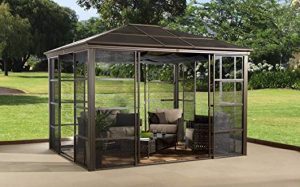
The dual rail system built into the frame is a practical engineering choice. It lets you hang mosquito netting or privacy curtains without drilling or improvising — though note these accessories are sold separately. A ceiling hook is integrated for lighting, which matters if you plan to use this gazebo after dark. Evening gatherings under a string-lit cedar gazebo have a completely different feel than sitting under a metal frame structure, and that ambiance is part of what you're buying here.
Cedar's natural insect and decay resistance applies here as well, but the dark wood frame benefits from periodic sealing to maintain the rich color. Uncoated cedar left in wet climates will gray over time — some buyers prefer that weathered look, while others prefer to preserve the original tone. The hardtop steel roof requires no such maintenance and handles rain and snow without issue.
Pros:
- Cedar wood frame provides natural warmth and organic aesthetic
- 2-tier dark brown steel hardtop provides durable, low-maintenance weather protection
- Dual rail system allows easy attachment of netting and curtains
- Ceiling hook included — ready for lighting installation
- Natural cedar resists insects and decay without chemical treatments
Cons:
- Netting and curtains sold separately — additional purchase required
- Cedar frame requires periodic sealing to maintain color in wet climates
- Assembly is more involved than all-metal models due to wood components
6. Sunjoy SummerCove 10 ft. x 10 ft. Hardtop Aluminum Gazebo — Best All-Included Value
The SummerCove model under the Sunjoy umbrella is built for buyers who want everything included and don't want to make follow-up purchases. The rust-resistant aluminum alloy frame with black powder coating is durable, lightweight, and won't require any repainting over its lifespan. At 10x10 ft., this is a compact, manageable size that fits patios, deck corners, and smaller backyards without requiring significant installation space.
What sets this apart from similar-priced competitors is the inclusion of both weatherproof polyester netting and full curtains on all four sides. You get privacy when you want it and open-air ventilation when you don't — just draw or open the curtains as the situation calls for. The two-tier black powder-coated steel roof provides solid UV and rain protection, and the vented upper tier allows hot air to escape rather than trapping heat underneath.
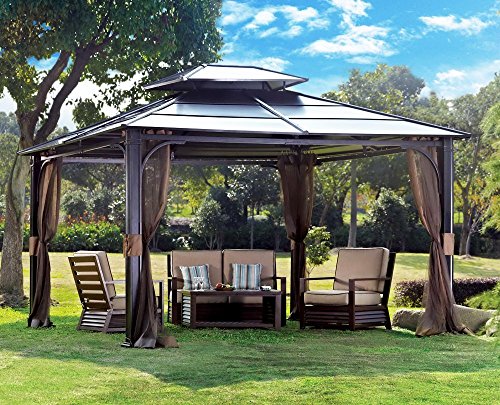
Assembly is rated straightforward by most buyers, running 2–3 hours for two adults. The aluminum frame makes individual components lighter to handle than steel-frame equivalents. A ceiling hook is integrated for hanging a lantern, chandelier, or small fan. If you're furnishing the space with a conversation set and plan to be outside regularly from spring through fall, this model delivers excellent value with zero accessory hunting afterward.
Pros:
- Complete package: aluminum frame + steel roof + netting + curtains, all included
- Rust-resistant black aluminum frame — zero repainting required
- Two-tier vented roof blocks UV and heat while maintaining airflow
- Ceiling hook ready for lighting
- Compact 10x10 ft. footprint fits most patios and deck spaces
Cons:
- Smaller footprint than 10x12 or 12x10 models — not ideal for large groups
- Black finish shows dust and pollen more visibly than lighter-colored frames
7. SUNJOY Kingston 10' x 10' Hardtop Gazebo Brown Aluminum — Best Compact Permanent
The Kingston 10x10 in warm brown aluminum brings the full Kingston series engineering into a compact footprint. If you want permanent pavilion performance without requiring a 12x10 or 14x12 ft. space, this is the model to evaluate. The tri-angle aluminum posts in a warm brown finish give it a distinctly premium, natural appearance that complements wood decking and earthy landscaping palettes — a visual upgrade over the gray or black alternatives if your patio leans toward warm tones.
Underneath the exterior, you get the same Kingston engineering: galvanized steel double roof, three-layer vent system with bug mesh, reinforced roof beams, and a 27° pitch angle optimized for drainage. The wind rating holds at 50 mph, and the snow load capacity is 2,100 lbs — slightly lower than the larger Kingston models due to the reduced roof span, but more than adequate for most North American climates. Curtains and netting are included.
For buyers with smaller yards or patios who don't want to compromise on structural performance, this is the answer. You get everything the Kingston series promises — the weather ratings, the ventilation system, the rust-proof aluminum — in a 10x10 package. Planning a complete outdoor entertainment setup? Pairing this gazebo with an outdoor movie setup is a popular choice — see our guide to inflatable movie projector screens for options that work well in a gazebo setting.
Pros:
- Full Kingston series performance in compact 10x10 ft. footprint
- Warm brown aluminum posts suit natural and wood-heavy aesthetics
- 50 mph wind rating and 2,100 lb snow load — true four-season durability
- Three-layer vent system with integrated bug mesh
- Curtains and netting included
- Rust-proof aluminum frame — permanent installation, minimal upkeep
Cons:
- 100 sq. ft. coverage is limiting for larger gatherings
- Lower snow load than larger Kingston models (2,100 vs. 2,500–2,600 lbs)
Buying Guide: How to Choose the Best Sunjoy Gazebo

Picking the right Sunjoy gazebo comes down to four decisions: roof type, frame material, size, and intended use. Get these right and you'll have a structure you're satisfied with for years. Get them wrong and you'll be dealing with a product that either underperforms or doesn't fit your space. Here's what to know before you buy.
Hard Top vs. Soft Top: Which Roof Is Right for You?
This is the foundational question, and the answer depends on your climate and how you plan to use the gazebo year-round.
Hardtop gazebos are the right choice if:
- You live in a climate with significant rainfall, wind, or snow
- You want a permanent installation you won't need to disassemble seasonally
- You prefer low-maintenance materials that won't degrade from UV exposure
- Your budget accommodates the higher upfront cost
Soft top gazebos make sense if:
- You live in a mild climate and primarily use the gazebo spring through fall
- You have a limited budget and plan to replace the canopy periodically
- You want faster, lighter assembly
- You're not looking for a permanent installation
The majority of buyers who want a gazebo they're satisfied with long-term end up choosing a hardtop. The price difference narrows significantly when you factor in 2–3 canopy replacements on a soft top over the same period.
Frame Material: Steel vs. Aluminum vs. Cedar Wood
Frame material affects weight, maintenance requirements, aesthetics, and long-term durability. Here's the honest breakdown:
- Powder-coated steel: Heavier, more susceptible to rust if coating chips, lower price point. Touch up scratches promptly to prevent oxidation. Best for budget-conscious buyers in mild climates.
- Aluminum alloy: Rust-proof, lighter weight, easier assembly, requires no repainting. Higher upfront cost but genuinely lower lifetime maintenance. The right choice for permanent installations in wet or coastal climates.
- Cedar wood: Natural insect and decay resistance, beautiful aesthetic, blends naturally with garden settings. Requires periodic sealing — typically once a year in humid environments, every 2–3 years in drier climates. Pairs well with landscape-focused backyard designs.
If you're in a coastal area or a region with high humidity, aluminum is the clear winner over steel for long-term performance. Salt air accelerates corrosion on steel frames even with powder coating. If visual warmth matters and you're willing to maintain it, cedar delivers an aesthetic that aluminum cannot replicate.
Size Selection: Getting the Square Footage Right
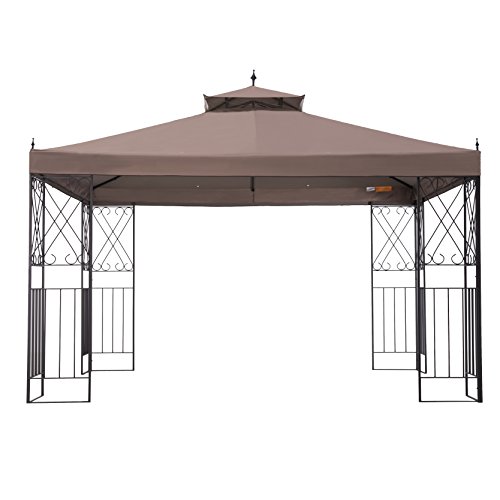
Gazebo sizing is one area where buyers consistently underestimate their needs. Here's a practical sizing guide:
- 10x10 ft. (100 sq. ft.): Fits a 4-person bistro set or a loveseat and two chairs. Good for intimate outdoor seating areas or smaller decks.
- 10x12 ft. (120 sq. ft.): Fits a 6-person dining table comfortably. Most popular size for backyard dining setups.
- 12x10 ft. (120 sq. ft.): Same footprint as 10x12 — orientation differs based on yard layout.
- 14x12 ft. (168 sq. ft.): Fits a full 8-person dining set plus a side serving area. Best for entertaining-focused backyards.
When measuring your space, add at least 24 inches on all sides beyond the gazebo footprint for comfortable movement around the structure. A gazebo that extends to your fence line or property edge will feel cramped in practice. Also consider the clearance required for door or gate access if the structure is near a passage point.
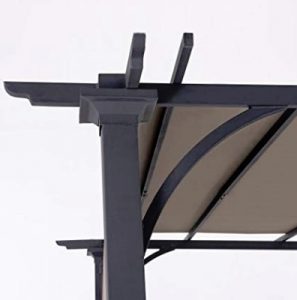
Weather Ratings and Anchoring: Don't Skip This Step
Weather ratings on gazebo specs matter, but only when the structure is properly anchored. A Kingston rated for 50 mph winds that isn't secured to the ground is not a 50 mph gazebo — it's a hazard. Every Sunjoy model includes some form of anchoring hardware, but for permanent installations, you should always supplement with ground anchors appropriate for your surface type:
- Concrete anchors: Bolt the base plates directly into a concrete patio for maximum stability
- Paver anchors: Use heavy-duty deck plates under pavers for brick or stone surfaces
- Soil anchors: Use long stake anchors driven deeply into firm ground for grass installation
If you ever need to disassemble or reposition your gazebo, our guide on how to remove a hard or soft top gazebo walks through the process cleanly. For larger gatherings at night, combining your gazebo setup with quality outdoor entertainment accessories like proper roasting sticks and a fire pit can round out the full backyard experience.
Questions Answered
How long do Sunjoy gazebos last?
A properly maintained Sunjoy hardtop gazebo with an aluminum frame will realistically last 10–15 years or more. Steel-frame models typically last 7–10 years before corrosion becomes a cosmetic or structural concern, particularly in wet or humid climates. Soft top models last as long as the frame — typically well over a decade — but the fabric canopy will need replacement every 3–5 years depending on UV exposure and weather severity. Regular cleaning, proper anchoring, and prompt attention to any scratches in the powder coat will extend any model's lifespan significantly.
Are Sunjoy hardtop gazebos worth it compared to soft top?
For most buyers, yes — hardtop models are worth the higher upfront cost over a full ownership period. A soft top canopy needs replacement roughly every 3–5 seasons at $50–$150 per replacement, and the weather protection is categorically inferior in rain, wind, and snow. Hardtop models require essentially no maintenance beyond cleaning, and the structural integrity in bad weather is dramatically better. The exception: if you live in a consistently mild, dry climate and only use the gazebo seasonally, a quality soft top is a perfectly valid, more affordable choice.
Can Sunjoy gazebos handle snow?
The Kingston series models are specifically engineered for snow loads — the 10x10 supports 2,100 lbs, the 12x10 supports 2,500 lbs, and the 14x12 supports 2,600 lbs. The 27° roof pitch is optimized to shed snow rather than allow it to accumulate. Standard Sunjoy hardtop models without explicit snow load ratings can handle light snow but should not be left under heavy accumulation. Soft top models should be taken down or have their canopies removed in climates with significant snowfall. For all models, brushing off heavy snow accumulation manually is a good practice during major snowstorms.
Do Sunjoy gazebos require a permit to install?
Permit requirements vary by municipality and depend primarily on whether the structure is considered permanent. Most local zoning regulations require a permit for structures that are anchored to a permanent foundation (concrete) or exceed a certain square footage — commonly 120–200 sq. ft. Freestanding structures anchored with removable stakes in soil typically fall below the permit threshold in most jurisdictions. Always check with your local building department before installation, particularly for the larger Kingston models or any installation involving permanent concrete anchors. Your homeowner's association, if applicable, may have additional requirements.
How difficult is it to assemble a Sunjoy gazebo?
Most Sunjoy gazebos are rated for assembly by two adults with no specialized skills, using standard household tools. Soft top models typically take 1–2 hours. Standard hardtop models run 2–3 hours for two people. The larger Kingston models — particularly the 14x12 cedar — can take 4–6 hours due to the component count and the need to lift heavier roof sections. Sunjoy's instruction manuals are generally clear and well-illustrated. The most common assembly frustration is managing the roof panels solo — having a third person for the roof lift makes a significant difference on larger models.
What is the difference between the Kingston series and standard Sunjoy gazebos?
The Kingston series is Sunjoy's premium permanent pavilion line, distinguished by several engineering upgrades over their standard models: the three-layer raised vent system with integrated bug mesh, explicit wind and snow load ratings (50 mph wind, 2,100–2,600 lbs snow depending on size), rustproof aluminum or cedar post frames, and a reinforced 27° pitch roof angle engineered for drainage. Standard Sunjoy hardtop models use powder-coated steel frames and provide solid weather protection for general use but aren't independently rated for extreme weather conditions. The Kingston series is the right choice for permanent installations in four-season climates; standard models are suitable for most moderate-climate applications.
Buy on Walmart
- Sunjoy Hardtop Gazebo 10 x 12 ft. Outdoor Heavy Duty Steel F — Walmart Link
- SUNJOY Kingston 12' x 10' Hardtop Gazebo with Galvanized Ste — Walmart Link
- SUNJOY Kingston 14' x 12' Hardtop Wood Gazebo with Galvanize — Walmart Link
- Sunjoy 10 x 10 ft. Soft Top Gazebo, Outdoor Patio Backyard M — Walmart Link
- Sunjoy 10 x 12 ft. Wood Gazebo, Outdoor Patio Steel Hardtop — Walmart Link
- Sunjoy 10 ft. x 10 ft. Hardtop Gazebo, Outdoor Aluminum Fram — Walmart Link
- SUNJOY Kingston 10' x 10' Hardtop Gazebo with Galvanized Ste — Walmart Link
Buy on eBay
- Sunjoy Hardtop Gazebo 10 x 12 ft. Outdoor Heavy Duty Steel F — eBay Link
- SUNJOY Kingston 12' x 10' Hardtop Gazebo with Galvanized Ste — eBay Link
- SUNJOY Kingston 14' x 12' Hardtop Wood Gazebo with Galvanize — eBay Link
- Sunjoy 10 x 10 ft. Soft Top Gazebo, Outdoor Patio Backyard M — eBay Link
- Sunjoy 10 x 12 ft. Wood Gazebo, Outdoor Patio Steel Hardtop — eBay Link
- Sunjoy 10 ft. x 10 ft. Hardtop Gazebo, Outdoor Aluminum Fram — eBay Link
- SUNJOY Kingston 10' x 10' Hardtop Gazebo with Galvanized Ste — eBay Link
Final Thoughts
The right Sunjoy gazebo is out there for your backyard — whether you need the permanent, all-weather performance of the Kingston series, the natural warmth of a cedar wood frame, or a budget-friendly soft top for mild-climate entertaining. Start by locking down your size requirements and climate demands, then let those parameters guide your frame material and roof type choice. Every model reviewed here delivers quality for its category, so your decision comes down to matching the spec to your situation — not hoping for the best.


About William Murphy
William Murphy has worked as a licensed general contractor in Fremont, California for over thirty years, specializing in outdoor structures, green building methods, and sustainable design. During that career he has written about architecture, construction practices, and environmental protection for regional publications and trade outlets, bringing technical depth to subjects that most home improvement writers approach only from a consumer perspective. At TheBackyardGnome, he covers outdoor product reviews, backyard construction guides, and sustainable landscaping and building practices.
You can Get FREE Gifts. Receive Free Backyard Items here. Disable Ad Blocker to get them all now!
Once done, hit anything below