Best Hardtop Gazebo: Reviews, Buying Guide and FAQs 2026
by William Murphy
You've been scrolling through backyard inspiration photos for weeks, and every setup you love has one thing in common: a solid, permanent structure overhead that looks like it belongs there. A pop-up tent just isn't going to cut it anymore. You want something that handles rain, snow, and blistering summer heat without buckling — something you can actually furnish and enjoy year after year without worrying whether it'll survive the next storm.
That's exactly what a hardtop gazebo delivers. Unlike soft-top canvas canopies (which we cover in our Best Canvas Canopy Gazebos of 2026 guide), hardtop models use galvanized steel or polycarbonate roofing panels that hold up through real seasons. The aluminum and steel frames are engineered to stay standing through high winds and heavy snow loads that would collapse a fabric shelter in minutes. You're investing in a permanent outdoor room, not a seasonal accessory.
In this guide, we've reviewed the seven best hardtop gazebos available in 2026. Whether you're outfitting a compact patio or a sprawling backyard, there's a strong pick here for your situation. We've compared size, materials, weather resistance, and what's included out of the box so you can make a confident choice. If you want a broader look at outdoor structure options, our Best Pergola for Your Backyard guide is worth reading alongside this one.
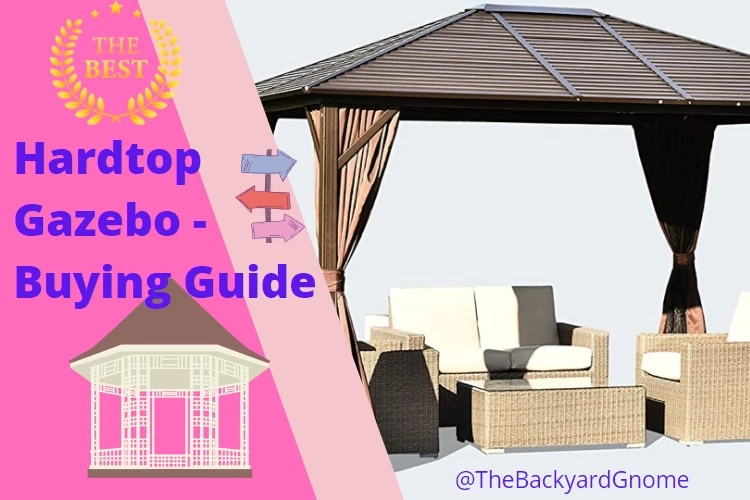
Contents
- Editor's Recommendation: Top Picks of 2026
- Product Reviews
- Kozyard Alexander 10'x12' — Best Overall
- YITAHOME 10x12 ft — Best Value
- Backyard Discovery Barrington 14'x12' — Best Cedar/Premium
- LAUSAINT HOME 12x16ft — Best Large Size
- PURPLE LEAF 10'x12' — Best for Simplicity
- EAGLE PEAK 12x10 — Best Dark Brown Aesthetic
- Kozyard Edward 10'x12' Polycarbonate — Best for Natural Light
- How to Pick the Best Hardtop Gazebo
- FAQs
- Key Takeaways
Editor's Recommendation: Top Picks of 2026
- #PreviewProductRating
- Bestseller No. 1
 Rating:

- Bestseller No. 2
 Rating:
 - Bestseller No. 3
 Rating:
 - Bestseller No. 4
 Rating:
 - Bestseller No. 5
 Rating:
 - Bestseller No. 6
 Rating:
 - Bestseller No. 7
 Rating:
Product Reviews
1. Kozyard Alexander 10'x12' Hardtop Gazebo — Best Overall
The Kozyard Alexander earns the top spot in 2026 because it nails the combination that matters most: structural strength you can feel and a finished look that doesn't disappear into the yard. The frame is built from triangular aluminum poles measuring 4.7" x 4.7" — noticeably chunkier than what you'll find on budget models — and the reinforced beams run 5" x 4". When properly anchored into concrete or pavers, this structure is rated to handle a 2,500-pound snow load and wind speeds up to 60 MPH. That kind of engineering gives you real peace of mind if you live somewhere that gets actual winters.
The galvanized steel double roof blocks UV rays effectively and sheds rain cleanly without pooling. The 10' x 12' footprint is the sweet spot for most backyards — roomy enough for a six-person dining set with space to move around, but not so large that it overwhelms a standard patio. Kozyard includes gray polyester curtains and black mesh netting, both running on a dual-track, double-sided zipper system. You can zip up for privacy and rain protection or roll everything back for a completely open-air feel. The curtains come out looking crisp, not like an afterthought tacked on at the factory.
Assembly takes a couple of hours with two people, and the instructions are clear enough that you won't be second-guessing every bolt. This is a gazebo you buy once and keep for a decade.
Pros:
- Exceptionally strong triangular aluminum frame rated for 2,500-lb snow load
- Dual-track curtain and mesh system offers real privacy and weather protection
- Clean, modern gray finish suits most home exteriors
- Reinforced corner design adds long-term stability
Cons:
- Heavier than lighter aluminum-only builds — you'll want two people minimum for assembly
- Curtains are gray only, no color options
2. YITAHOME 10x12 ft Hardtop Gazebo — Best Value
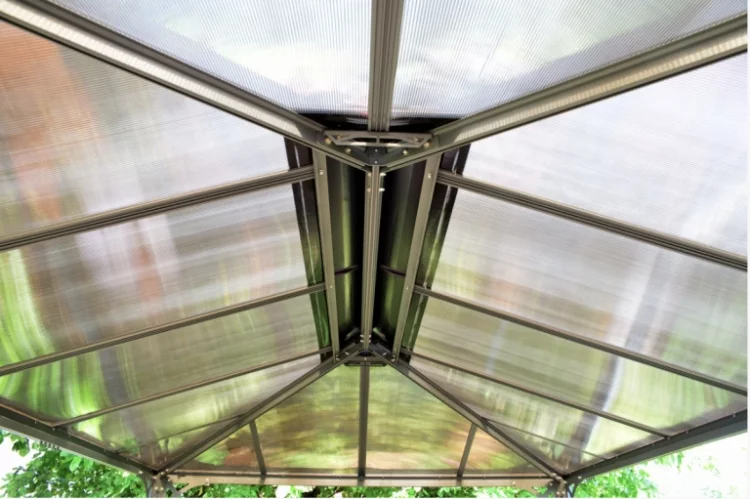
If your budget is tight but you're not willing to compromise on a real metal roof, the YITAHOME is the pick. It delivers a double-tiered galvanized iron roof — the same weather-proof material you see on higher-priced models — at a price point that's genuinely hard to beat. The two-tier vented design isn't just aesthetic. Hot air rises and escapes through the ridge gap, which keeps the space measurably cooler on sunny afternoons than a sealed single-layer roof would. There are also two hooks built into the ridge for hanging string lights or a ceiling fan, which is a detail you'd expect to pay more for.
The black powder-coated aluminum frame is weather-resistant, corrosion-resistant, and holds up well against UV fading. Four reinforced corner brackets add rigidity to the overall structure, and the base feet include holes for ground stakes — important if you're setting this up on a lawn or gravel surface rather than a poured slab. The included sidewalls mirror what you get on pricier options: double-layer construction with brown polyester cloth on the outside and black mesh on the inside, running on a full double-track zipper system. Privacy and ventilation work independently, which matters when you want airflow without being visible to your neighbors.
The main trade-off is that the frame material is slightly lighter gauge than the Kozyard Alexander. It's still solid and passes what you'd need for typical residential use, but if you live in a region with severe winters, you may want to anchor it more aggressively or consider stepping up to a heavier build.
Pros:
- Double-tiered vented roof promotes airflow and reduces heat buildup
- Roof hooks included for lights or a ceiling fan
- Strong value for the price point
- Dual-track double-layer sidewalls included
Cons:
- Frame is lighter gauge than premium options — more aggressive anchoring recommended in high-wind areas
- Brown color scheme is less versatile than gray or black
3. Backyard Discovery Barrington 14'x12' Cedar Gazebo — Best Premium Pick
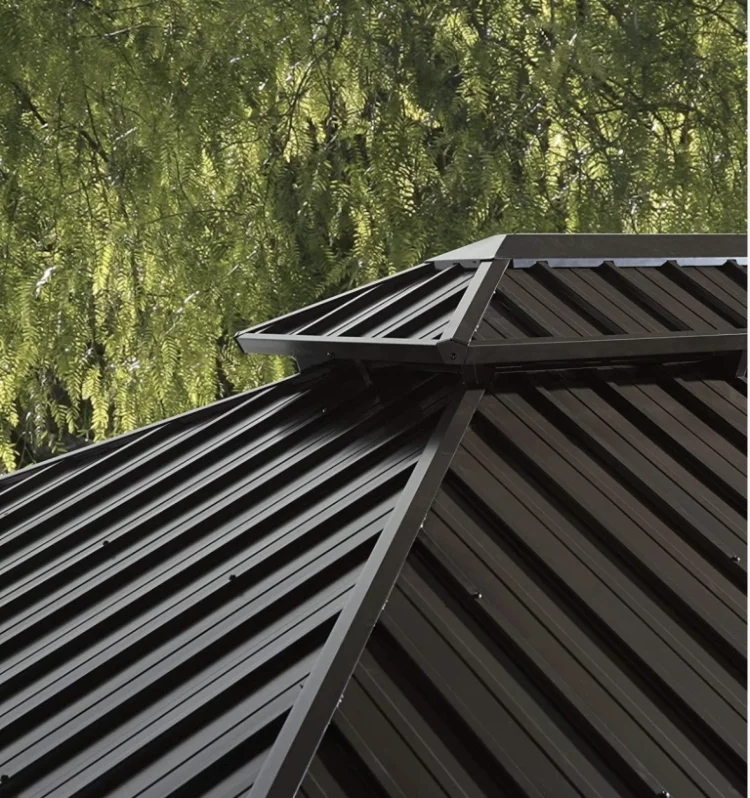
The Backyard Discovery Barrington is in a different category from the other picks on this list — and that's by design. If you want a gazebo that looks like a real architectural feature rather than an outdoor product, this is your answer. The cedar wood frame paired with a galvanized steel hip roof creates a look that holds up aesthetically in the same way it holds up structurally. Cedar is naturally rot-resistant and handles moisture without warping or splitting the way softer woods do, so this is genuinely a set-it-and-forget-it structure when properly sealed and cared for.
The engineering specs are the most impressive on this list. Backyard Discovery's Pro-Tect testing validates that the Barrington withstands up to 8,800 pounds of snow load (equivalent to roughly 30 inches of packed snow) and wind speeds up to 100 MPH — figures that leave every other pick on this page far behind. The 14' x 12' footprint gives you significantly more square footage than the 10x12 models, which makes a real difference once you add furniture, a grill, and guests. The company backs it all with a 5-year warranty, which is the strongest coverage available at this tier.
The standout feature is the patented PowerPort system: three electrical outlets and three USB ports that mount to any post on the structure. You get power for string lights, a speaker, a fan, or a blender without running an extension cord across the yard. It's the kind of convenience that sounds minor until you're actually setting up for a party. The price reflects the premium materials and features — but if you're building a space you intend to keep for ten or fifteen years, the Barrington makes a strong case for itself.
Pros:
- Industry-leading weather resistance: 8,800-lb snow load and 100 MPH wind rating
- Patented PowerPort with 3 outlets and 3 USB ports built in
- Cedar frame is naturally rot-resistant and beautiful
- 5-year warranty — best coverage in this roundup
Cons:
- Significantly more expensive than other picks
- Cedar requires periodic sealing to maintain long-term appearance
- Heavier and more involved assembly than aluminum-only models
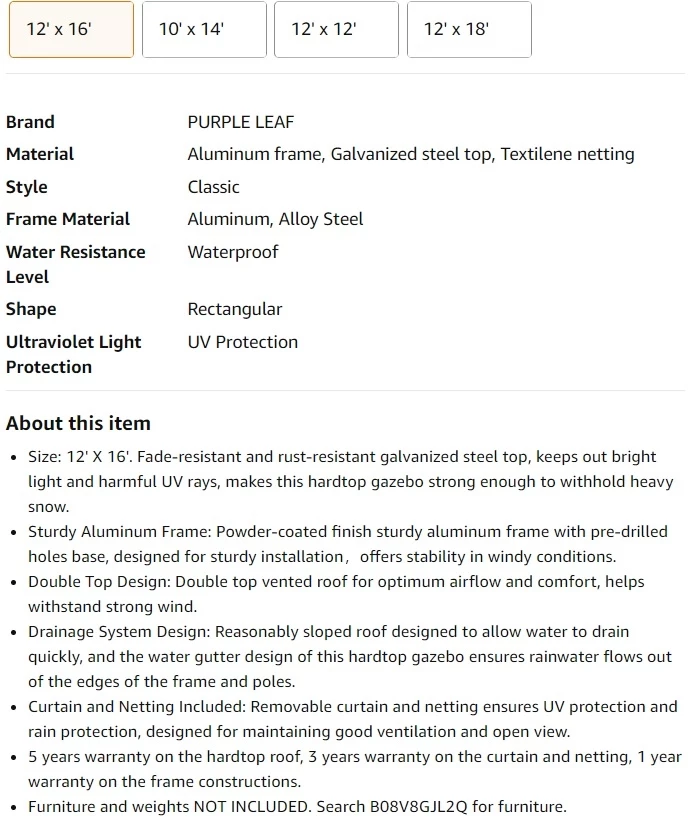
4. LAUSAINT HOME 12x16ft Hardtop Gazebo — Best for Large Outdoor Spaces
At 12x16 feet, the LAUSAINT HOME is the largest footprint in this roundup — and if you've got the yard for it, the extra space transforms the experience. You can fit a full outdoor dining set, a seating area, and a side table without anything feeling cramped. This is the gazebo for people who entertain regularly or who want to create a true outdoor living room rather than just a shaded seat for two.
The double hardtop uses durable galvanized steel over a high-strength aluminum frame, which keeps weight manageable while delivering solid weather resistance. What sets the LAUSAINT HOME apart is the integrated rain gutter system that channels rainwater away from the structure and prevents snow from accumulating on the roof edges. That detail matters in climates where freeze-thaw cycles cause ice dams — and it's not a feature you see on most aluminum gazebos at this price. The double-tiered roof also incorporates a mesh ventilation strip at the ridge, which reduces wind uplift and keeps leaves and mosquitoes out simultaneously.
The nettings and curtains operate independently via removable zipper panels on a dual-track system, and both materials are rated water-resistant and fire-resistant — a useful specification if you're pairing this gazebo with a fireplace table or outdoor heater. If you're building out a large patio space and want guidance on furniture arrangement to maximize the 12x16 footprint, our reviews section has related guides for outdoor furniture and accessories.
Pros:
- Largest footprint in this roundup at 12x16 ft — genuine outdoor room space
- Integrated rain gutter system manages water runoff and prevents snow buildup
- Fire-resistant and water-resistant curtains and netting
- Double-tiered mesh ventilation at ridge reduces wind uplift
Cons:
- Requires significant yard space — verify measurements before ordering
- Assembly is more involved due to larger size; plan for a full day
5. PURPLE LEAF 10'x12' Permanent Hardtop Gazebo — Best for Straightforward Setup
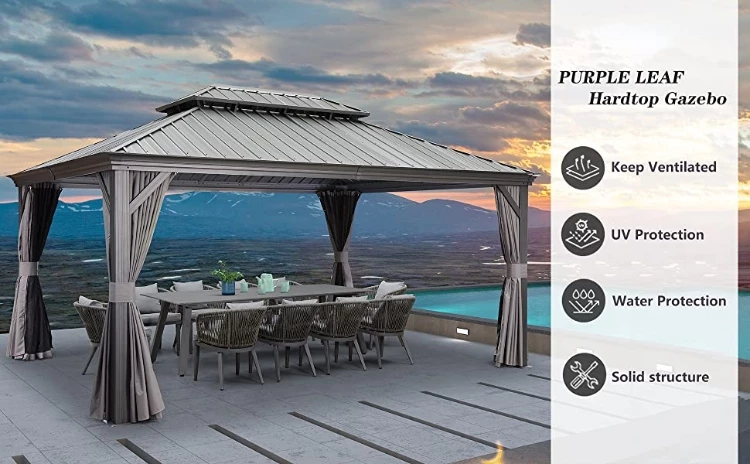
PURPLE LEAF has built a reputation for producing clean, reliable hardtop gazebos that don't overcomplicate the buying decision — and the 10'x12' model is a textbook example of that approach. The fade-resistant and rust-resistant galvanized steel top is the centerpiece, handling UV rays and heavy snow without degrading year over year. The powder-coated aluminum frame is drilled with pre-installed base holes, which makes anchoring to a concrete pad or deck straightforward and keeps the base secure in windy conditions without requiring elaborate custom hardware.
The double top vented design is the same concept you see on the YITAHOME and EAGLE PEAK — the gap between the two roof layers lets hot air escape and allows wind pressure to equalize across the structure, which reduces the risk of uplift. This matters more than most buyers realize. A sealed flat roof acts like a sail in high winds; a vented double roof disperses that force. Curtains and netting are included, covering all four sides with the standard dual-track system. The grey finish is neutral enough to match most home exteriors without requiring any coordination.
PURPLE LEAF isn't trying to win on luxury features — no integrated power ports, no cedar accents. What you get is a well-engineered, attractive 10x12 hardtop that does exactly what it's supposed to do. If you want reliability without complexity, this is a confident choice.
Pros:
- Pre-drilled base holes make anchoring clean and straightforward
- Double vented roof reduces wind uplift and heat buildup
- Fade-resistant and rust-resistant materials for long-term appearance
- Neutral grey finish suits a wide range of home styles
Cons:
- No premium features like power ports or built-in hooks at the ridge
- Curtain color options are limited
6. EAGLE PEAK 12x10 Hardtop Gazebo — Best for Curb Appeal
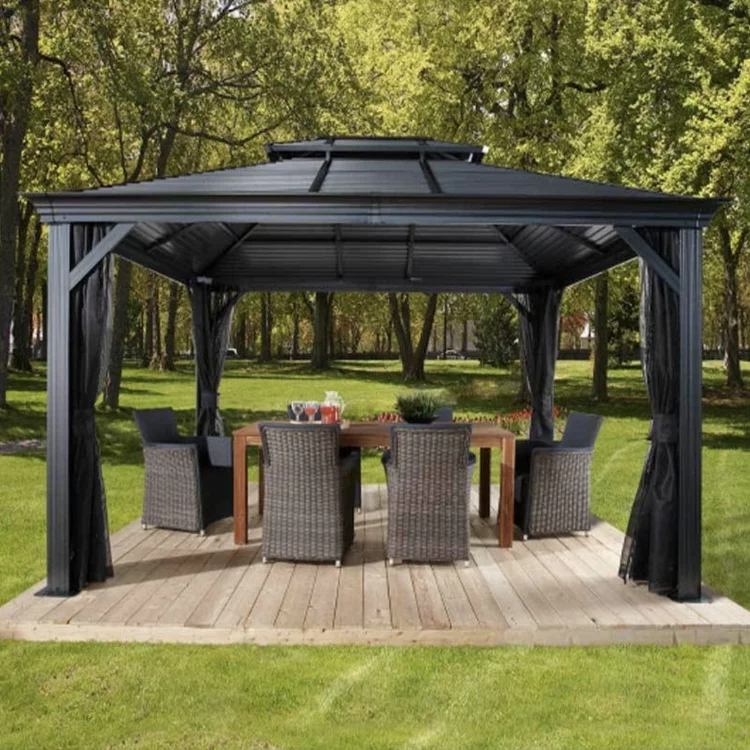
Most hardtop gazebos come in gray or black. The EAGLE PEAK stands out with a dark brown and tan color combination that photographs beautifully and integrates seamlessly with natural wood decking, stone patios, or garden landscaping. If aesthetics are a priority alongside function, this is the pick that does both without compromise. The rust-free heavy-duty aluminum frame is powder-coated for durability and keeps the overall weight manageable — EAGLE PEAK specifically engineered this for easier assembly without sacrificing structural integrity, and it shows in how cleanly the parts fit together.
The galvanized steel roof blocks up to 90% of UV rays — the highest UV-blocking claim in this roundup — and carries a 2,500-pound snow load rating that matches the Kozyard Alexander. The double roof design includes two "J" hooks and one "U" hook at the ridge for lights or a ceiling fan, a detail borrowed from the YITAHOME playbook that adds everyday usability. The included tan curtains and netting match the brown frame color intentionally, giving the whole structure a coordinated, finished appearance that most competing gazebos in this price range don't manage.
If you're pairing this with a natural stone or flagstone patio, the warm earth tones of the EAGLE PEAK coordinate far better than the ubiquitous gray options. It delivers solid structural performance — 2,500-lb snow load, quality UV blocking, reliable aluminum frame — wrapped in a finish that looks like it was designed rather than simply manufactured.
Pros:
- Distinctive dark brown/tan finish stands out from the sea of gray options
- Blocks up to 90% of UV rays — best UV protection rating in this roundup
- 2,500-lb snow load capacity matches the top-rated Kozyard Alexander
- Ridge hooks for lights or fan included
Cons:
- Brown/tan color scheme limits versatility if you redecorate your outdoor space
- Newer model with a shorter customer review history than some competitors
7. Kozyard Edward 10'x12' Polycarbonate Hardtop Gazebo — Best for Natural Light
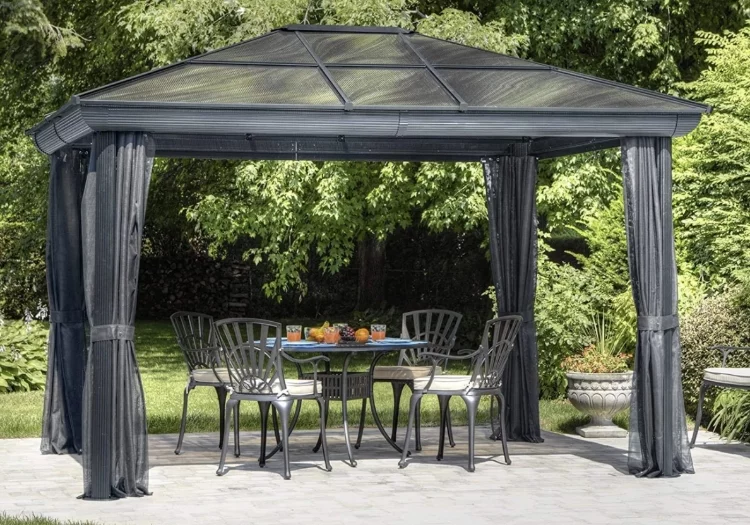
Every other gazebo in this roundup uses an opaque metal roof. The Kozyard Edward takes a different approach entirely: 6mm polycarbonate panels (semi-transparent hardened plastic commonly used in greenhouses and skylights) replace the steel roofing. The result is a covered outdoor space that still feels bright and open, with diffused natural light filtering through the charcoal gray panels. If you've ever sat under a steel-roofed gazebo on an overcast afternoon and felt like you were inside a cave, the Edward solves that problem completely.
The polycarbonate panels still block harmful UV rays and protect against rain — so you're not trading weather protection for the light. What you give up compared to a steel roof is the maximum snow load capacity; polycarbonate panels are not rated for the same heavy snow loads as galvanized steel, so this model is better suited to mild-to-moderate winter climates. The aluminum frame is the same quality construction Kozyard uses across its lineup, and the included zippered curtains and mosquito netting on all four sides let you convert the space from fully enclosed to open-air in minutes.
The contemporary charcoal gray polycarbonate finish is genuinely attractive and photographs well. If you're using this space as an outdoor entertaining room and want a design-forward look with an airy feel, the Kozyard Edward is the only hardtop option in this roundup that delivers it. Kozyard's reputation for quality aluminum gazebo construction is well-documented — you can read a detailed look at their framing approach in our Kozyard Rosana Hardtop Aluminum Gazebo review.
Pros:
- Polycarbonate roof lets in diffused natural light — unique in this roundup
- UV-blocking and rain-resistant despite being transparent
- Contemporary, design-forward aesthetic with charcoal gray panels
- Full curtains and netting included on all four sides
Cons:
- Not rated for heavy snow loads — better suited to mild winter climates
- Polycarbonate panels can show scratches over time more visibly than metal
How to Pick the Best Hardtop Gazebo
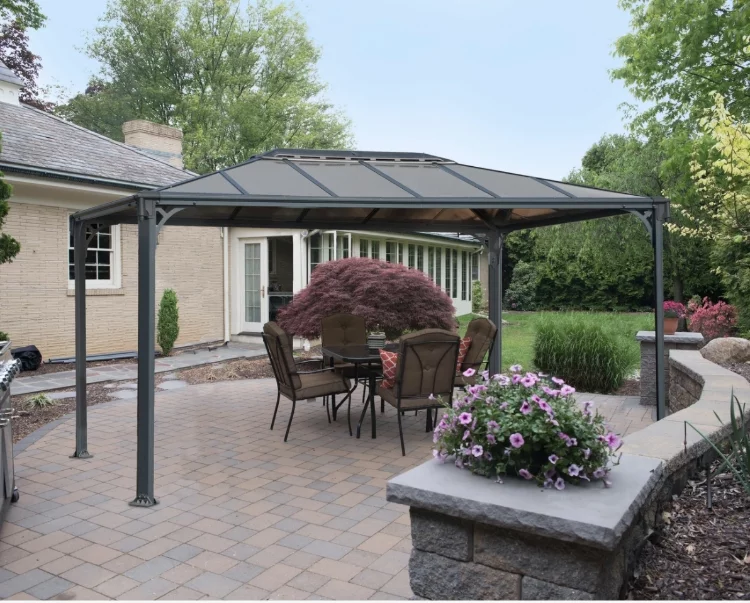
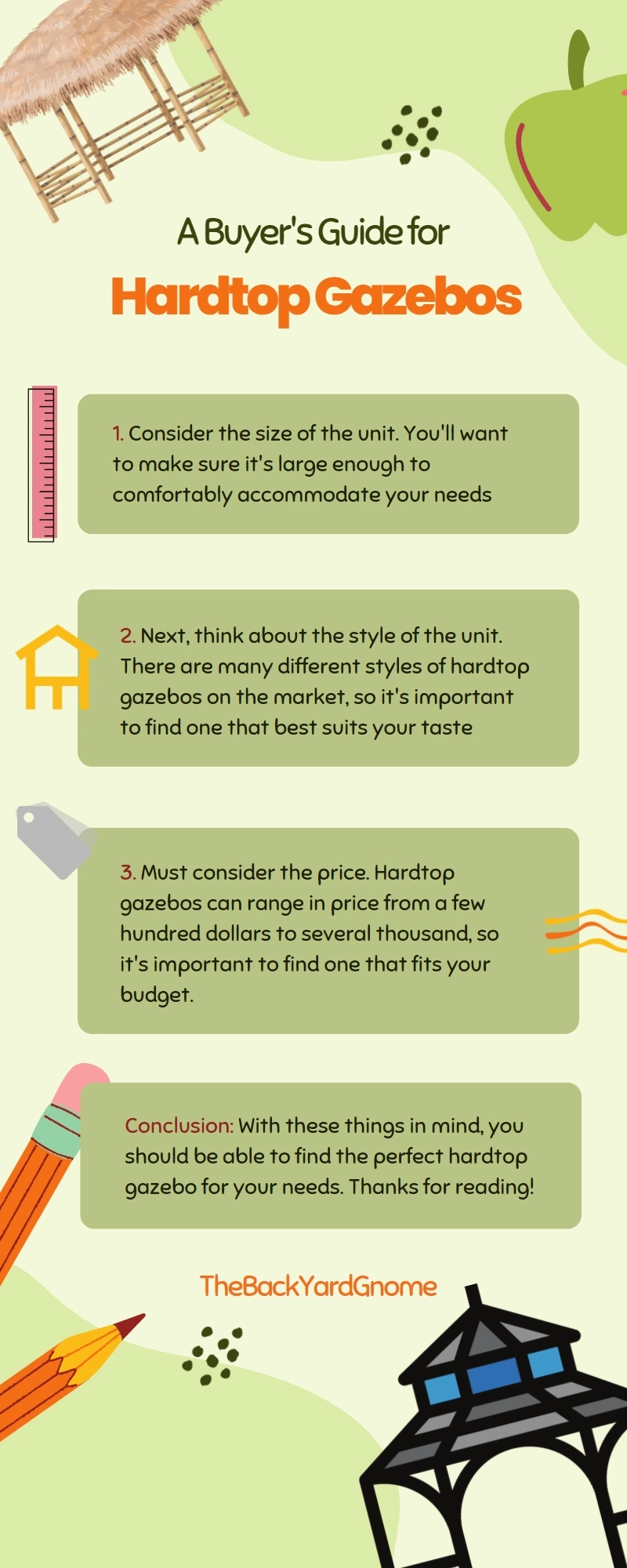
Shopping for a hardtop gazebo in 2026 is less complicated than it might seem — but a few key decisions will determine whether your purchase is still serving you well in five years or sitting in a pile of bent aluminum. Here's what actually matters.
Roof Material: Steel vs. Polycarbonate
The vast majority of hardtop gazebos use galvanized steel roofing panels — steel sheets coated in a zinc alloy layer that prevents rust and corrosion. This is the most durable and weather-capable option. It blocks UV rays, handles heavy snow loads, and lasts for decades when properly maintained. Galvanized steel is your default choice for any climate that gets real winters.
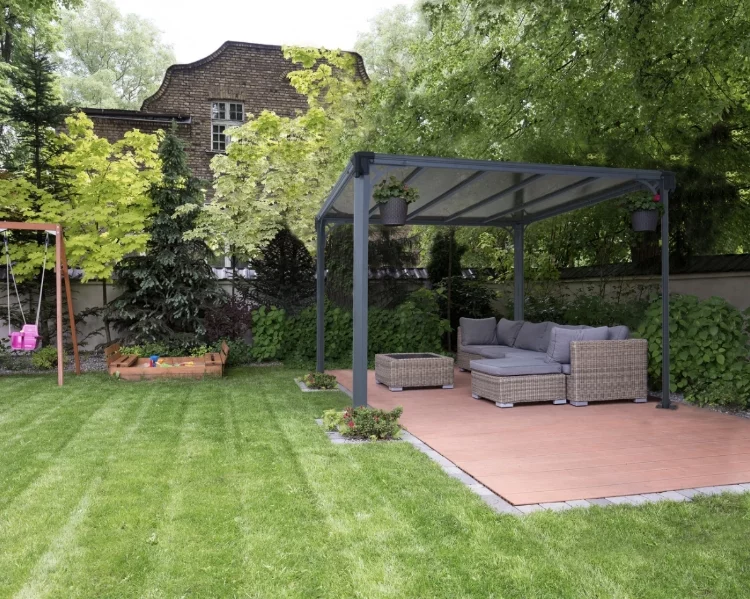
Polycarbonate panels (used by the Kozyard Edward) are a semi-transparent thermoplastic that transmits diffused natural light while still blocking UV rays and rain. They work well in mild climates and covered patios where snow loads aren't a concern. Polycarbonate is impact-resistant but not rated for the same snow load capacity as galvanized steel — if you get serious snow accumulation, stick with a metal roof.
Frame Construction: What the Numbers Mean
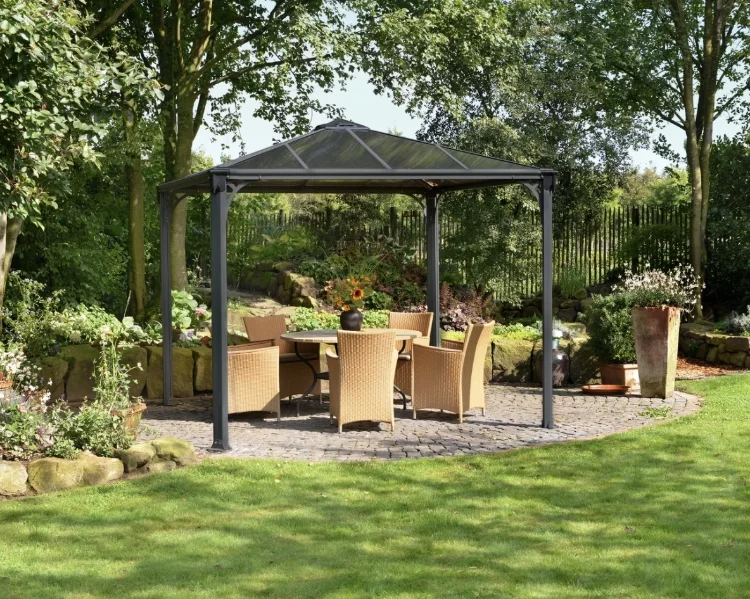
Aluminum is the standard frame material across all the picks in this guide, and for good reason: it's lightweight, corrosion-resistant, and strong enough for residential use without the weight penalty of steel. The key specs to look for are pole cross-section dimensions. A 4.7" x 4.7" triangular pole like the Kozyard Alexander uses is meaningfully stronger than a standard 3" square tube you'll find on budget models. Larger cross-sections resist bending under load — which is exactly what you need when a heavy snowfall or sustained wind puts lateral stress on the frame.
Powder-coated finishes on aluminum frames protect against UV fading and surface oxidation. Look for pre-drilled base holes in the feet — these allow you to anchor the structure to concrete or decking using anchor bolts, which is the difference between a gazebo that moves in a windstorm and one that stays put. If you're unsure about what size and shape makes sense for your yard, our guide to Gazebo Shapes and Sizes walks through the geometry in plain terms.
Size: Matching the Footprint to Your Space
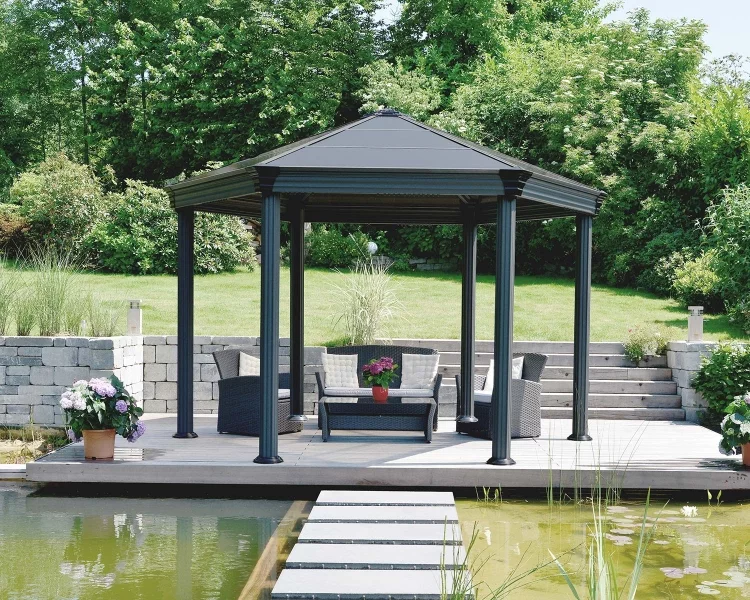
The most common hardtop gazebo size is 10' x 12', and it's popular for a reason. That footprint accommodates a six-person outdoor dining set comfortably, with room to push chairs back from the table. If you're planning a larger outdoor room — multiple seating areas, a bar setup, or space for entertaining larger groups — step up to a 12' x 16' like the LAUSAINT HOME. Measure your available yard space before you order and account for at least two feet of clearance on all sides of the structure for airflow and aesthetics.
Consider ceiling height as well. Most 10x12 models top out around 9-10 feet at the peak, which feels comfortable for a standing adult. If you're planning to add a ceiling fan for summer use, you want at least 7 feet of clearance between the floor and fan blades — confirm that measurement before purchasing a fan separately.
Weather Ratings and Warranty
Snow load (measured in pounds) and wind speed ratings are the most important specs for buyers in climates with actual weather. A 2,500-lb snow load is the minimum you should accept for a four-season installation — that rating covers typical heavy snowfall accumulations in most North American climates. The Backyard Discovery Barrington's 8,800-lb rating is exceptional and relevant for buyers in northern states or high-altitude areas. Wind ratings of 60 MPH cover most storm scenarios; the Barrington's 100 MPH rating is relevant for coastal buyers.
Warranty terms vary significantly. Most aluminum gazebos offer one to three years. The Backyard Discovery Barrington's five-year warranty is the strongest in this roundup. Whatever you buy, register the product after assembly — many warranty claims fail because buyers skip this step. Also worth reading before your first winter: our guide on how to winterize a gazebo covers anchoring, curtain storage, and snow load management to maximize the lifespan of any permanent structure.
FAQs
What is the difference between a hardtop and a soft-top gazebo?
A hardtop gazebo uses rigid roofing panels — typically galvanized steel or polycarbonate — mounted on a metal frame. A soft-top gazebo uses a fabric or polyester canopy stretched over a frame. Hardtop models are significantly more durable, handle snow and rain better, and are designed for permanent installation. Soft-top canopies are lighter, less expensive, and better suited for seasonal use where you plan to take the canopy down in winter. If you're looking for a permanent outdoor structure that handles four seasons, a hardtop is the right choice.
Do hardtop gazebos need to be anchored?
Yes, and this is non-negotiable if you want the weather ratings advertised on the box to apply to your installation. Most manufacturers specify anchoring to concrete, pavers, or a deck using anchor bolts through the pre-drilled holes in the base feet. An unanchored gazebo sitting on grass or gravel is vulnerable to wind uplift — the structure can shift or tip even in moderate storms. Anchoring properly with the right hardware is a straightforward step that takes an hour and protects a significant investment.
How much snow can a hardtop gazebo handle?
It depends on the specific model and whether it's properly anchored. The Kozyard Alexander and EAGLE PEAK are both rated for 2,500-pound snow loads, which covers heavy accumulations typical in most North American climates. The Backyard Discovery Barrington leads this roundup at 8,800 pounds (approximately 30 inches of packed snow). Polycarbonate-roof models like the Kozyard Edward carry lower snow load ratings and are better suited to mild winter climates. Always check the manufacturer's specification and consider your local average snowfall before purchasing.
Can I use a hardtop gazebo year-round?
Yes — that's the primary advantage of a hardtop over a soft-top model. Galvanized steel roofs handle snow, rain, and UV exposure across all four seasons without degrading. In winter, the main considerations are ensuring the structure is properly anchored, removing heavy snow accumulation if it exceeds the rated load, and storing fabric curtains to prevent mold or mildew if you live in a wet climate. For a complete winter prep checklist, the guide on how to winterize a gazebo covers the practical steps.
How long does it take to assemble a hardtop gazebo?
Most 10x12 aluminum hardtop gazebos take two people approximately three to four hours to assemble. Larger models like the 12x16 LAUSAINT HOME or the cedar Backyard Discovery Barrington require more time — plan for a full day for larger structures. The key variable is whether your installation surface is level and whether you're anchoring to an existing concrete pad versus installing ground anchors. Read through the instruction manual the evening before assembly and lay out all hardware so you're not searching for the right bolt mid-build.
What size hardtop gazebo do I need for outdoor dining?
A 10' x 12' footprint comfortably accommodates a standard six-person outdoor dining set with room to move chairs back from the table. If you're working with an eight-person table or want additional seating areas alongside the dining table, step up to 12' x 16'. Measure your existing furniture before purchasing and leave at least 18 inches between the edge of the table and the inner posts of the gazebo. A gazebo that fits your furniture perfectly on paper can feel cramped in practice if you haven't accounted for chair pullout room.
Buy on Walmart
- Kozyard Alexander 10' x 12' Hardtop Gazebo, Aluminum Frame w — Walmart Link
- YITAHOME 10x12 ft Hardtop Gazebo with Netting and Shaded Cur — Walmart Link
- Backyard Discovery Barrington 14' x 12' Cedar Wood Outdoor G — Walmart Link
- LAUSAINT HOME Outdoor Hardtop Gazebo for Patios 12x16ft, Per — Walmart Link
- PURPLE LEAF 10' X 12' Permanent Hardtop Gazebo Aluminum Gaze — Walmart Link
- EAGLE PEAK 12x10 Hardtop Gazebo, Galvanized Steel Double Roo — Walmart Link
- Kozyard Permanent Aluminum Hardtop Gazebo with Composite Pol — Walmart Link
Buy on eBay
- Kozyard Alexander 10' x 12' Hardtop Gazebo, Aluminum Frame w — eBay Link
- YITAHOME 10x12 ft Hardtop Gazebo with Netting and Shaded Cur — eBay Link
- Backyard Discovery Barrington 14' x 12' Cedar Wood Outdoor G — eBay Link
- LAUSAINT HOME Outdoor Hardtop Gazebo for Patios 12x16ft, Per — eBay Link
- PURPLE LEAF 10' X 12' Permanent Hardtop Gazebo Aluminum Gaze — eBay Link
- EAGLE PEAK 12x10 Hardtop Gazebo, Galvanized Steel Double Roo — eBay Link
- Kozyard Permanent Aluminum Hardtop Gazebo with Composite Pol — eBay Link
Key Takeaways
- The Kozyard Alexander is the best overall pick for 2026 — its 2,500-lb snow load rating, chunky triangular frame, and included dual-track curtain system deliver the best combination of strength and value in the 10x12 category.
- If budget is your primary constraint, the YITAHOME 10x12 delivers a real galvanized steel double roof with ventilation hooks and dual-layer sidewalls at a price point that outcompetes everything else in this roundup.
- For a true premium, permanent outdoor structure with built-in power and industry-leading weather resistance, the Backyard Discovery Barrington is in a class of its own — the 5-year warranty and 8,800-lb snow load rating justify the higher price for buyers building for the long term.
- Always anchor your gazebo to a solid surface before the first storm — every weather rating on this page assumes proper anchoring, and skipping this step turns a well-engineered structure into a liability.


About William Murphy
William Murphy has worked as a licensed general contractor in Fremont, California for over thirty years, specializing in outdoor structures, green building methods, and sustainable design. During that career he has written about architecture, construction practices, and environmental protection for regional publications and trade outlets, bringing technical depth to subjects that most home improvement writers approach only from a consumer perspective. At TheBackyardGnome, he covers outdoor product reviews, backyard construction guides, and sustainable landscaping and building practices.
You can Get FREE Gifts. Receive Free Backyard Items here. Disable Ad Blocker to get them all now!
Once done, hit anything below