Best Outdoor Fireplaces: Reviews, Buying Guide and FAQs 2026
by Simmy Parker
Picture this: it's a cool October evening, you're scrolling through product pages at midnight, overwhelmed by terms like BTU ratings, 304 stainless steel, and smokeless airflow systems. You want a fire feature for your backyard — something that pulls friends together and makes the patio actually usable on chilly nights — but the options keep multiplying. Wood-burning or propane? A fire table or a bowl? Portable or permanent? We've done the research and hands-on evaluation so you don't have to guess.
Outdoor fireplaces have come a long way from the rusty ring of rocks you'd find at a campsite. Today's best models combine serious heat output with stylish designs that work equally well for a casual family night or a proper backyard gathering. Whether you're after a smokeless wood-burning fire pit you can take camping or a sleek gas fire table that doubles as patio furniture, there's a right pick for your space and budget. Browse our full outdoor gear and backyard reviews to find more expert recommendations across every category.
For this 2026 update, we evaluated seven of the top-selling and highest-rated outdoor fireplaces available. We looked at heat output, build quality, ease of use, cleanup, and value. Below you'll find our complete breakdown — including pros, cons, and a buying guide to help you match the right model to your lifestyle. If you're also comparing chimineas or want to understand fire pit safety before you buy, check out our Backyard Firepit and Chiminea Safety guide — it covers clearance distances, fuel safety, and what to keep away from the flame.

Contents
- Best Choices for 2026
- Our Hands-On Reviews
- Solo Stove Bonfire 2.0 — Best Portable Smokeless Fire Pit
- Solo Stove Yukon 2.0 — Best Large Smokeless Fire Pit
- Outland Living Series 403 — Best Propane Fire Table
- Hampton Fire Table — Best Natural Gas Fire Table
- Sunnydaze Crossweave — Best Budget Wood-Burning Pit
- Cuisinart Chimenea — Best Propane Chimenea
- Ash & Ember Hemisphere — Best Cast Iron Fire Bowl
- Key Features to Consider When Choosing
- Common Questions
- Final Thoughts
Best Choices for 2026
- #PreviewProductRating
- Bestseller No. 1
 Rating:

- Bestseller No. 2
 Rating:
 - Bestseller No. 3
 Rating:
 - Bestseller No. 4
 Rating:
 - Bestseller No. 5
 Rating:
 - Bestseller No. 6
 Rating:
 - Bestseller No. 7
 Rating:
Our Hands-On Reviews
1. Solo Stove Bonfire 2.0 with Stand — Best Portable Smokeless Fire Pit
If you've ever sat around a fire pit and spent half the night moving chairs to dodge smoke, the Solo Stove Bonfire 2.0 is the answer. Solo Stove's signature double-wall airflow design pulls oxygen in through bottom vents, channels it up between the walls, and forces it out through top jets — burning off smoke before it reaches you. The result is a remarkably clean fire that lets everyone stay put instead of playing musical chairs with the wind. At 19.5 inches wide, it's sized perfectly for a group of four to six people gathered close on a cool evening.
The 2.0 update over the original Bonfire adds a removable ash pan, which makes cleanup dramatically easier. After the fire cools, you just slide the pan out and dump it — no scooping, no ash clouds in your face. The included stand raises it off the ground to protect decking and patio surfaces from heat damage, which is a thoughtful addition for anyone using this on wood or composite decks. The whole unit is made from premium 304 stainless steel (the same grade used in restaurant kitchens — highly corrosion-resistant) and weighs just 21.75 pounds with the stand, so it's genuinely portable. Solo Stove includes a carrying case, so throwing this in the truck for a camping weekend is a realistic option, not just a marketing claim.
The main trade-off is fuel: this is wood-only, so you'll need to keep dry hardwood on hand. It also burns through logs fairly quickly at peak output because the efficient airflow keeps combustion very hot. But for pure ambiance — the crackle, the flame, the smell of real wood — nothing in this price range beats it. This is our top pick for anyone who wants a premium, low-maintenance fire pit experience at home or on the road.
Pros:
- Exceptional smokeless performance — the double-wall design genuinely works
- Removable ash pan makes post-fire cleanup fast and clean
- Lightweight and portable with a carrying case included
- Premium 304 stainless steel construction built to last years
Cons:
- Wood-only fuel — no propane or gas conversion option
- Burns through logs quickly at full heat due to efficient combustion
2. Solo Stove Yukon 2.0 — Best Large Smokeless Fire Pit
Everything that makes the Bonfire 2.0 great, scaled up for serious entertaining. The Yukon 2.0 measures 27 inches across — that's nearly eight inches wider than the Bonfire — and is designed to comfortably seat six or more people. If you regularly host larger groups or simply want a fire that commands attention in a bigger backyard, this is the size you want. The same low-smoke airflow system runs here: bottom intake vents, double-wall channeling, and top jets that incinerate smoke before it reaches the people around the fire. You get a real campfire experience without the eye-watering haze.
Solo Stove upgraded the Yukon 2.0 with a high-heat ceramic coating on top of the 304 stainless steel shell. This extra layer protects the finish from the intense, sustained heat a fire this size generates and keeps it looking sharp after dozens of burns. At 38 pounds (Solo Stove's specs say 41 lbs including packaging and stand — without stand it's 38 lbs), it's definitely heavier than the Bonfire, but still manageable for two people to carry. The removable ash pan is a welcome addition that the original Yukon lacked — cleanup after a long evening of burning is now a five-minute job rather than a half-hour ordeal.
One thing to keep in mind: the Yukon eats large logs. That's actually a feature, not a bug — longer burn times per log — but you'll want to have a solid supply of split hardwood ready. If you're primarily using this at home and already buy firewood seasonally, that's no issue. The Yukon 2.0 is the best wood-burning fire pit for backyard entertaining in its class, full stop. It looks premium, performs consistently, and will hold up for years without significant degradation.
Pros:
- 27-inch diameter handles six or more people comfortably
- High-heat ceramic coating adds durability over the original Yukon
- Removable ash pan for quick, clean post-fire cleanup
- Same proven smokeless airflow design as the Bonfire — just bigger
Cons:
- At 38+ lbs, it's less effortless to move than the Bonfire
- Premium price point — noticeably more expensive than budget alternatives
3. Outland Living Series 403 Fire Table — Best Propane Fire Table
If you want a fire feature that doubles as actual patio furniture — something you can set drinks on, gather around for conversation, and fire up in ten seconds flat — the Outland Living Series 403 is a compelling answer. It's a 44-inch rectangular fire table with a tempered glass top and a burner that puts out 50,000 BTUs (British Thermal Units — a measure of heat output; for reference, a standard home furnace runs around 80,000 BTUs). That's serious heat for an outdoor propane unit, and it's adjustable, so you can dial it down for a mild evening or crank it for a cold fall night.
The espresso brown finish and clean rectangular lines give this table a genuinely upscale look that integrates into most outdoor furniture sets without looking like an afterthought. The Arctic Ice decorative glass rocks around the burner add a polished finish that holds up to weather well. Ignition is a simple push-button system connected to a standard 20 lb propane tank (the kind you'd use for a gas grill — very easy to find and refill). Since there's no combustion of actual wood, there's zero smoke, zero ash, and zero cleanup after use. You turn it off and walk away.
The trade-offs are real but manageable. Propane costs more per hour of burn than wood over time, and you'll need to keep spare tanks on hand. The table isn't designed to be moved frequently — it's meant to live in one spot on your patio. But if convenience is your priority and you want a fire feature that impresses guests without any of the work of wood burning, the Series 403 is one of the best values in its category for 2026.
Pros:
- 50,000 BTU output with adjustable flame height via chrome manual control valve
- Push-button ignition — lit in seconds, no matches or lighters needed
- 100% smoke-free with zero cleanup after each use
- Attractive rectangular design works as functional patio furniture
Cons:
- Propane tank not included and ongoing fuel cost adds up over a season
- Not portable — designed to stay in one place on your patio
4. Hampton Fire Table — Best Natural Gas Fire Table
The Hampton Fire Table is built for homeowners who want a permanent, high-end fire feature with zero ongoing fuel hassle. At 56 x 32 inches, it's a substantial piece — the largest fire table on this list — and it runs on natural gas, meaning it connects directly to your home's gas line (just like a gas stove or dryer). No tanks to swap, no trips to the gas station, no running out of fuel mid-evening. You open the valve, press the ignition button, and the fire is on. The 45,000 BTU output provides steady, comfortable warmth across a large seating area.
The cast concrete construction gives this table a weight and presence that cheaper alternatives simply can't match. It looks architecturally intentional rather than like a piece of outdoor furniture you ordered online — and that's the point. The Hampton is a centerpiece, the kind of thing guests notice when they walk out to your patio. Lava rocks are included, which sit around the burner flame and distribute heat evenly while adding to the visual effect. The push-button ignition is reliable and straightforward even for guests who've never used a gas fire table before.
The catch is the installation requirement. Natural gas means professional hookup by a licensed plumber or gas fitter — this isn't a DIY afternoon project, and that adds cost and scheduling. It also means this table goes exactly one place and stays there. But if you're planning a proper backyard renovation and want a fire feature that will be there in ten years looking exactly as good as day one, the Hampton is worth the upfront investment. For more inspiration on transforming your outdoor space, take a look at our roundup of the best fire pits for every backyard size and budget.
Pros:
- Natural gas connection means unlimited fuel with no tank swaps ever
- 56-inch cast concrete design is a genuine patio centerpiece
- 45,000 BTU output with reliable push-button ignition
- Includes lava rocks for even heat distribution
Cons:
- Requires professional natural gas installation — not plug-and-play
- Fixed placement only — not moveable once installed
5. Sunnydaze Crossweave Outdoor Fire Pit — Best Budget Wood-Burning Option
Not everyone needs — or wants to pay for — a Solo Stove. The Sunnydaze Crossweave is a no-nonsense, large-capacity wood-burning fire pit that delivers on the fundamentals at a fraction of the premium brands' price tags. At 36 inches in diameter, it's actually wider than either Solo Stove on this list, comfortably accommodating six to eight people around the fire. The crossweave pattern on the steel body looks clean and works with most outdoor aesthetics, from rustic to contemporary.
The build is 24-gauge steel with a high-temperature black paint finish, which resists rust and handles sustained heat well. It's not as heavy-duty as cast iron or stainless steel — but at under 24 pounds, it's extremely easy to move around your yard or take to a campsite, and at this price point the trade-off makes sense. Sunnydaze includes everything you actually need in the box: a metal spark screen (essential for keeping embers away from people and property), a round weather-resistant cover to protect it between uses, and a poker tool to safely move logs around without getting close to the flames. The mesh-covered cutouts improve airflow at the base, which helps the fire burn hotter and cleaner than a solid-wall design.
Will it produce some smoke? Yes — this is a conventional wood-burning fire bowl, not a sophisticated airflow system like the Solo Stoves. You'll want to burn dry, seasoned hardwood to minimize smoke output, which is good practice regardless of your fire pit type. But for families who want a reliable backyard gathering spot, a large fire, and don't want to spend hundreds of dollars, the Sunnydaze Crossweave is an excellent, honest choice. According to the National Fire Protection Association, outdoor fire pits should be kept at least 10 feet from any structure — keep that in mind when positioning any open fire bowl.
Pros:
- 36-inch diameter accommodates six to eight people — great for larger groups
- Comes complete with spark screen, cover, and poker tool
- Lightweight at under 24 lbs — easy to move and store
- Excellent value — all the basics covered at a budget-friendly price
Cons:
- Produces more smoke than engineered smokeless designs
- 24-gauge steel is less durable long-term than stainless or cast iron
6. Cuisinart Chimenea Propane Fire Pit — Best Propane Chimenea
Chimeneas — the tall, front-opening fire vessels with a chimney neck — have been around for centuries, originally developed in Mexico for outdoor cooking and heating. Cuisinart's take on the form is a modern propane version that keeps the distinctive chimenea silhouette while swapping wood burning for the convenience of gas. At 40,000 BTUs, it produces solid heat output for a unit this size, and the adjustable flame means you can run it at a comfortable low setting for ambiance on a mild evening or push it up when the temperature drops. A standard 20 lb propane tank (not included) gives you nine to fifteen hours of burn time depending on your setting — that's enough for a week's worth of evening sessions before a refill.
The standout feature is the directional heat shield, which is unusual in this category. Most fire pits radiate heat in all directions equally — which sounds ideal but actually means the people sitting directly in front get less focused warmth than you'd expect. The Cuisinart's heat reflector pushes warmth forward toward your seating area, making it noticeably more efficient in practice than raw BTU numbers alone suggest. This is a genuine engineering choice worth paying for if your patio seating is arranged in front of the unit rather than all the way around it. The chimenea form also naturally channels the flame upward, which cuts down on wind interference better than an open bowl design.
The steel frame has a weather-resistant finish that holds up to normal outdoor exposure, and lava rocks come included for visual effect around the burner. If you love the traditional look of a chimenea but want the zero-smoke, push-button convenience of propane, this is the clear choice in 2026. For those who prefer the authentic wood-burning chimenea experience, our guide to the best chimineas covers both traditional and modern options in detail.
Pros:
- Directional heat shield focuses warmth toward seating — smarter heat delivery
- 40,000 BTU with 9–15 hours per standard propane tank
- Classic chimenea design handles wind better than open fire bowls
- Zero smoke, zero ash, instant push-button ignition
Cons:
- Propane tank not included and ongoing fuel cost applies
- Chimenea shape limits 360-degree visibility of the flame — one primary viewing angle
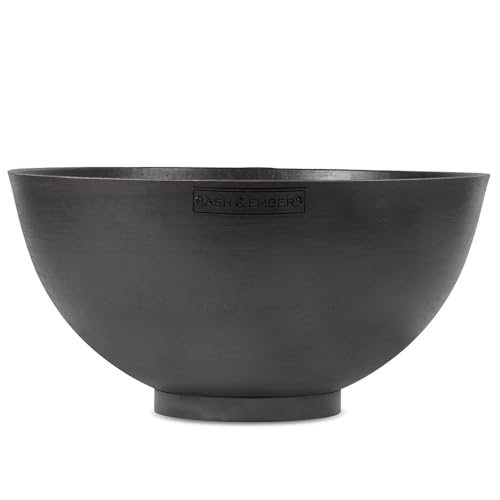
7. Ash & Ember 36" Hemisphere Fire Pit — Best Cast Iron Fire Bowl
If aesthetics and longevity matter as much as performance, the Ash & Ember Hemisphere Fire Pit occupies a category of its own. This is a 36-inch half-sphere (hemisphere) bowl made from raw, unpainted cast iron — the same material used in cookware and engine blocks, chosen specifically because it lasts generations when properly maintained. The design philosophy here is deliberately minimal: no powder coat, no painted finish, no bells and whistles. Just raw iron that will develop a natural rust patina (the reddish-brown surface layer that actually protects the metal over time) that deepens and darkens with each burn. After a season of regular use, this fire pit looks like it was made specifically for your backyard.
The deep hemispherical bowl gives you serious fuel capacity — you can load this with generous logs and run a long, slow burn without constantly feeding the fire. The flanged edge around the top rim adds structural rigidity and gives the bowl a clean, finished look that elevates it beyond a basic fire ring. The stable base keeps it rock-solid on any flat surface, which matters when you're loading heavy cast iron with firewood. Cast iron retains heat exceptionally well, which means the bowl radiates warmth even after the active flames die down — a nice bonus for extending an evening around the embers.
Cast iron does require basic care: keep it covered when not in use, and season it occasionally with a light oil coating the same way you'd maintain a cast iron skillet. It's also heavy — raw cast iron fire pits at this size are not lightweight by nature, so frequent moving isn't practical. But if you want a fire pit that gets better looking with age and will outlast anything with a painted or stainless finish, the Ash & Ember Hemisphere is the one to buy. It pairs naturally with a relaxed, rustic backyard aesthetic that no amount of stainless steel can replicate.
Pros:
- Raw cast iron develops a protective patina — genuinely improves with age
- Deep bowl holds ample firewood for long burns without constant tending
- Sculptural hemisphere design is a visual statement piece for any backyard
- Retains heat in the bowl long after flames die — extends warm-gathering time
Cons:
- Requires basic cast iron maintenance (seasoning, covering) to prevent deep rust
- Heavier than steel alternatives — not convenient to move regularly
Key Features to Consider When Choosing an Outdoor Fireplace
Fuel Type: Wood, Propane, or Natural Gas?
This is the single most important decision you'll make, and it shapes everything else. Wood-burning fire pits give you the authentic campfire experience — crackling logs, real smoke smell (or no smoke with a Solo Stove), and the tactile satisfaction of building a fire. The downside is fuel storage, ash cleanup, and smoke management. Propane fire pits (like the Outland Series 403 and Cuisinart Chimenea) are the convenience leaders: instant on, instant off, zero cleanup, adjustable heat. You pay for that convenience through fuel cost and the need to keep spare tanks on hand. Natural gas (like the Hampton Fire Table) is the ultimate in convenience for permanent installations — unlimited fuel piped directly to your unit — but requires professional installation and zero portability. Match the fuel type to how you actually live: if you camp, want portability, and love the ritual of building a fire, go wood. If you want to flip a switch and have friends over with zero effort, go propane or gas.
Heat Output and Coverage Area
For gas and propane units, BTU (British Thermal Unit) ratings tell you how much heat the burner generates per hour. As a rough guide: 30,000–40,000 BTUs works well for a covered patio or mild climates; 50,000 BTUs and above handles open spaces and genuinely cold nights. For wood-burning pits, diameter matters more than any rating — a 36-inch bowl produces significantly more heat than a 20-inch one simply because it holds more fuel. Think about your coldest realistic use case and size accordingly. It's better to have a unit you dial down than one that leaves your guests reaching for their coats after 8 PM.
Portability vs. Permanence
Be honest with yourself about this one. A fire pit you'll use on camping trips needs to be under 25 lbs with a carrying case — the Solo Stove Bonfire 2.0 hits that mark perfectly. A backyard unit you'll move once to find the right spot and then leave there forever can be much heavier and more substantial. Permanent gas fire tables actually benefit from weight and size — they feel more like real outdoor furniture that way. If you're still figuring out your outdoor layout, start with something portable. You can always upgrade to a permanent feature once you've lived in the space through a few seasons.
Materials and Long-Term Durability
The material your fire pit is made from determines how long it lasts and how much care it needs. 304 stainless steel (Solo Stove) is corrosion-resistant, stays looking clean, and needs minimal maintenance. Cast iron (Ash & Ember) is virtually indestructible but requires occasional seasoning and protection from standing water to avoid deep pitting rust. Painted steel (Sunnydaze) is budget-friendly and works well in the short-to-medium term, but the paint can chip or fade after extended heat exposure and outdoor seasons. Concrete (Hampton) is essentially permanent but heavy and expensive. For most buyers, stainless steel hits the best balance of durability and low maintenance. If longevity and a natural aged look matter more to you than convenience, cast iron is the material to choose.
Common Questions
What is the difference between a fire pit and an outdoor fireplace?
A fire pit is typically a freestanding bowl or ring — open on all sides, with no chimney or enclosure — designed for a group to gather around in a circle. An outdoor fireplace has an enclosed firebox, a chimney or flue, and usually a defined front-facing opening. Traditional chimeneas fall in between: they're freestanding with a chimney neck but lack the full masonry structure of a built-in outdoor fireplace. For most backyard use in 2026, fire pits and fire tables are the practical choice — they're flexible, available in many price ranges, and work with any patio layout.
How much BTU do I need for an outdoor fire pit?
For a propane or natural gas fire pit, 40,000–50,000 BTUs is the sweet spot for most outdoor settings. Below 30,000 BTUs you'll notice the heat is mostly decorative on a cold evening. Above 50,000 BTUs you're in territory that works for large open spaces or seriously cold climates. If your patio is covered or partially enclosed, even a 40,000 BTU unit will feel very effective since the heat isn't dispersing as freely. Wood-burning fire pits don't have BTU ratings, but a larger bowl with more fuel capacity will consistently outperform a smaller one in terms of heat output.
Are smokeless fire pits actually smokeless?
They're significantly lower-smoke — not always completely smoke-free, which is an important distinction. Solo Stove's double-wall design burns off the majority of smoke by creating a secondary combustion event where smoke gases are reignited before leaving the bowl. In practice, you'll notice vastly less smoke than a conventional fire pit, and you won't spend the evening moving to dodge smoke clouds. Some smoke is still produced, particularly during startup before the fire reaches operating temperature and when you add fresh logs. Burning dry, seasoned hardwood (not green or wet wood) makes a meaningful difference regardless of your fire pit design.
Can I use an outdoor fire pit on a wood deck?
Yes, but with precautions. Never place any fire pit directly on wood or composite decking — always use a heat shield mat or fire pit pad underneath to protect the surface from radiant heat damage. For wood-burning units, keep a spark screen in place at all times and position the pit at least 10 feet from railings, structures, and overhead coverings. Propane and natural gas fire pits with enclosed burners and no open combustion zone are generally safer on decks, but you still need a heat-resistant mat and to check local regulations. When in doubt, set up on a patio or ground surface instead. See our firepit safety guide for a full breakdown of safe setup practices.
What wood burns best in an outdoor fire pit?
Seasoned (dried) hardwoods are the clear winner: oak, hickory, maple, and ash burn hot, long, and produce minimal smoke. The key word is seasoned — wood that has been dried for at least six months to a year. Fresh-cut (green) wood contains significant moisture, which means a lot of the energy goes into evaporating water rather than producing heat, and the result is excessive smoke and a weak fire. Softwoods like pine burn faster, produce more creosote (a tar-like residue that builds up inside chimneys), and aren't ideal for fire pits. If you're buying firewood, ask for dry hardwood — split logs dry faster and stack more efficiently than rounds.
Do I need a permit to have an outdoor fire pit?
It depends entirely on your municipality. Many cities and counties have regulations covering fire pit size, distance from structures, burn hours, fuel type, and whether wood-burning is permitted at all during high fire-risk periods. Some jurisdictions require a simple permit for any open-flame outdoor feature; others have no restrictions outside of HOA rules. Your best starting point is to check with your local fire department or city government website before purchasing and installing any outdoor fire feature. If you live in a drought-prone or high-risk wildfire area, restrictions are often strict and seasonal. Always comply with local ordinances — fines for open-burning violations can be substantial.
Buy on Walmart
- Solo Stove Bonfire 2.0 with Stand, 19.5 Inch Smokeless Fire — Walmart Link
- Solo Stove Yukon 2.0, 27 Inch Smokeless Fire Pit with Remova — Walmart Link
- Outland Living Series 403 Fire Table – 44" 50,000 BTU Outdoo — Walmart Link
- Hampton Fire Table Outdoor Fire Pit 56" x 32" Cast Concrete — Walmart Link
- Sunnydaze Crossweave Outdoor Fire Pit - Wood-Burning Fire Pi — Walmart Link
- Cuisinart Chimenea Propane Fire Pit, 40,000 BTU Adjustable G — Walmart Link
- Ash & Ember 36" Hemisphere Fire Pit, Wood Burning Outdoor Fi — Walmart Link
Buy on eBay
- Solo Stove Bonfire 2.0 with Stand, 19.5 Inch Smokeless Fire — eBay Link
- Solo Stove Yukon 2.0, 27 Inch Smokeless Fire Pit with Remova — eBay Link
- Outland Living Series 403 Fire Table – 44" 50,000 BTU Outdoo — eBay Link
- Hampton Fire Table Outdoor Fire Pit 56" x 32" Cast Concrete — eBay Link
- Sunnydaze Crossweave Outdoor Fire Pit - Wood-Burning Fire Pi — eBay Link
- Cuisinart Chimenea Propane Fire Pit, 40,000 BTU Adjustable G — eBay Link
- Ash & Ember 36" Hemisphere Fire Pit, Wood Burning Outdoor Fi — eBay Link
Final Thoughts
The right outdoor fireplace transforms an ordinary backyard into a place people actually want to spend time — and in 2026, there's a genuinely great option at every budget and use case. If smokeless performance and portability are your priorities, start with the Solo Stove Bonfire 2.0. If you want a permanent, elegant fire table with zero maintenance, the Outland Living Series 403 or Hampton Fire Table will serve you well for years. Pick the one that fits how you actually live and entertain, order it, and get outside — your best backyard evenings are still ahead of you.


About Simmy Parker
Simmy Parker holds a Bachelor of Science in Civil Engineering from Sacramento State University and has applied that technical background to outdoor structure design, landscape planning, and backyard improvement projects for over a decade. Her love for the outdoors extends beyond design — she regularly leads nature hikes and has developed working knowledge of native plants, soil conditions, and sustainable landscaping practices across Northern California. At TheBackyardGnome, she covers backyard design guides, landscaping ideas, and eco-friendly outdoor living resources.
You can Get FREE Gifts. Receive Free Backyard Items here. Disable Ad Blocker to get them all now!
Once done, hit anything below