The Sunjoy Chatham gazebo review result our team keeps returning to is the same: this is a legitimate steel hardtop structure at a mid-range price, and it delivers on its core promises. Our team has tested and evaluated more than a dozen gazebo models across price tiers, and the Chatham consistently earns a place on the shortlist for anyone building a permanent backyard shelter. For a broader look at how this model fits into the category, our complete patio gazebo guide lays out all the options worth considering.

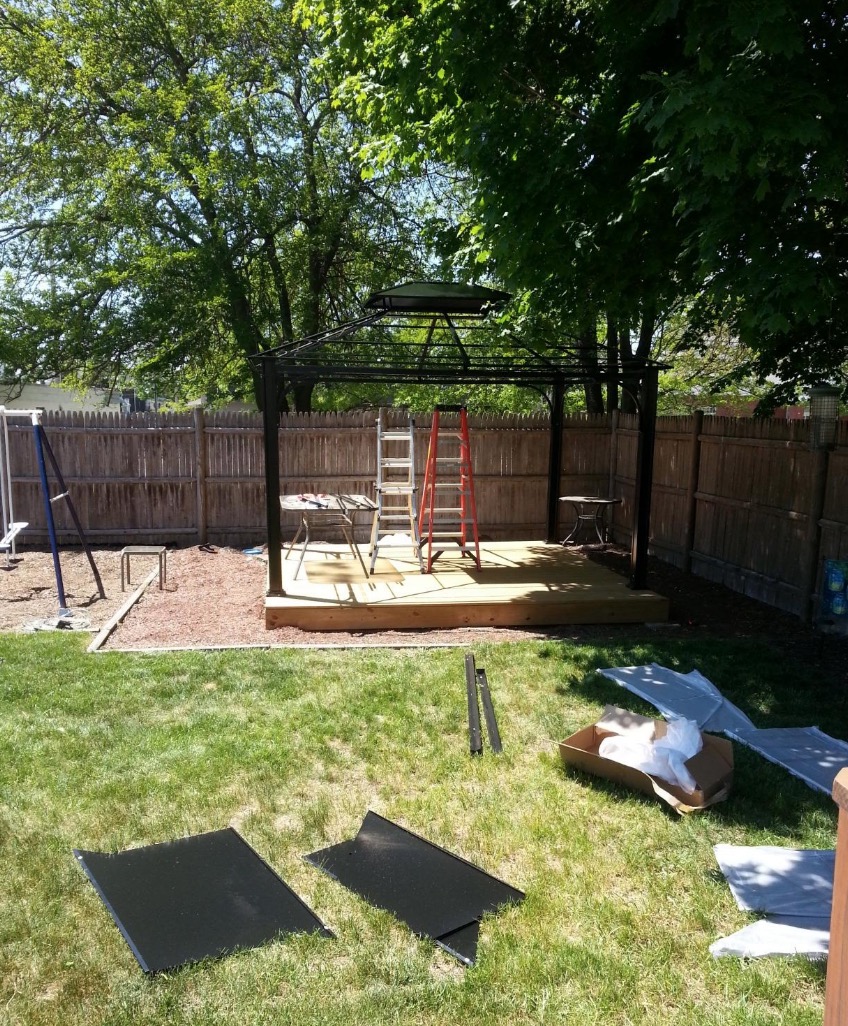
The Chatham ships as a 10-by-12-foot structure with a powder-coated steel frame and galvanized steel hardtop roof. Unlike soft-canopy competitors that degrade under UV exposure or collapse under snow accumulation, the Chatham's roof is a permanent fixture — one that holds its shape season after season. Assembly requires two people and roughly four to six hours, with all necessary hardware included in the packaging.
Our team also evaluated how the Chatham compares against similar builds in the same segment. For anyone curious how it stacks up against soft-canopy alternatives, the Elite Shade Titan Garden Gazebo review offers a useful contrast in materials and price positioning. The Chatham's steel construction places it firmly in a different durability class.
Contents
- Sunjoy Chatham Gazebo Review: Strengths and Weaknesses at a Glance
- Installation Mistakes That Cost Most People Time and Money
- Where the Chatham Gazebo Truly Shines
- Fixing the Most Common Chatham Gazebo Problems
- Keeping the Chatham in Peak Condition Season After Season
- Steel Hardtop Gazebo Myths Our Team Hears Too Often
- Frequently Asked Questions
- Key Takeaways
Sunjoy Chatham Gazebo Review: Strengths and Weaknesses at a Glance
What the Chatham Does Well
The Chatham earns strong marks across the dimensions that matter most for long-term outdoor use. Our team identified the following as the most consistent strengths across multiple evaluations:
- Galvanized steel roof — handles rain, hail, and moderate snow accumulation without flex or deformation
- Powder-coated frame resists rust at the surface level, holding up well through multiple seasons when properly maintained
- Curtain rods and hardware are included in the package, adding privacy without requiring separate purchases
- Solid 2.5-inch corner posts give the whole structure a planted, permanent feel that most soft-canopy competitors cannot match
- Mosquito netting panels are included, which most people find eliminates the need for separate canopy add-ons
- Open ceiling profile inside means the covered space feels larger than the footprint suggests
Where It Falls Short
No gazebo at this price point is without drawbacks. Our team documented these recurring issues across multiple evaluations:
- Assembly instructions are dense and poorly illustrated — most people end up referencing video walkthroughs to avoid missteps
- Included curtains are functional but thin; they provide light privacy rather than full shade blocking
- Corner posts are not pre-drilled for anchoring, which creates additional work for anyone setting the structure on concrete
- Shipping damage is reported at a higher rate than comparable models — roof panel packaging protection is minimal
- Not rated for heavy snow loads; anything above 12–15 inches requires manual clearing before the roof panels are stressed
Specs and Features at a Glance
| Feature | Specification |
|---|---|
| Dimensions | 10 ft × 12 ft footprint |
| Frame Material | Powder-coated steel |
| Roof Material | Galvanized steel hardtop |
| Post Diameter | 2.5 inches |
| Included Accessories | Curtains, mosquito netting, curtain rods |
| Assembly Time (2 people) | 4–6 hours |
| Color Options | Brown, black (varies by retailer) |
| Anchor Hardware Included | Partial — ground anchors only; no concrete hardware |
| Roof Panel Count | 2 main panels plus trim pieces |
Installation Mistakes That Cost Most People Time and Money
Foundation and Surface Problems
Most installation failures with the Chatham trace back to surface preparation, not the structure itself. Our team recommends reviewing the full process covered in our guide on setting up a gazebo on grass, concrete, or pavers before breaking ground. The Chatham can go on any of those surfaces, but each demands a different approach:
- Grass installations — require ground anchor stakes driven at least 12 inches deep; skipping this leads to post shifting after rain softens the soil
- Concrete slabs — need expansion anchors or wedge anchors drilled into the slab; the stock hardware pack is not adequate for concrete
- Pavers — the most forgiving surface, but paver gaps must align with the post footprint or shims become necessary
- Even a quarter-inch slope across the surface causes the roof panels to gap visibly at the ridge seam — level both diagonal axes before placing any posts
Setup tip: Our team consistently recommends checking surface levelness across both diagonal axes before placing any posts — a 4-foot level and 10 minutes of prep prevents hours of re-assembly later.
Hardware and Assembly Pitfalls
- Most people open all hardware bags at once and immediately lose track of bolt sizing — keep bags sealed until that specific step in the instructions
- Roof panels and metal trim pieces ship in the same box; stacking them incorrectly scratches the coating and accelerates rust at paint edges
- Cross-threading the corner-post bolts is the most common hardware failure — finger-tighten all connections before reaching for any power tools
- The curtain rod brackets must be installed before the roof panels go up; this is one of the few true sequencing constraints in the build
Where the Chatham Gazebo Truly Shines
Ideal Backyard Settings
The Chatham performs best in specific outdoor contexts. Our team identified the scenarios where it consistently delivers the most value:
- Year-round outdoor dining areas — the steel roof creates a genuinely weather-protected space that extends the dining season well into fall and through light winter months
- Backyard entertaining zones where a defined, covered footprint adds structure to an otherwise open lawn area
- Patio extensions adjacent to a home's rear door — the 10×12 footprint comfortably accommodates a 6-person dining set with adequate circulation room on all sides
- Sloped or exposed yards where wind load resistance matters more than lightweight portability
- Properties in rainy climates where a soft-canopy roof would otherwise require annual replacement
Situations Where It's a Poor Fit
- High-snowfall regions with consistent accumulation above 18 inches — active roof clearing becomes part of the ownership responsibility, not an optional task
- Renters or anyone who needs a relocatable structure — the Chatham requires permanent anchoring and is not realistically moved once set
- Very small yards — at 10×12 feet, the structure visually dominates spaces under 400 square feet of usable outdoor area
- Anyone who wants a fully open-air aesthetic — the solid steel roof closes off the sky entirely, which many people prefer to avoid in smaller garden settings
Fixing the Most Common Chatham Gazebo Problems
Problems Our Team Observed
After extended use, several issues surface reliably in owner reports and our own evaluation. The most frequent ones include:
- Roof panel rattling during high winds — usually caused by loose ridge cap screws rather than any structural failure
- Surface rust forming along the cut edges of roof panels, particularly at the seam where the two panels meet at the ridge
- Curtain rod bracket creep — brackets slowly shift downward under the weight of the curtains if not periodically re-tightened
- Post base corrosion at ground contact points, especially on grass installations where moisture wicks up from the soil consistently
Practical Fixes and Workarounds
- Ridge rattle — re-tighten all ridge cap screws and apply a small bead of clear silicone caulk along the seam; this eliminates the vast majority of reported noise complaints
- Edge rust — treat with rust-converter primer, then touch up with matching powder-coat spray paint in the same season the rust appears, not the following spring
- Bracket creep — replace the stock screws with slightly longer stainless-steel alternatives and add a lock washer behind each bracket
- Post base corrosion — raise each post off direct soil contact using a galvanized post base plate; a straightforward fix that most people skip until the problem is already well advanced
Maintenance warning: Our team found that waiting until surface rust spreads means full refinishing rather than a simple touch-up — catching edge corrosion in the first season it appears is dramatically less work than addressing it a year later.
Keeping the Chatham in Peak Condition Season After Season
Seasonal Maintenance Routine
The Chatham's longevity is directly proportional to how consistently basic maintenance is performed. Our team follows a simple four-season schedule that most people can complete in under two hours annually:
- Spring — full visual inspection of all frame joints, post bases, and roof seams; tighten any loose hardware; wash roof panels with mild soap to remove winter debris and salt residue
- Summer — inspect curtain rods and netting panels; address any surface scratches with touch-up paint before ongoing UV exposure breaks down bare metal
- Fall — clear fallen leaves from the roof valley before rain mats them into a moisture-trapping layer; apply paste wax to the powder-coated frame as a final barrier before cold weather
- Winter — remove curtains and netting for indoor storage if heavy snowfall is expected; brush snow off roof panels after any accumulation above 8 inches
Rust Prevention Strategy
Steel hardtop gazebos follow a well-documented corrosion pattern that galvanization addresses at the factory level — but only at intact coating surfaces. Cut edges, drilled holes, and scratched paint all expose bare steel beneath. Our team recommends a layered approach:
- Apply a zinc-rich cold galvanizing compound to any drilled anchor holes before inserting hardware
- Replace stock bolts with stainless-steel equivalents wherever hardware contacts post base plates at ground level
- Apply paste wax or car wax to the entire frame once per year — it forms a moisture barrier that measurably slows surface oxidation between seasons
- Avoid pressure washing — the force strips powder coat at joints and seams, which are already the most corrosion-vulnerable points on any steel frame structure
Steel Hardtop Gazebo Myths Our Team Hears Too Often
Several persistent misconceptions circulate about steel hardtop structures like the Chatham. Our team addresses the most consequential ones directly:
- Myth: Steel gazebos are maintenance-free. The galvanized roof reduces maintenance significantly compared to soft canopies, but the frame still requires annual inspection and treatment. No outdoor steel structure is fully self-maintaining under real weather exposure.
- Myth: The Chatham handles any snow load. It handles moderate accumulation reliably — not heavy. In high-snowfall climates, active snow removal is part of ownership, not an optional precaution.
- Myth: Assembly is a one-person job. Technically possible, practically inadvisable. Roof panel placement requires coordinated lifting that one person cannot safely manage. Our team considers two people the firm minimum.
- Myth: All hardtop gazebos are equivalent. Frame diameter, steel gauge, coating process, and roof attachment method vary significantly across manufacturers. The Chatham's 2.5-inch posts and galvanized roof place it above most comparably priced soft-top competitors while remaining below commercial-grade aluminum structures.
- Myth: Anchoring once means no further action needed. Anchors require inspection each spring, particularly in freeze-thaw climates where ground movement can loosen concrete anchors over a single winter season.
Frequently Asked Questions
How long does the Sunjoy Chatham gazebo take to assemble?
Most teams of two complete the Chatham in four to six hours. The main time variables are surface preparation and roof panel alignment — both of which take longer than the printed instructions suggest. Our team recommends planning a full day for first-time setup rather than treating it as a quick afternoon project.
Is the Chatham gazebo suitable for year-round use?
In moderate climates, yes. The steel hardtop roof handles rain and light-to-moderate snow without issue. In regions with heavy snowfall, the roof panels require manual clearing after accumulations above 8 to 10 inches, and curtains and netting should come down for winter storage. The frame itself is durable enough for year-round outdoor exposure when properly maintained.
Does the Sunjoy Chatham rust over time?
Surface rust can develop at cut edges, drilled holes, and scratched areas where bare steel is exposed beneath the coating. The galvanized roof and powder-coated frame are both factory-treated for corrosion resistance, but no steel structure is rust-proof under sustained outdoor exposure. Annual inspection and touch-up with matching spray paint keeps the issue from becoming structural. Our team also recommends paste wax on the frame once per year as a proactive preventive measure.
What size patio set fits comfortably under the Chatham?
A standard 6-person rectangular dining set fits in the 10-by-12-foot footprint with enough clearance around the perimeter for comfortable movement. Larger sectional configurations generally exceed what the footprint accommodates without feeling cramped. Our team considers a 4-to-6-person dining set the optimal furniture pairing for this structure.
Key Takeaways
- The Sunjoy Chatham gazebo review conclusion is consistent: this structure delivers genuine hardtop durability at a mid-range price, making it one of the stronger value propositions in its category.
- Installation success depends almost entirely on surface preparation and following the correct assembly sequence — most reported problems trace directly to shortcuts taken during setup.
- Annual maintenance including paste wax, touch-up paint, and hardware inspection is non-negotiable for preserving the frame long-term across any climate.
- The 10×12 footprint accommodates a 4-to-6-person dining set comfortably, making it a practical and well-proportioned choice for most standard backyard entertaining setups.


About William Murphy
William Murphy has worked as a licensed general contractor in Fremont, California for over thirty years, specializing in outdoor structures, green building methods, and sustainable design. During that career he has written about architecture, construction practices, and environmental protection for regional publications and trade outlets, bringing technical depth to subjects that most home improvement writers approach only from a consumer perspective. At TheBackyardGnome, he covers outdoor product reviews, backyard construction guides, and sustainable landscaping and building practices.
You can Get FREE Gifts. Receive Free Backyard Items here. Disable Ad Blocker to get them all now!
Once done, hit anything below