Last summer, I watched my neighbor drag a cheap patio umbrella to the curb after just one season — the fabric had faded to a washed-out gray, two ribs had snapped clean, and it had flipped inside out twice in a single afternoon storm. That moment stuck with me. When I started shopping for my own backyard shade solution, one name kept rising to the top: Coolaroo. This Coolaroo market umbrella review covers everything you need to make a confident buying decision — materials, UV performance, real-world durability, setup requirements, and long-term care. If you want shade that holds up across multiple seasons without looking beaten up by July, read on.
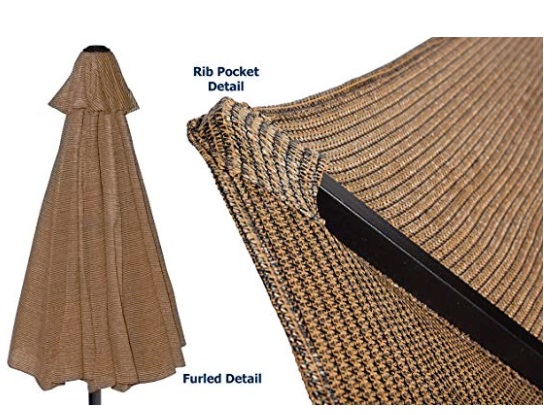
The Coolaroo market umbrella stands apart from the competition because of one defining material choice: knitted HDPE (high-density polyethylene) fabric. Most budget umbrellas rely on woven polyester that traps heat and deteriorates quickly under prolonged UV exposure. Coolaroo's HDPE mesh allows a controlled amount of airflow to pass through while still blocking up to 90% of UV radiation — a meaningful difference when you're sitting outside on a 95-degree afternoon. You can compare it alongside other top contenders in our guide to the best market umbrellas for backyard use.
Understanding the full picture — from what's in the box to how the umbrella behaves in a summer squall — helps you invest your money wisely. Whether you're shading a dining table, a pool deck, or a quiet reading corner, this guide breaks every relevant detail down in plain language so you walk away with a clear picture of what you're actually getting.
Contents
The Heritage Behind Coolaroo's Fabric Technology
Coolaroo is an Australian brand with decades of experience engineering shade fabric for some of the harshest outdoor environments on the planet. The company originally developed its HDPE knitted mesh for agricultural use — specifically to protect crops and livestock from the punishing Australian sun. That commercial-grade heritage transferred directly into the consumer products you see today. This isn't a company that started making patio umbrellas and worked backwards toward durability. Durability is where they started.
The material science behind the fabric is well-documented. According to Wikipedia's overview of high-density polyethylene, HDPE is valued for its resistance to moisture, UV degradation, and chemical exposure — all properties that matter enormously for any product designed to live outdoors through multiple seasons. That foundation helps explain why Coolaroo's price premium over basic alternatives is genuinely justified by the underlying material, not just the brand name.
Why HDPE Outperforms Standard Polyester
Standard polyester umbrella canopies begin breaking down within one to two seasons under direct sunlight. The woven structure traps heat, and that heat accelerates fiber degradation from the inside out. Worse, most polyester umbrellas are coated with a UV-blocking agent after manufacturing. That coating wears away with exposure, washing, and abrasion. Once it's gone, the bare fabric underneath has no meaningful UV resistance left.
HDPE works on a fundamentally different principle. The UV resistance is built into the polymer at the molecular level during manufacturing, not applied as a surface treatment afterward. That distinction is significant: material-level UV resistance doesn't wash off, doesn't peel, and doesn't degrade the way a coating does. After five summers of direct sun exposure, HDPE fabric retains its UV blocking performance at levels close to original specification. That's the core reason Coolaroo umbrellas outlast cheaper alternatives by years rather than just one extra season.
This context reframes the purchasing decision. You're not paying more for a recognizable name. You're paying for a material that operates on a fundamentally longer performance curve than what you'll find at a discount retailer.
Coolaroo Market Umbrella Review: Core Specs and Components
Before you commit, know exactly what you're getting. The Coolaroo market umbrella ships in several configurations — most commonly 9-foot and 11.5-foot canopy diameters — with color options that range from neutral sand and terracotta to bolder red and blue. The structural components are consistent across tiers, though heavier models may upgrade specific hardware. Here's how the two most popular sizes compare side by side.
| Feature | 9-Foot Model | 11.5-Foot Model |
|---|---|---|
| Canopy Diameter | 9 ft | 11.5 ft |
| Approximate Shade Area | ~50 sq ft | ~90 sq ft |
| Pole Material | Powder-coated steel | Powder-coated steel |
| Fabric | Knitted HDPE mesh | Knitted HDPE mesh |
| UV Block Rating | Up to 90% | Up to 90% |
| Ribs | 8 fiberglass ribs | 8 fiberglass ribs |
| Crank Mechanism | Yes | Yes |
| Push-Button Tilt | Yes | Yes |
| Base Included | No | No |
| Approximate Weight | ~12 lbs | ~18 lbs |
Pole and Frame Construction
The powder-coated steel pole feels solid in hand. It's not the ultra-premium aluminum you'd find on a commercial restaurant umbrella, but it's far more rigid than the hollow poles on entry-level products. The push-button tilt mechanism lets you angle the canopy toward the sun as it tracks across the sky throughout the day — and you will use this feature constantly during peak summer, not just when you first set it up.
The eight fiberglass ribs are a deliberate engineering choice. Fiberglass flexes slightly under wind load rather than resisting rigidly and snapping at the joint. That flex is actually an advantage in gusty conditions. It distributes stress across the full rib structure instead of concentrating it at a single failure point, which explains why Coolaroo ribs routinely survive conditions that crack or permanently deform the steel ribs on cheaper umbrellas.
Fabric and UV Performance
The HDPE knitted mesh delivers its UV blocking performance without converting the shaded area into a heat trap. In side-by-side comparisons, the temperature differential between direct sun and the area under a Coolaroo canopy typically measures 10 to 15 degrees cooler. The open-knit structure allows a consistent breeze to pass through, which makes an enormous practical difference in humid climates where a solid-panel umbrella cuts off all airflow entirely.
The mesh also drains immediately after rain. There's no pooling, no waterlogged canopy sagging toward the center, no dripping on the people sitting underneath. You can step outside 10 minutes after a rain shower and use the umbrella without any delay.
Who This Umbrella Is Right For
The Coolaroo market umbrella has a specific sweet spot, and knowing where you fall in that range prevents you from either overpaying for more than your situation requires or settling for less than your space actually needs.
First-Time Outdoor Space Builders
If you're building out your backyard from scratch, the Coolaroo is a smart anchor purchase. It pairs naturally with a wide range of furniture styles — from a simple bistro table to a fully configured patio conversation set — and its neutral color options don't clash with most existing outdoor decor. Setup requires no special tools. The crank mechanism and push-button tilt are both intuitive, and most buyers have the umbrella assembled and positioned in under 30 minutes.
One important consideration for first-time buyers: the umbrella does not include a weighted base. You'll need to purchase one separately, and this is not optional — an unsupported market umbrella in even moderate wind is a safety hazard. Build the cost of a quality base into your budget from the start rather than discovering the gap when the box arrives.
Experienced Outdoor Entertainers
If you've cycled through two or three cheap umbrellas and already know the specific ways they fail — faded fabric, bent ribs, wobbling poles, mold on the canopy — the Coolaroo addresses every one of those failure points directly. The HDPE fabric resists fading, mold, and UV degradation at a level that experienced outdoor buyers recognize immediately as a genuine category upgrade rather than incremental improvement.
Seasoned outdoor hosts tend to pair this umbrella with quality seating like zero gravity chairs or premium sectional furniture, understanding that quality compounds across every piece in an outdoor setup. A well-made umbrella above mediocre furniture still underperforms. The Coolaroo earns its place in a setup where every other component is also built to last.
How It Performs in Real Backyard Conditions
Specifications describe potential. Real-world use reveals actual performance. Here's what you can expect from the Coolaroo market umbrella across the full range of backyard conditions — including the ones that test cheap alternatives to their breaking point.
Wind and Weather Resistance
The fiberglass ribs give the Coolaroo a meaningful edge over steel-rib competitors in moderate wind. More importantly, the mesh fabric itself reduces total wind load compared to solid-panel canopies. Air passes through the open-knit structure rather than pressing against a solid surface, which dramatically reduces the force exerted on the pole and base during gusts. In practice, this means the umbrella stays planted in the kind of afternoon wind that would invert a solid-panel umbrella or send it skidding across your patio.
No freestanding market umbrella is safe in sustained high winds or approaching thunderstorms. Close and secure the canopy whenever significant weather is coming. That instruction applies universally across every umbrella brand and size — it's not a Coolaroo-specific limitation. What Coolaroo does better than most is handle the ordinary gusty afternoon without requiring constant intervention.
Shade Coverage in Practice
A 9-foot canopy covers approximately 50 square feet of effective shade — enough for a four-person dining table with a reasonable margin around the edges. If you're shading a larger dining setup, a lounging area with multiple chairs, or a sectional that extends in multiple directions, the 11.5-foot model is the right choice. Shade footprint shifts throughout the day as the sun moves, which is why the tilt mechanism gets used actively rather than sitting ignored once the umbrella is positioned.
Owners who pair this umbrella with a full outdoor sectional consistently find that the 11.5-foot model is the minimum useful size for practical, all-day coverage. The 9-foot model is excellent for compact setups. For anything larger, size up and don't second-guess it.
Cleaning and Long-Term Care
One of the most underappreciated advantages of HDPE fabric is how little maintenance it demands. Water passes through the open-knit structure rather than pooling on a solid surface, which means mold and mildew lack the persistently wet environment they need to establish. Dirt and pollen rinse off with a garden hose and mild dish soap. This is not a fabric that requires specialized cleaners, annual treatments, or careful handling to maintain its appearance over time.
Routine Maintenance
Keep your maintenance routine simple and consistent throughout the active season:
- Rinse the canopy with a garden hose every few weeks during periods of heavy use
- Use a soft brush and mild dish soap for stubborn pollen buildup or bird droppings — avoid abrasive scrubbers that can damage the knit structure
- Wipe down the pole and crank mechanism with a damp cloth monthly to prevent mineral or salt buildup from accumulating in the joints
- Apply a light coat of silicone spray to the crank mechanism once per season to keep it turning smoothly
- Inspect the powder-coat finish on the pole at the start of each season and touch up any chips with rust-inhibiting primer before corrosion gets a foothold
The pole inspection step carries more importance than most owners expect. A small chip in the powder coat can become a significant rust problem within a single humid summer if left untreated — particularly in coastal environments where salt air accelerates surface corrosion on exposed metal.
Seasonal Storage
Proper off-season storage extends the working life of both the canopy and the pole by multiple years. When closing up for the season:
- Close and strap the canopy securely before moving the umbrella anywhere
- Remove the canopy from the pole if your model allows it and store it flat or loosely rolled — never compressed tightly in a small space for extended periods, which stresses the fabric structure
- Store the pole in a dry location or protect it with a weather-resistant cover
- In climates with freezing winters, bring the full assembly indoors or into a covered shed rather than leaving it outside under a tarp
Avoid storing the canopy in a sealed plastic bag or airtight container. Residual moisture trapped inside promotes mildew even on HDPE fabric during a long off-season. A breathable cover or a clean, dry corner of your garage is the right approach. Simple storage habits here directly translate into more seasons of use before any replacement is needed.
Getting the Most Out of Your Market Umbrella
A few deliberate decisions at setup make a significant difference in both the day-to-day usability and the long-term life of your Coolaroo umbrella. These aren't complicated steps — but skipping them is the most common reason buyers end up disappointed with a product that would otherwise perform well for years.
Choosing the Right Base
The base you pair with this umbrella is as important as the umbrella itself, and it's consistently the most underestimated purchase in the setup. Follow these weight guidelines as your starting point:
- 9-foot canopy: 50-pound base minimum; 65 pounds preferred for exposed or regularly windy yards
- 11.5-foot canopy: 75-pound base minimum; 90 pounds preferred
Cross-base designs distribute weight more evenly than round pedestal bases, particularly under lateral wind stress. If you're mounting the umbrella through a center hole in your dining table, confirm the hole diameter matches the Coolaroo pole before purchasing a separate base — most models use a 1.5-inch diameter pole, but verify your specific configuration first.
If you're still comparing shade and furniture options while planning your full backyard setup, our comprehensive roundup of the best patio umbrellas covers additional styles and price points worth evaluating alongside the Coolaroo before you commit.
Positioning for Maximum Shade
Strategic placement determines how useful your umbrella actually is throughout the day. Position the umbrella so the tilt mechanism faces west in the morning and east in the afternoon to track the sun's arc across the sky. If you have a fixed mounting position — umbrella through a table hole — angle the tilt toward your primary afternoon sun exposure, since afternoon heat tends to be the most intense and the most uncomfortable part of the outdoor day.
Keep the umbrella at least three feet clear of structures, fences, and overhanging branches. This allows the canopy to open and close without snagging and prevents wind channeling between surfaces, which puts unexpected lateral stress on the ribs even in relatively modest breezes. If you're assembling a complete outdoor living space around your umbrella, pairing your Coolaroo with an outdoor fireplace or fire feature creates a space that functions beautifully from afternoon shade into evening ambiance — a natural extension of the same investment in quality outdoor living.
Final Thoughts
The Coolaroo market umbrella is one of the few products in the outdoor living category that genuinely earns its price premium through material science rather than marketing. If you've been burned by disposable umbrellas before, this is the upgrade that ends that cycle. Pick the size that matches your actual seating footprint, pair it with a properly weighted base, and get it set up this weekend — your backyard will be a fundamentally different place to spend time by the end of next month.


About Simmy Parker
Simmy Parker holds a Bachelor of Science in Civil Engineering from Sacramento State University and has applied that technical background to outdoor structure design, landscape planning, and backyard improvement projects for over a decade. Her love for the outdoors extends beyond design — she regularly leads nature hikes and has developed working knowledge of native plants, soil conditions, and sustainable landscaping practices across Northern California. At TheBackyardGnome, she covers backyard design guides, landscaping ideas, and eco-friendly outdoor living resources.
You can Get FREE Gifts. Receive Free Backyard Items here. Disable Ad Blocker to get them all now!
Once done, hit anything below