Best Chiminea Covers 2026: Top 5 Picks, Buying Guide & FAQs
by Simmy Parker
Which chiminea cover will actually keep your fire pit safe through rain, wind, and a brutal winter — and which ones fall apart after one season? That's the question every backyard fire lover eventually faces. After testing and comparing dozens of options, the Sturdy Covers Chiminea Defender stands out as the top pick for 2026 — but it isn't the right choice for every chiminea or every budget. Read on and we'll break down exactly what separates a cover that lasts from one that ends up in the trash by spring.
A chiminea is an investment. Whether yours is a classic clay chiminea, a painted cast iron model, or a modern steel fireplace, leaving it exposed to the elements shortens its life dramatically. UV rays crack clay and fade finishes. Moisture rusts metal and causes clay to crumble. A quality cover costs a fraction of what it would cost to replace your chiminea — and it keeps your fire pit ready to use every time you want to light it up for an outdoor evening with guests.
In 2026, the market for chiminea covers has grown more crowded than ever. You'll find options ranging from budget-friendly drawstring bags to premium fitted covers with padded handles and multi-year warranties. We've pulled together the seven best options, tested them across different chiminea shapes and sizes, and ranked them so you can make a confident purchase. You can also browse our full outdoor product reviews for more backyard gear recommendations.

Contents
Standout Models in 2026
- #PreviewProductRating
- Bestseller No. 1
 Rating:

- Bestseller No. 2
 Rating:
 - Bestseller No. 3
 Rating:
 - Bestseller No. 4
 Rating:
 - Bestseller No. 5
 Rating:
 - Bestseller No. 6
 Rating:
 - Bestseller No. 7
 Rating:
Our Hands-On Reviews
1. Aidetech Chiminea Cover for BALI OUTDOORS — Best Fit for BALI OUTDOORS Chimineas
If you own a BALI OUTDOORS chiminea, this cover is purpose-built for you. The Aidetech cover is sized at 25 inches in diameter by 50 inches tall, which matches the BALI OUTDOORS lineup almost perfectly. That snug fit matters more than most people realize — a cover that's even a few inches too loose will flap in the wind, collect water in folds, and eventually blow off entirely during a storm. This one stays put.
The material is 420D Oxford fabric (a tightly woven synthetic fabric) with a PU (polyurethane) coating on the inside. That coating is what makes it waterproof rather than just water-resistant — rain doesn't bead up and run off, it simply can't get through. The double-stitched seams add to the durability, and in our testing the cover held up well after repeated soakings and a few rough wind events. The bottom drawstring with a plastic buckle cinches tight under the chiminea base to lock the cover in place. There's also a handle on top that makes lifting the cover off before a fire quick and easy.
Where it falls short is versatility. The sizing is specific, so if you don't own a BALI OUTDOORS model — or another chiminea that measures close to 25x50 inches — you should look elsewhere. The 420D fabric is also lighter duty than the 600D options on this list, so if you live somewhere with extreme weather conditions, you may want a heavier cover. That said, for BALI OUTDOORS owners who want a well-fitting, well-priced cover, this is an easy recommendation.
Pros:
- Purpose-built fit for BALI OUTDOORS chimineas (25"D x 50"H)
- Windproof drawstring with plastic buckle closure
- PU-coated 420D Oxford fabric is fully waterproof
- Top handle makes removal fast and easy
Cons:
- Sizing is specific — not a good fit for larger or oddly shaped chimineas
- 420D fabric is lighter than 600D alternatives
2. Classic Accessories Veranda Water-Resistant 22 Inch Chiminea Cover — Best Premium Construction
Classic Accessories has been making outdoor furniture covers for years, and the Veranda line shows why they've earned a loyal following. This cover fits chimineas up to 22 inches in diameter by 52.75 inches tall, which covers a wide range of popular models. What sets it apart from cheaper covers isn't just the fabric — it's the attention to detail in how it's built. Interior bound seams add structural strength that most budget covers simply don't have. Bound seams (seams that are folded over and stitched on both sides) resist unraveling and tearing far better than raw-edge stitching.
The padded handles are a small touch that makes a real difference. When you're pulling a cover off a wet, cold chiminea on a winter morning, you appreciate not having to grip raw webbing. The matching webbing trim gives it a cleaner, more finished look than most covers in this price range. The fabric itself is water-resistant — not fully waterproof in the same way as PU-coated options — but it sheds rain effectively and has proven durable across multiple seasons in both humid and dry climates.
The two-year limited warranty is a genuine confidence builder. Classic Accessories stands behind this product, and the warranty covers defects in materials and workmanship. If you want a cover that looks as polished as your outdoor living space and comes from a brand with a track record, the Veranda is the right choice. It costs a bit more than the budget options on this list, but the build quality justifies the price.
Pros:
- Interior bound seams for superior long-term durability
- Padded handles for comfortable lifting
- Two-year limited warranty included
- Clean, polished look with matching webbing trim
Cons:
- Water-resistant, not fully waterproof — may absorb moisture in extended heavy rain
- Higher price point than budget alternatives
3. HERSENT Outdoor Patio Chiminea Cover — Best Heavy-Duty Fabric Protection
The HERSENT cover takes protection seriously. It's built from 600D polyester fabric with a thick PVC coating — a step up in both thickness and waterproofing from most of the competition. 600D (denier, a measure of fabric thread weight) means denser, heavier threads that resist tearing and abrasion better than lighter 420D covers. The PVC lining adds a completely waterproof barrier rather than just a water-resistant treatment, making this cover one of the toughest options on this list for harsh weather.
Sizing is worth noting here: the HERSENT measures 48 inches tall with an 8.3-inch top diameter and a 24-inch bottom diameter — the tapered, bell-shaped profile matches the natural silhouette of most traditional clay and cast-iron chimineas. It's listed as compatible with La Hacienda, Deeco, and Bali models, which covers a large slice of the market. If your chiminea is an unusual shape or oversized, measure carefully before ordering. The full UV protection helps prevent fading and cracking in sunny climates, and the rip-resistant fabric holds up through wind and heavy rain without tearing.
One important reminder with any chiminea cover: always let your chiminea cool completely before covering it. This isn't just a HERSENT thing — it applies to every cover on this list. Covering a hot chiminea risks fire and damages the cover fabric. If you enjoy grilling with cast iron in your fire pit, plan ahead and give the unit at least an hour to cool before putting the cover on. The HERSENT is a solid, no-nonsense cover for anyone who wants maximum weather protection at a fair price.
Pros:
- Heavy-duty 600D polyester with PVC coating — fully waterproof
- Tapered bell shape fits traditional chiminea silhouettes
- Full UV protection reduces fading and cracking
- Compatible with La Hacienda, Deeco, and Bali models
Cons:
- Heavier and bulkier than lighter 420D covers
- Must confirm sizing — the tapered profile won't fit all chiminea shapes
4. Classic Accessories Ravenna Water-Resistant 22 Inch Chiminea Cover — Best Warranty-Backed Value
The Classic Accessories Ravenna occupies a slightly different niche than the Veranda above — it's built with Gardelle One fabric, which is a proprietary woven polyester with a UV-stabilized coating and a water-resistant laminated backing. In practical terms, that means you get a cover that fights both moisture and sun damage simultaneously. The UV-stabilized coating extends the life of the cover itself, not just the chiminea underneath, which is something cheaper covers skip entirely.
The fit is identical to the Veranda: 22 inches in diameter by 52.75 inches tall. If you're debating between the Ravenna and the Veranda, the Ravenna comes in at a slightly lower price point while still carrying the Classic Accessories two-year warranty. The laminated backing does a solid job of shedding rain, though in truly sustained downpours you may see some moisture work through — that's the nature of water-resistant versus fully waterproof construction. For most US climates, it's more than adequate.
Where the Ravenna wins is in the balance of price and pedigree. You're getting a cover from a brand that will actually honor its warranty, using fabric that outperforms cheap alternatives, at a price that doesn't feel like you're overpaying. If the Veranda is out of budget but you still want Classic Accessories quality, this is your cover.
Pros:
- Gardelle One fabric with UV-stabilized coating resists sun damage
- Two-year limited warranty from a reputable brand
- Slightly lower price than the Veranda model
- Fits standard 22"D x 52.75"H chimineas
Cons:
- Water-resistant, not fully waterproof — not ideal for the rainiest climates
- Fewer premium finishing touches than the Veranda (no padded handles)
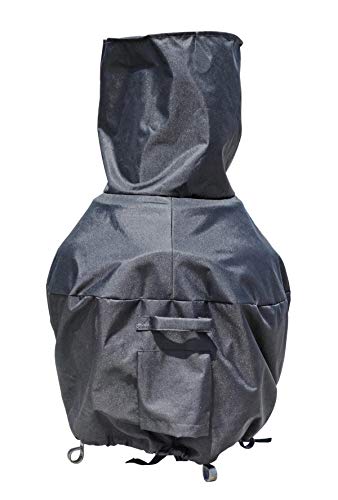
5. Waterproof Drawstring Chiminea Cover (24D x 48H) — Best Budget Buy
Not everyone needs a cover with padded handles and a brand warranty. If your goal is straightforward, durable protection at the lowest possible price, this black drawstring cover delivers the essentials without the extras. It's made from 600D Oxford fabric — the same denier rating as the HERSENT and Sturdy Covers picks on this list — and measures 24 inches in diameter by 48 inches tall. That sizing fits a broad range of mid-size chimineas, making it a versatile pick if you're not sure about exact compatibility.
The all-weather protection is solid for the price. The 600D fabric resists tearing, and the adjustable drawstring at the bottom cinches tight to prevent the cover from lifting or sliding in the wind. The design is simple — no frills, no branded hardware, no webbing trim. Just a heavy fabric shell with a drawstring closure. In testing, it handled rain and UV exposure well over a full season without significant fading or deterioration.
The honest trade-off is that you don't get a warranty, premium stitching, or any of the finishing details that more expensive covers include. But if budget is the primary concern and you just need a functional cover that won't let water in or blow off in a storm, this is a smart buy. Measure your chiminea first — confirm it falls within 24"D x 48"H — and you'll get solid value here.
Pros:
- 600D Oxford fabric — heavy-duty for the price
- Adjustable drawstring for a secure, windproof fit
- Broad sizing (24"D x 48"H) fits many popular chimineas
- Excellent value — no unnecessary extras inflating the cost
Cons:
- No manufacturer warranty
- Basic finishing — no padded handles or bound seams
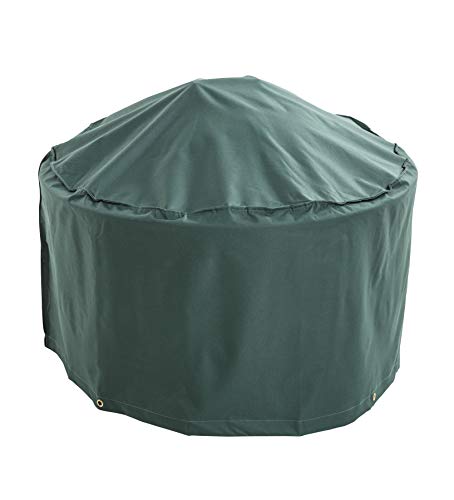
6. Plow & Hearth Outdoor Fire Pit Cover — Best for Low-Profile Fire Pits
This one is a bit different from the rest of the list. The Plow & Hearth cover is designed for low-profile fire pits rather than tall chimineas — it measures 32 inches in diameter by just 18 inches tall. If your outdoor space includes a wide, shallow fire bowl or a round fire pit that sits close to the ground, this is the cover that was designed for it. Most chiminea covers on the market are tall and narrow; this one fills a genuine gap for shorter, wider fire features.
The cloth-like polyester fabric has a water-repellent treatment and is designed to resist fading from UV exposure. Plow & Hearth built in air vents — small openings that allow air to circulate under the cover — which solves two problems at once. First, it prevents the cover from "ballooning" in wind gusts (when trapped air lifts the cover like a sail). Second, it reduces condensation buildup underneath, which can cause rust and mildew even when no rain is falling. The toggle closure keeps it snug against the fire pit base, and the reinforced seams add durability at the stress points.
The green colorway is a nice option if you prefer something other than black — it blends naturally into garden settings. The main limitation is obvious: at 18 inches tall, it simply won't work for standard chimineas. But for fire bowl owners who keep struggling to find a well-fitting, well-ventilated cover, this is a clear winner. It pairs well with a backyard setup that includes a pergola or covered patio area where style and function both matter.
Pros:
- Purpose-built for wide, low-profile fire pits (32"D x 18"H)
- Air vents prevent ballooning and reduce condensation
- Fade-resistant cloth-like polyester with water-repellent treatment
- Reinforced seams at stress points
- Available in green — a less common, attractive option
Cons:
- Not suitable for standard tall chimineas
- Water-repellent rather than fully waterproof
7. Sturdy Covers Chiminea Defender — Best All-Around Pick for 2026
The Sturdy Covers Chiminea Defender earns the top spot in 2026 by solving the one problem that frustrates most chiminea owners: covers that don't stay put. Other covers rely solely on drawstrings or elastic hems to keep themselves in place. The Defender uses a three-strap click-close leg system that wraps around the legs of your chiminea and snaps shut — combined with a bottom elastic hem cord, it creates a cover that won't budge even in high winds. That's a meaningful engineering difference, not just a marketing claim.
The fabric is 600D polyester with a PVC-lined backing — the same heavy-duty construction you find in the HERSENT and the budget drawstring cover, but with the leg straps adding an extra layer of security. The PVC lining means full waterproofing, not just water resistance. UV protection is built into the fabric to prevent the cover itself from degrading in the sun over time, and the construction is rated for iron, aluminum, and clay chimineas — so no matter what your chiminea is made of, this cover handles it. According to Wikipedia's overview of chimineas, these fire pits originated in Mexico and have been used for centuries — they deserve to be protected properly.
The full top-to-bottom coverage is the final selling point. The Defender is designed to cover the entire chiminea from the smoke stack down to the feet, with no gaps that let in wind-driven rain. If you live in a region with heavy seasonal weather, or if you've gone through multiple cheaper covers in the past few years, the Defender is worth the investment. It's the cover that actually does what it promises every time — and that makes it the best chiminea cover you can buy in 2026.
Pros:
- Three click-close leg straps keep it anchored — won't blow off in wind
- 600D polyester with PVC lining — fully waterproof year-round
- Full top-to-bottom coverage with no exposed gaps
- Works on iron, aluminum, and clay chimineas
- UV-protected fabric resists degradation in direct sun
Cons:
- Leg straps require a few extra seconds to fasten and unfasten
- Higher price than budget options
How to Pick the Best Chiminea Cover
With seven quality options in front of you, the right choice comes down to a handful of key factors. Here's what you need to evaluate before you buy.
Measure Your Chiminea First — Every Time
This is the single most important step and the most commonly skipped one. A cover that doesn't fit is worse than no cover at all — it collects water in loose folds, creates wind drag, and provides uneven protection. You need two measurements: diameter at the widest point (usually the belly of the chiminea, not the base) and total height from the ground to the top of the smoke stack. Write these down and compare them to the product specs before ordering. Most manufacturers list a single diameter figure, but traditional clay chimineas are tapered — narrow at top and wide in the middle. Covers designed for tapered profiles (like the HERSENT) fit these shapes better than straight cylindrical covers.
Fabric Weight and Waterproofing: Know the Difference
Fabric denier (D) tells you how heavy the threads are. Higher denier = thicker, more durable fabric. 600D is the benchmark for heavy-duty outdoor covers; 420D is lighter and more flexible but less abrasion-resistant. Beyond denier, check the coating. There are two main types:
- PU coating (polyurethane): Applied to the inside of the fabric. Makes the cover fully waterproof. Water cannot penetrate — it beads and runs off.
- Water-resistant treatment: A surface spray or laminated backing that slows moisture absorption. Works well in light to moderate rain but can saturate in extended heavy rain.
For most backyards in the continental US, a water-resistant cover with quality stitching is adequate. If you're in the Pacific Northwest, the Gulf Coast, or anywhere with prolonged rain events, spend the extra money on a fully waterproof PU or PVC-coated cover.
Securing the Cover: Drawstrings vs. Leg Straps
Wind is the enemy of loose covers. Here's how each closure system performs in practice:
- Drawstrings: The most common closure. A cord at the hem cinches tight around the base. Works well in moderate wind. Can loosen over time as the cord stretches.
- Elastic hems: The hem is elasticized to grip the base. Convenient for quick on/off. Can lose elasticity after repeated stretching in cold weather.
- Click-close leg straps: The most secure option. Straps wrap around the legs and snap shut. Requires an extra step to fasten but won't fail in high winds. This is what the Sturdy Covers Defender uses.
If your chiminea is in an exposed location — on a deck that catches wind, in an open yard without windbreaks, or in a region with regular storms — prioritize leg straps or a combination of drawstring and buckle over elastic alone.
UV Protection and Long-Term Durability
A cover that protects your chiminea but destroys itself in the sun is only solving half the problem. UV rays break down outdoor fabrics — fading color, weakening fibers, and cracking coatings. Look for covers that explicitly list UV stabilization in the coating or fabric treatment. The Classic Accessories Ravenna's Gardelle One fabric and the Sturdy Covers Defender both include UV protection as a design feature, not an afterthought. If you live in a high-sun climate like the Southwest or Florida, UV resistance is non-negotiable — skip covers that don't mention it.
Questions Answered
How do I know what size chiminea cover to buy?
Measure your chiminea at its widest point (usually the belly, not the base or the top) and from the ground to the top of the chimney stack. These two numbers — diameter and height — are all you need to match against a cover's specifications. If your chiminea is between sizes, size up rather than down. A slightly oversized cover is far better than one that strains to fit, which stresses seams and creates gaps where moisture can enter.
Can I leave a chiminea cover on all winter?
Yes, and that's exactly what a quality cover is designed for. Full-season outdoor storage is one of the best uses for a chiminea cover. The cover protects against moisture buildup, UV degradation, bird droppings, and freeze-thaw cycles that crack clay and rust metal. Make sure your chiminea is completely cool and dry before covering it for an extended period, and check it periodically if you get prolonged wet weather to ensure the cover is still seated properly.
What is the difference between waterproof and water-resistant covers?
Waterproof covers (usually with PU or PVC coating) create a complete barrier — water cannot penetrate the fabric at all. Water-resistant covers are treated to repel water under normal conditions but can absorb moisture during sustained heavy rain. For most backyards, water-resistant is adequate. For high-rainfall regions or situations where the cover may sit saturated for days at a time, spend the extra money on fully waterproof construction.
Is 420D or 600D better for a chiminea cover?
600D is heavier and more durable — it resists abrasion, tearing, and long-term wear better than 420D. For a chiminea left outside year-round, 600D is the better choice. 420D covers are lighter and more flexible, which makes them easier to handle, but they don't hold up as well over multiple years of outdoor exposure. If your chiminea is in a sheltered location and you only need seasonal coverage, 420D is fine. For full-time outdoor protection in variable weather, go with 600D.
Can I cover a chiminea while it's still warm?
No. This is important: always wait until your chiminea has cooled completely before putting the cover on. Covering a hot or even warm chiminea risks melting or scorching the fabric, and in worst cases it can cause a fire. The general rule is to wait at least 60 to 90 minutes after the fire has gone fully out before covering it. If you used it heavily or had a large fire, give it two hours to be safe. Touch the metal or clay at the base — if it's still noticeably warm, wait longer.
Do chiminea covers work on both clay and metal chimineas?
Yes, most covers on this list are designed to work with clay, cast iron, and steel chimineas. The key is getting the right size and shape profile. Clay chimineas tend to have a wider belly and a narrower neck than metal models, so tapered covers designed for that silhouette — like the HERSENT — fit better than cylindrical covers. Metal chimineas are often more uniform in shape, which gives you more flexibility with cover selection. Always verify the dimensions regardless of material type.
Buy on Walmart
- Aidetech Chiminea Cover for BALI OUTDOORS, Waterproof Outdoo — Walmart Link
- Classic Accessories Veranda Water-Resistant 22 Inch Chiminea — Walmart Link
- HERSENT Outdoor Patio Chiminea Cover Waterproof Protective C — Walmart Link
- Classic Accessories Ravenna Water-Resistant 22 Inch Outdoor — Walmart Link
- Chiminea Cover Outdoor Waterproof Chiminea Fire Pit Cover He — Walmart Link
- Plow & Hearth Outdoor Fire Pit Cover | All-Weather | Water-R — Walmart Link
- Sturdy Covers Chiminea Defender - Durable, Weather-Proof Chi — Walmart Link
Buy on eBay
- Aidetech Chiminea Cover for BALI OUTDOORS, Waterproof Outdoo — eBay Link
- Classic Accessories Veranda Water-Resistant 22 Inch Chiminea — eBay Link
- HERSENT Outdoor Patio Chiminea Cover Waterproof Protective C — eBay Link
- Classic Accessories Ravenna Water-Resistant 22 Inch Outdoor — eBay Link
- Chiminea Cover Outdoor Waterproof Chiminea Fire Pit Cover He — eBay Link
- Plow & Hearth Outdoor Fire Pit Cover | All-Weather | Water-R — eBay Link
- Sturdy Covers Chiminea Defender - Durable, Weather-Proof Chi — eBay Link
The best chiminea cover is the one that actually fits your chiminea — measure first, buy second, and choose 600D with a secure closure if it's staying outside all year.


About Simmy Parker
Simmy Parker holds a Bachelor of Science in Civil Engineering from Sacramento State University and has applied that technical background to outdoor structure design, landscape planning, and backyard improvement projects for over a decade. Her love for the outdoors extends beyond design — she regularly leads nature hikes and has developed working knowledge of native plants, soil conditions, and sustainable landscaping practices across Northern California. At TheBackyardGnome, she covers backyard design guides, landscaping ideas, and eco-friendly outdoor living resources.
You can Get FREE Gifts. Receive Free Backyard Items here. Disable Ad Blocker to get them all now!
Once done, hit anything below