The best portable tiki bars solve a genuine problem: how do you create a real tropical bar experience outdoors without building something permanent? A quality portable unit sets up in under an hour, stores flat between seasons, and gives any backyard gathering the kind of atmosphere that sticks with guests long after the last mai tai. If you're planning a luau or just want a dedicated outdoor bar station, this guide — paired with our full library of entertaining resources — gives you everything you need to make the right call.

The challenge is sorting through a market full of bars that photograph beautifully but disappoint in real use. Thatch that sheds after a single summer, frames that wobble under a full bottle collection, counters too shallow to be functional — these are exactly the problems this guide helps you avoid.
Below you'll find the full breakdown: when a portable bar is the right move versus a permanent structure, how to match your choice to your hosting style, realistic budgets, the accessories that actually matter, the most common mistakes buyers make, how to troubleshoot common problems, and the quick upgrades that take any setup to the next level.
Contents
- When a Portable Tiki Bar Is the Right Call (And When It's Not)
- First-Timer or Serious Host: How the Best Portable Tiki Bars Differ
- A Realistic Cost Breakdown for Portable Tiki Bars
- Everything You Need to Set Up and Run Your Bar
- Mistakes That Kill the Tiki Vibe
- Fixing Common Portable Tiki Bar Problems
- Quick Wins That Instantly Upgrade Your Setup
When a Portable Tiki Bar Is the Right Call (And When It's Not)
Situations Where Portable Wins
A portable tiki bar makes clear sense in more circumstances than most people realize. You're not just buying something for one annual luau — you're buying a flexible outdoor entertaining asset that adapts to how you actually live.
- You rent your home and can't modify outdoor structures
- Your backyard layout shifts seasonally — bar near the pool in summer, cleared space in fall and winter
- You host at different locations: your home, a family property, beach rentals
- You want to test the outdoor bar concept before committing to a permanent build
- You need the space for other uses when you're not entertaining
The flexibility matters more than people expect. When you decide the bar works better next to the patio than the lawn, you move it. No demo, no rebuild, no contractor. That's a real advantage that a built-in structure can't replicate.
When to Consider Going Permanent
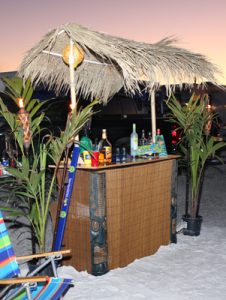
Portable isn't the right answer for everyone. If you host 20 or more guests most weekends through the warm season, the weekly assembly-and-breakdown cycle will wear on you fast. It's also not ideal if you want plumbing — a sink with running water changes the bar experience in ways a portable unit simply can't replicate.
For everything a built outdoor tiki structure involves, our guide on outdoor tiki huts and bars covers the full scope, from material choices to construction considerations. Other clear signs you're ready to go permanent:
- You've used a portable bar for at least one full season and consistently wish it were bigger or more fixed
- You're already planning a significant hardscaping project where a built-in bar integrates naturally
- You want to run power and water directly to the bar station
Don't talk yourself into a permanent structure before you're ready. A quality portable tiki bar gives you 90% of the experience for a fraction of the cost. Start there, prove the concept, then upgrade when the need is real.
First-Timer or Serious Host: How the Best Portable Tiki Bars Differ
What First-Time Buyers Should Look For
If this is your first portable tiki bar, don't optimize for the best unit ever made. Optimize for the right unit for where you are now. An entry-level or mid-range bar gets you into the experience, teaches you what you actually need, and doesn't require a large commitment before you've proven out your usage.
At this tier, expect:
- Lighter aluminum or hollow-steel framing — handles casual use without issue
- Two storage shelves, which is enough for a modest bottle collection and some accessories
- Synthetic thatch panels that look good for two to three seasons before needing attention
- Mostly tool-free assembly in 30–45 minutes

The Best of Times portable bar series is a reliable entry point — stable enough for real hosting, priced accessibly, and widely available. Don't overthink the first buy. Host a few parties, see how you actually use it, and you'll know exactly what to look for if and when you upgrade.
What Serious Entertainers Actually Need
Once you've run a full season and know you want more, the premium tier justifies itself. Brands like TikiBarToGo build with heavier steel frames, deeper counters with genuine load capacity, reinforced thatch panels with real overhang, and three-shelf storage deep enough for upright wine bottles. The full TikiBarToGo portable tiki bar review breaks down the flagship model in detail if you want the specifics.
The differences you'll feel immediately at the premium tier:
- No flex or wobble under a fully loaded counter — once you've felt this, a lighter frame feels like a liability
- Extended thatch overhang that shades the counter surface and adds visual scale
- 30–50 lbs heavier overall — harder to move solo, but genuinely wind-stable
- Hardware that holds up through dozens of assembly cycles without loosening
A Realistic Cost Breakdown for Portable Tiki Bars
What Each Price Tier Gets You
Here's how the market breaks down across three main tiers. These ranges reflect current retail pricing for new units — secondhand options can cut the cost significantly if you're patient and willing to inspect before buying.
| Tier | Price Range | Best For | Key Features | Main Trade-Offs |
|---|---|---|---|---|
| Entry | $100–$250 | First-time buyers, occasional use | Basic thatch look, 2 shelves, light frame, tool-free assembly | Limited stability under load, shorter lifespan |
| Mid-Range | $250–$500 | Seasonal hosts, regular gatherings | Sturdier frame, 2–3 shelves, improved thatch coverage, side panels | Some flex when fully loaded, thatch fades over time |
| Premium | $500–$1,200+ | Dedicated entertainers, frequent use | Heavy steel frame, full thatch coverage, deep counter, 3+ shelves | Higher cost, heavier to move solo |
The Real Number Including Accessories
The bar's sticker price is only part of the story. A fully functional tiki bar setup typically requires:
- Bar stools: $150–$400 for a set of four
- String lights or tiki torches: $30–$100
- Bar mat and drip tray: $20–$50
- Cocktail tools kit: $30–$80
- Storage cover or furniture bag for off-season: $30–$60
Budget 30–50% above the bar's price to cover the accessories that make the setup actually functional and complete. If you're working with a tight budget, prioritize the bar and the lighting — those two elements do the most for atmosphere.
Everything You Need to Set Up and Run Your Bar
What Assembly Actually Requires
Most portable tiki bars ship as structural components only: frame pieces, thatch panels, shelving, and hardware. Nothing functional arrives in the box. For assembly, you'll typically need:
- A rubber mallet for seating bamboo or rattan joints without splitting the material
- A Phillips head screwdriver — most newer models are largely tool-free, but a few screws usually remain
- A level, especially if your patio or deck surface has any slope
- Two people for the first assembly on any mid-range or premium unit
Check whether your bar comes with a carrying bag or storage straps — many don't. Source a weatherproof furniture cover to protect thatch panels between uses. This is a small investment that significantly extends the life of your bar.
The Add-Ons Worth Spending On
Once the bar is assembled, accessories bridge the gap between "prop" and "functional bar station." The ones that consistently deliver:
- Solar or battery-powered LED tiki torch string lights — single fastest atmosphere upgrade after dark
- Bamboo bar mat — protects the counter, catches spills, looks intentional rather than improvised
- Portable cocktail station organizer — keeps tools, straws, and garnishes organized and accessible
- Outdoor bar stools with footrests — guests with somewhere to rest their feet stay longer
For tiki bar stools specifically, it's worth comparing the major brands before buying — quality varies more than you'd expect at similar price points. Skip the fake plastic foliage garlands. They look cheap within the first hour. Real tropical plants in pots flanking the bar look dramatically better.
Mistakes That Kill the Tiki Vibe
Setup Errors That Bite Later
Most portable tiki bar problems are created before the first guest arrives. These are the errors worth avoiding:
- Assembling on uneven ground without leveling first. A two-inch slope turns a stable bar into a wobbler. Use rubber feet pads or shim the legs before you finish assembly.
- Skipping the dry run before your event. Assemble the bar at least once before the party. You'll find the confusing instruction, the missing hardware piece, or the panel that doesn't seat right — far better to find it on a Tuesday afternoon than 45 minutes before guests arrive.
- Overloading the counter on an entry-level bar. Weight limits are real. Exceeding them bows the shelving and stresses the joints. Know your bar's rated capacity and respect it.
- Setting up too far from power. String lights and blenders need electricity. A long extension cord snaking across the lawn is both an eyesore and a trip hazard.
Maintenance Oversights Between Seasons
Portable bars get neglected in storage. That's where most damage actually happens.
- Never store thatch panels in a damp area — moisture is the primary cause of degradation in both natural and synthetic thatch
- Apply UV protectant spray to bamboo and rattan surfaces once per season before extended outdoor exposure
- Re-check all joint connections before reassembly — materials settle and loosen during winter storage
- Don't leave the bar assembled and unprotected during a storm. Wind above 30 mph can topple any portable structure, regardless of how solid it felt in calm conditions
Fixing Common Portable Tiki Bar Problems
Structural and Stability Issues
If your bar wobbles on a flat surface, start with the joints. Bamboo and rattan connections loosen with repeated assembly. Re-tighten all connector hardware and, if the frame still rocks, place non-slip rubber pads under each leg. A thin rubber mat under the entire base works even better on tile or smooth concrete.
Counter sag under load is a weight distribution problem first, and a structural one second. Redistribute heavier bottles to the lower shelves. The counter surface is for active use — not storage. If sag persists after redistribution, you've likely exceeded the bar's rated capacity and need to assess whether an upgrade is warranted.
For wind instability, the most practical solution on a portable unit is a sand-bag anchor tied to the base frame. Some premium models include anchor points for exactly this purpose. If yours doesn't, a simple ground stake looped through a base rung works reliably. The tiki aesthetic is rooted in outdoor, open-air environments — building in wind resistance from the start is smart planning, not overkill.
Appearance Problems Over Time
Thatch panels that lose their fullness can often be revived by gently separating compressed fibers with your fingers, then misting lightly with water and letting them dry in the sun. If panels are genuinely thinning, replacements are available for most major brands at a modest cost — this is much cheaper than replacing the entire bar.
- Bamboo discoloration from moisture: sand lightly with fine-grit sandpaper and apply a bamboo sealant
- Stiff or sticky rattan joints: a light application of furniture-grade wax loosens the material and protects against moisture absorption
- Faded thatch color: synthetic thatch responds well to outdoor fabric spray dye in natural tones — it's a cheap fix that restores the look for another season
Quick Wins That Instantly Upgrade Your Setup
Fast Atmosphere Boosters
You don't need to spend another few hundred dollars to make your bar feel like a destination. A few targeted additions change the entire experience:
- Hang one or two tiki masks directly on the thatch panels. Takes five minutes and immediately signals that the setup is deliberate and designed.
- Add a small Bluetooth speaker positioned behind the bar — ambient Hawaiian or reggae music does more for atmosphere than any decoration you can buy.
- Place tiki torches in the flanking space around the bar rather than on the counter itself. You get the fire element without the fire hazard on your bottle collection.
- Use a chalkboard sign above the bar listing your two or three signature cocktails. Guests engage with it, and it gives the whole setup a polished, purposeful feel.
The Finishing Details That Complete the Look
The finishing details are what separate a bar that looks "set up" from one that looks genuinely designed.
- Use a consistent color palette for all barware — matching mugs, a unified bar tool set, and napkins in two tropical colors
- Keep the counter surface clear of clutter. Everything that doesn't serve an active function belongs on the shelves below, not on top
- Put a textured outdoor rug in front of the bar — it defines the space, grounds the setup visually, and signals to guests where to gather
- Light the bar from below with ground-level uplighting rather than overheads. It reads warmer, more dramatic, and photographs significantly better
Small intentional details compound. Each one on its own is minor. Taken together, they turn a portable bar into a genuine destination in your backyard rather than a piece of furniture that happens to be outside.
Frequently Asked Questions
How long does it take to assemble a portable tiki bar?
First assembly typically takes 30 to 60 minutes. Once you've done it once and know the sequence, you can set the bar up in 20 to 30 minutes. Having a second person helps significantly for mid-range and premium units, which can weigh 60–80 lbs fully assembled.
Can you leave a portable tiki bar outside year-round?
You can, but you shouldn't. UV exposure, moisture, and freeze-thaw cycles break down thatch panels and bamboo faster than anything else. Store thatch panels and bamboo components in a dry indoor space during the off-season and you'll extend the life of your bar by several seasons.
What's the best portable tiki bar for a small backyard?
Look for a unit with a footprint under five feet wide that includes folding side wings. This gives you full bar functionality when entertaining and a much smaller profile when not in use. Mid-range units from Best of Times and similar brands offer compact options without major stability trade-offs.
Are portable tiki bars worth the investment?
Yes — if you actually entertain outdoors. A quality portable tiki bar costs a fraction of a built-in structure and delivers most of the same experience. If you host even three or four outdoor events per year, the per-use cost drops quickly and the bar pays for itself in atmosphere and hosting versatility.
Final Thoughts
You now have everything you need to make a smart, confident decision on a portable tiki bar — from matching the tier to your hosting style, to budgeting accurately, to setting it up right and keeping it in good shape season after season. Pick your price tier, shortlist two or three units that meet the structural requirements outlined here, and pull the trigger before your next event. The hardest part isn't choosing — it's realizing how much better your outdoor gatherings will be once you stop waiting.


About Simmy Parker
Simmy Parker holds a Bachelor of Science in Civil Engineering from Sacramento State University and has applied that technical background to outdoor structure design, landscape planning, and backyard improvement projects for over a decade. Her love for the outdoors extends beyond design — she regularly leads nature hikes and has developed working knowledge of native plants, soil conditions, and sustainable landscaping practices across Northern California. At TheBackyardGnome, she covers backyard design guides, landscaping ideas, and eco-friendly outdoor living resources.
You can Get FREE Gifts. Receive Free Backyard Items here. Disable Ad Blocker to get them all now!
Once done, hit anything below