The best residential tiki hut builders USA buyers trust are concentrated in Florida, Texas, and the Gulf Coast, though several national companies now ship materials and manage installations across all 48 contiguous states. Whether you're adding a backyard tiki bar or commissioning a full commercial palapa for a resort or restaurant, the builders covered here have verified portfolios and real project history to back up their quotes. Browse our dedicated tiki hut builders resource guide for an expanded regional directory and detailed vetting tips.
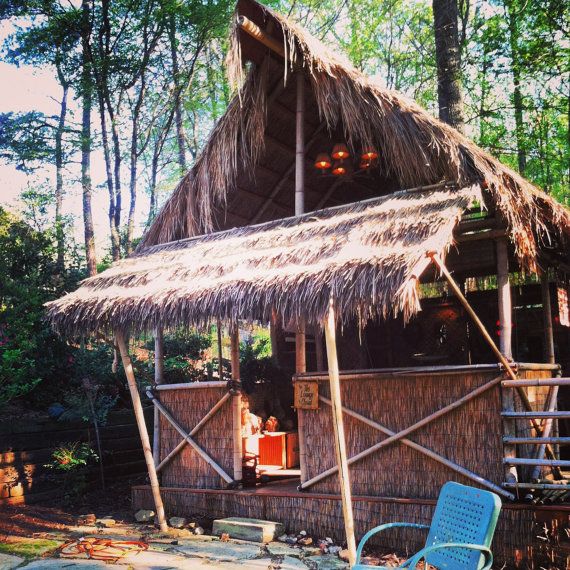
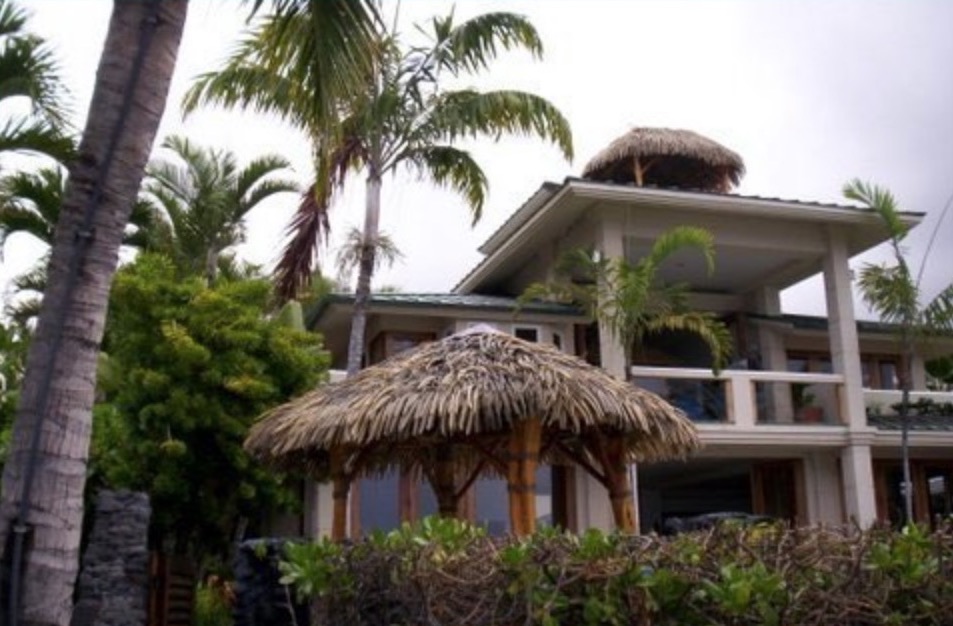
Tiki huts have moved well beyond beach bars and resort pools. Today you'll find them covering backyard kitchens, poolside lounges, outdoor bars, and full commercial event spaces in every climate zone across the country. Builders have responded by developing synthetic thatch options that mimic authentic African palm without the maintenance demands, alongside traditional hand-tied natural thatch installations for clients who want the real thing.
Before you request a single quote, it's worth clearing up a few widespread misconceptions that cause buyers to overpay, underbuild, or skip critical permit steps. The sections below walk you through everything from common myths to real cost numbers, a shortlist of top builders, and a plain-language comparison of material choices.
Contents
- What Most People Get Wrong About Tiki Hut Builders
- Knowing When a Professional Build Is Worth It
- The Fastest Ways to Vet a Tiki Hut Builder Before You Commit
- What a Tiki Hut Actually Costs: A Real Budget Breakdown
- Top Residential Tiki Hut Builders in the USA — and How to Work With Them
- Natural Thatch vs. Synthetic: The Honest Strengths and Weaknesses
- Final Thoughts
What Most People Get Wrong About Tiki Hut Builders
Bad information about tiki hut construction circulates freely online, and acting on it leads to sticker shock, permitting headaches, and disappointing results. Here are the three most damaging misconceptions you need to set aside before you start shopping.
Myth: Tiki Huts Only Work in Warm Climates
This is the most persistent myth in the industry, and it simply doesn't hold up. Synthetic thatch products are engineered to handle wind speeds up to 160 mph and carry UV, mold, and moisture resistance that makes them viable in Pacific Northwest rain, Midwest humidity, and light snow loads. Natural African thatch performs best in hot, dry climates but can be waterproofing-treated for wetter regions with good results. A quality builder evaluates your local climate during the initial site assessment and specifies materials accordingly, so geography alone is rarely a dealbreaker for a well-planned project.
Myth: Thatch Roofs Need Replacing Every Few Years
Natural thatch on a properly built residential structure typically lasts 5 to 15 years depending on the palm species, installation quality, and climate exposure. Synthetic thatch products from established manufacturers carry warranties ranging from 10 to 20 years. The determining variable is whether the thatch was installed correctly over a structurally sound frame — a rushed installation with poorly dried materials degrades in a few seasons, while a correctly built hut with quality thatch holds up for decades with minimal intervention.
Myth: Tiki Huts Can't Pass Building Inspections
Permitted tiki hut construction is entirely possible in most jurisdictions, and experienced builders handle the permitting process as a standard part of their project scope. Thatched roof structures have been used in construction for thousands of years and are addressed in building codes throughout Florida, Texas, and other major markets. Your builder should pull permits, submit engineered drawings where required, and schedule inspections without you having to ask — if they're trying to skip these steps, that's a serious disqualifying red flag.
Pro tip: Always verify that your builder carries general liability insurance and provides documentation confirming that all materials meet your local fire-resistance ratings before you sign any contract.
Knowing When a Professional Build Is Worth It
Not every tiki hut project demands a specialist builder, and understanding where the line falls saves you real money on simpler installations while protecting you from under-building on complex ones. If you're comparing tiki huts against other covered outdoor structures, our hexagonal gazebo buying guide covers a popular DIY-friendly alternative worth evaluating side by side.
Go Professional When…
- Your structure exceeds 10 feet in diameter or will attach directly to your home's foundation or roofline
- You're building for commercial use and need compliance with ADA requirements and local fire codes
- You want natural thatch installed with traditional hand-tying techniques that require skilled, experienced labor
- Your property sits in a hurricane zone where wind-load engineering is mandatory for permitted structures
- You're integrating electrical, overhead lighting, ceiling fans, or any plumbing into the build
Skip the Specialist When…
- You're installing a prefabricated synthetic thatch kit under 10 feet with no permanent concrete foundation
- Your local zoning classifies the structure as a temporary accessory with no permit requirement triggered
- You have solid construction experience and want a manageable weekend DIY project with a clear materials list
- Budget is the primary constraint and visual authenticity is secondary to function
For most residential projects with any structural complexity — attached structures, electrical integration, or footprint over 12×12 — a professional builder eliminates expensive mistakes and shortens your timeline considerably. Once your hut is standing, complement it with quality outdoor seating using our best patio conversation sets guide, which covers durable options that pair naturally with a tropical outdoor aesthetic.
The Fastest Ways to Vet a Tiki Hut Builder Before You Commit
Getting competitive quotes from three to five builders before committing is the standard move, but the vetting process doesn't need to drag on for weeks. These steps get you to a qualified shortlist quickly so you can focus energy on comparing real proposals rather than filtering out unqualified companies with slick websites.
What to Check Before You Call
- Portfolio breadth — look for completed projects similar to yours in footprint, setting, and material choice
- Google and Houzz reviews, specifically how the company responds to any negative feedback left by customers
- License and insurance certificates verified directly through your state's contractor licensing database
- Years in business — builders with fewer than three years of tiki-specific experience carry meaningfully higher delivery risk
- Supplier relationships — established builders source thatch from known importers with consistent quality standards and documentation
Red Flags That Disqualify a Builder Immediately
- Requesting full payment upfront before any materials are ordered or work begins on your site
- No verifiable physical business address or contractor license number on file with your state
- Inability to explain what thatch species or specific synthetic product they plan to install
- No written warranty covering both materials and labor provided as part of the proposal
- Quotes that come in 40 percent or more below all competitors without a clear, documented explanation
Warning: Suspiciously low quotes almost always signal inferior thatch materials, unlicensed subcontractors, or missing structural elements that will cost you far more to correct after the fact.
What a Tiki Hut Actually Costs: A Real Budget Breakdown
Pricing varies widely based on size, materials, structural complexity, and your regional market. The table below gives you honest baseline numbers for both residential and commercial builds drawn from active USA builders. All figures reflect installed pricing — materials plus labor — not kit-only costs you'd assemble yourself.
| Project Type | Size Range | Thatch Type | Estimated Installed Cost |
|---|---|---|---|
| Small residential (backyard bar or lounge) | 10×10 to 12×12 ft | Synthetic | $3,500 – $6,500 |
| Mid-size residential (pool cabana) | 14×14 to 16×20 ft | Synthetic | $7,000 – $14,000 |
| Large residential (outdoor kitchen cover) | 20×20 ft+ | Natural or synthetic | $15,000 – $30,000 |
| Small commercial (restaurant or resort) | 20×20 to 30×30 ft | Natural or synthetic | $25,000 – $55,000 |
| Large commercial (event venue or beachfront) | 40×40 ft+ | Natural African thatch | $60,000 – $150,000+ |
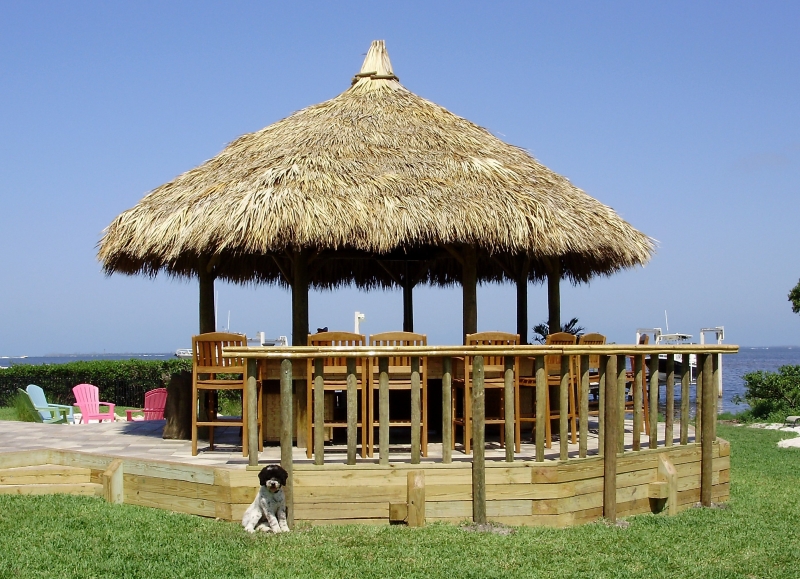
Residential Pricing Factors
For a residential project, the three biggest cost drivers are total square footage, the integration of electrical or plumbing, and the choice between synthetic and natural thatch. Natural thatch adds 20 to 35 percent to material costs compared with high-quality synthetic options, but delivers an organic texture that many homeowners find worth the premium. Adding ceiling fans, LED lighting, or a built-in bar typically adds $1,500 to $5,000 to the base structure cost depending on the complexity of the electrical scope required.
Commercial Pricing Factors
Commercial projects carry higher costs because they require engineered structural drawings, commercial-grade pressure-treated lumber, wind-rated hardware connections, and longer supervised labor timelines. Permitting fees for commercial builds in Florida and Texas alone can add $1,000 to $3,000 to overall project cost before any work begins. If you're planning a waterborne tiki structure for hospitality use, our guide to floating tiki hut boat cruises in the USA offers useful context on how operators build and maintain structures at commercial scale on the water.
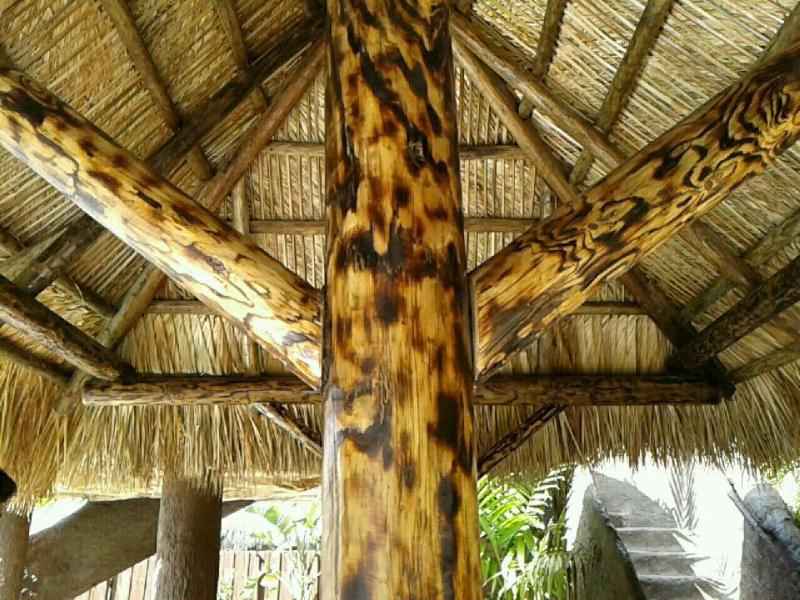
Top Residential Tiki Hut Builders in the USA — and How to Work With Them
These companies represent the strongest options currently active in the US market, with verifiable portfolios, established supplier relationships, and documented project history across both residential and commercial categories. After the builder profiles, you'll find a step-by-step overview of the standard build process so you know exactly what to expect once you engage any qualified contractor.
Florida-Based Specialists
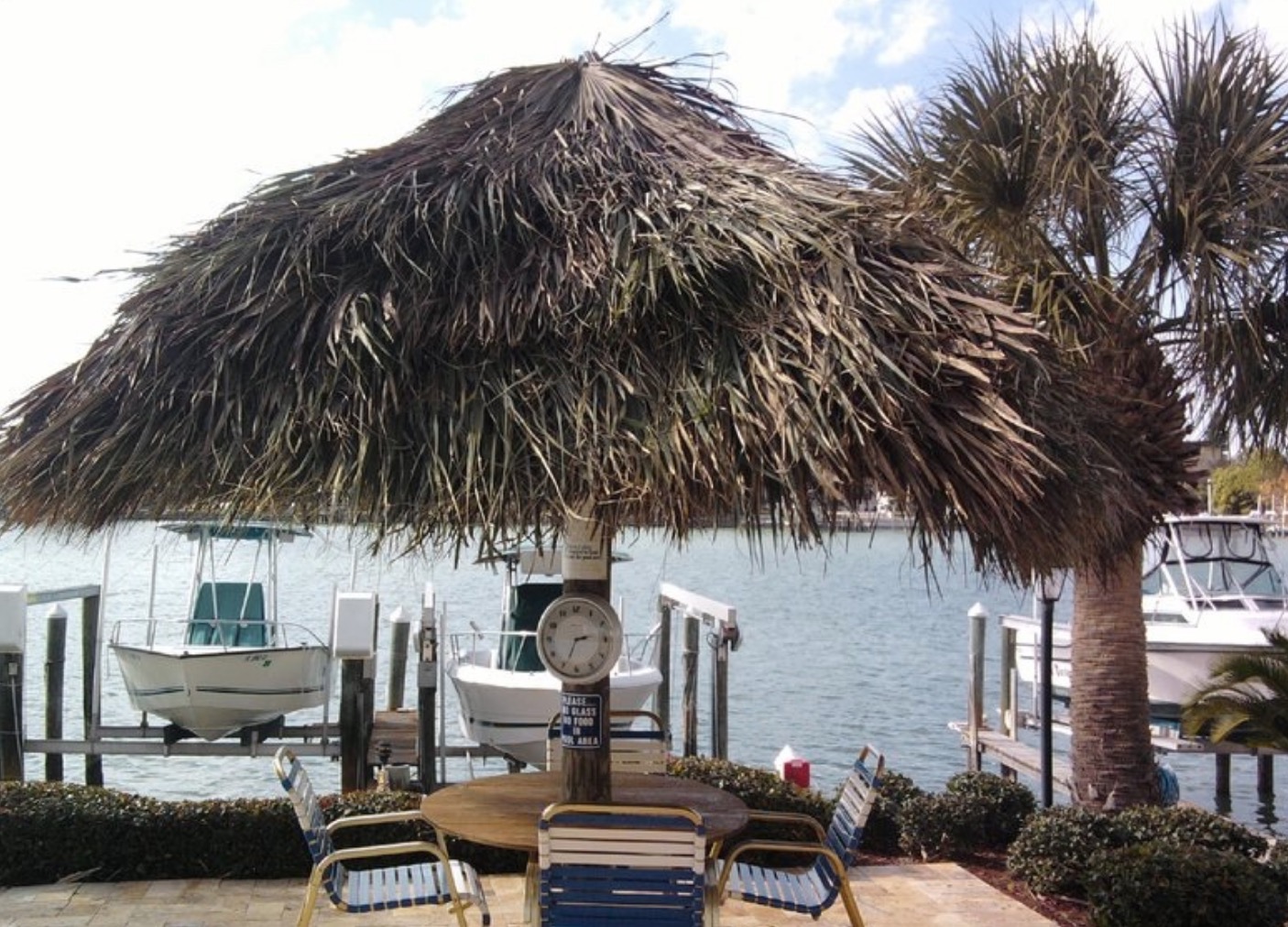
Aloha Tiki Huts specializes in South Florida residential and commercial installations using both natural African thatch and commercial-grade synthetic panels. They handle permitting across Miami-Dade, Broward, and Palm Beach counties and offer custom sizing throughout their full catalog of structures.
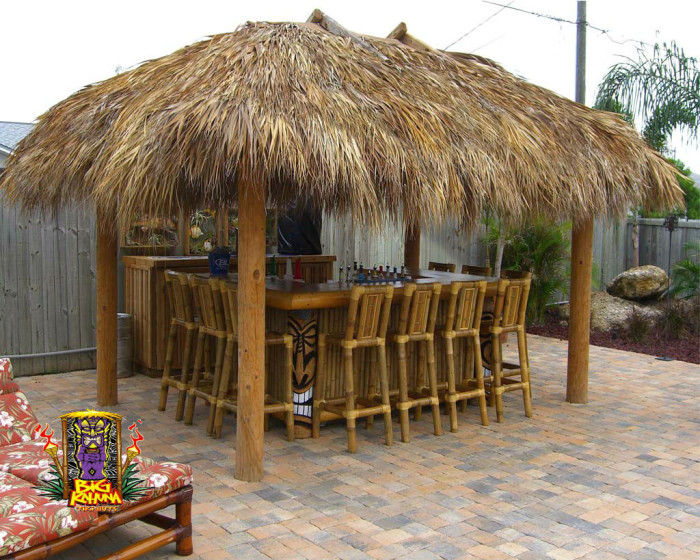
Big Kahuna Tiki Huts focuses on residential installations across Central and South Florida, with a strong portfolio of poolside structures and outdoor kitchen covers built in the 12×20 to 20×20 range using pressure-treated posts and natural thatch as their signature material.
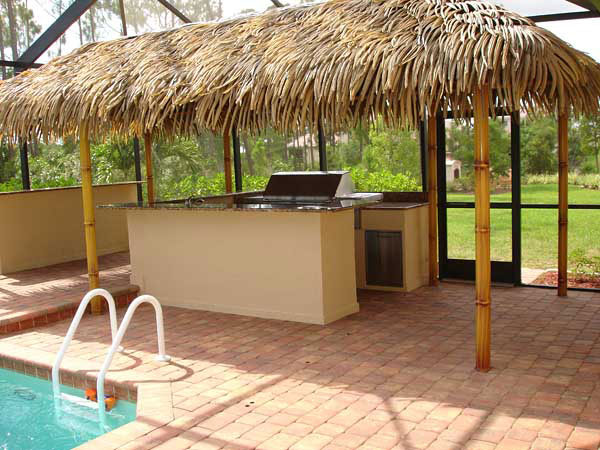
Oasis Tiki Huts covers a wider geographic footprint spanning Florida, Georgia, and the Carolinas. They emphasize custom outdoor kitchen integrations and have completed high-end residential projects throughout the Southeast for clients who want full outdoor living functionality under one roof structure.
National and Multi-Region Builders
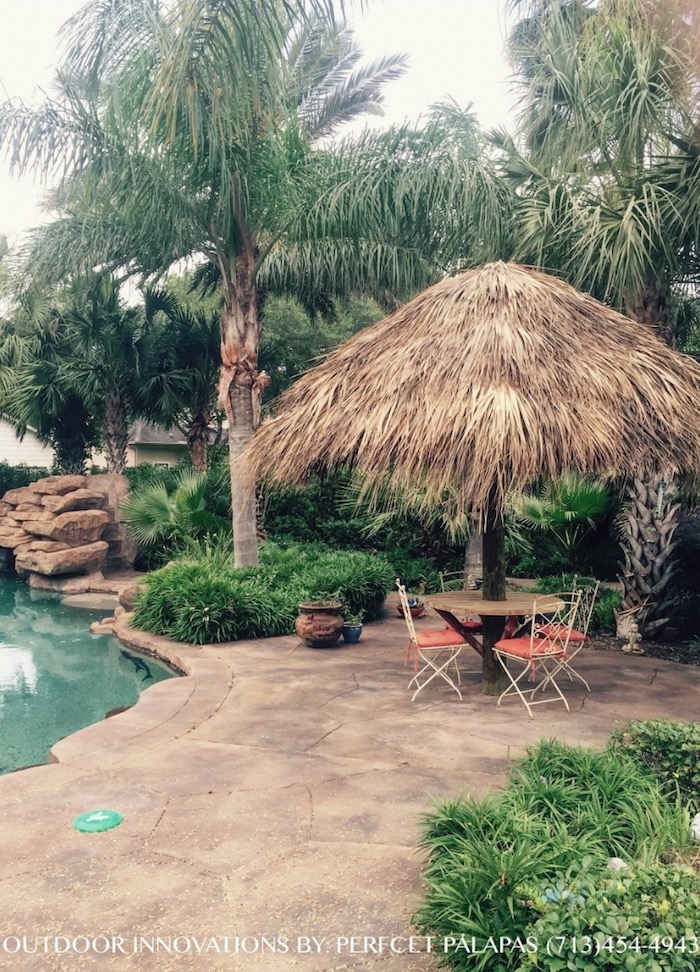
Perfect Palapas operates nationally with a focus on commercial-grade natural thatch structures, importing African palm thatch directly and specializing in large-footprint projects for resorts, restaurants, and permanent event venues that need authentic materials and engineering to match.
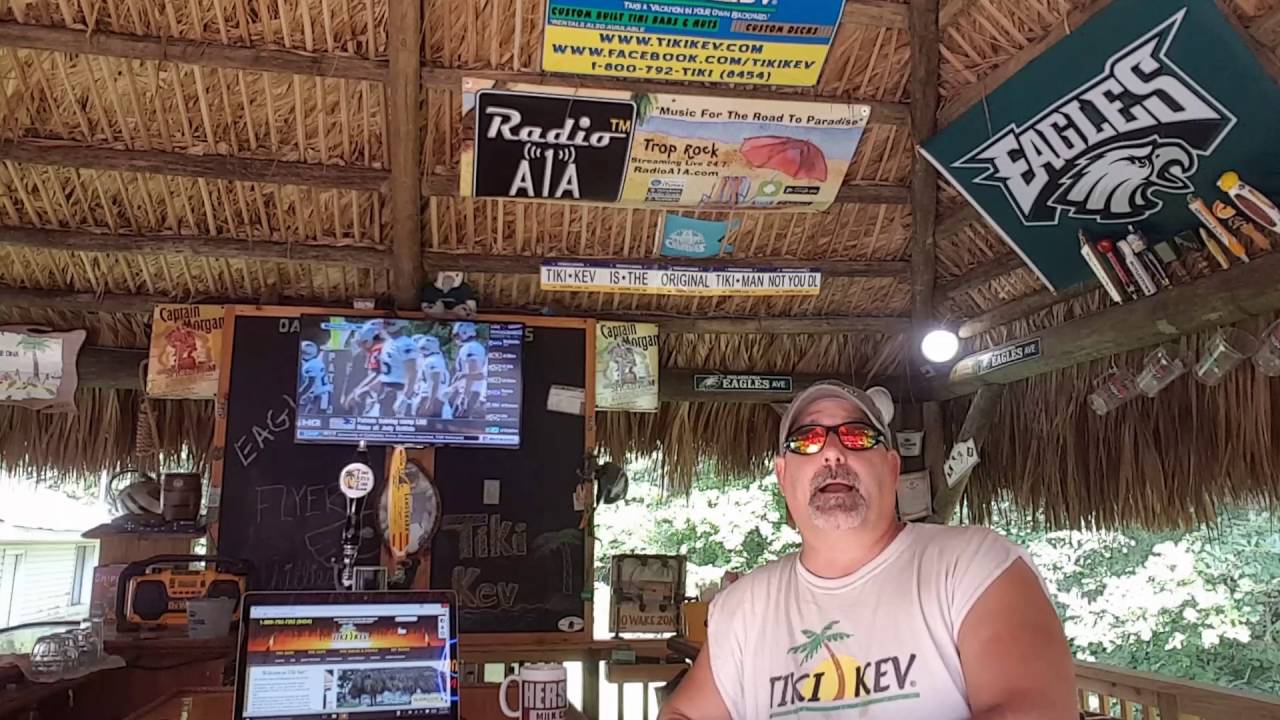
Tiki Kev covers the Southeast and Gulf Coast with an emphasis on mid-size residential tiki huts and tiki bar builds. Their standard process includes a design consultation, CAD rendering, structural engineering where code requires it, and a clearly communicated phased installation timeline so you always know what's happening next.
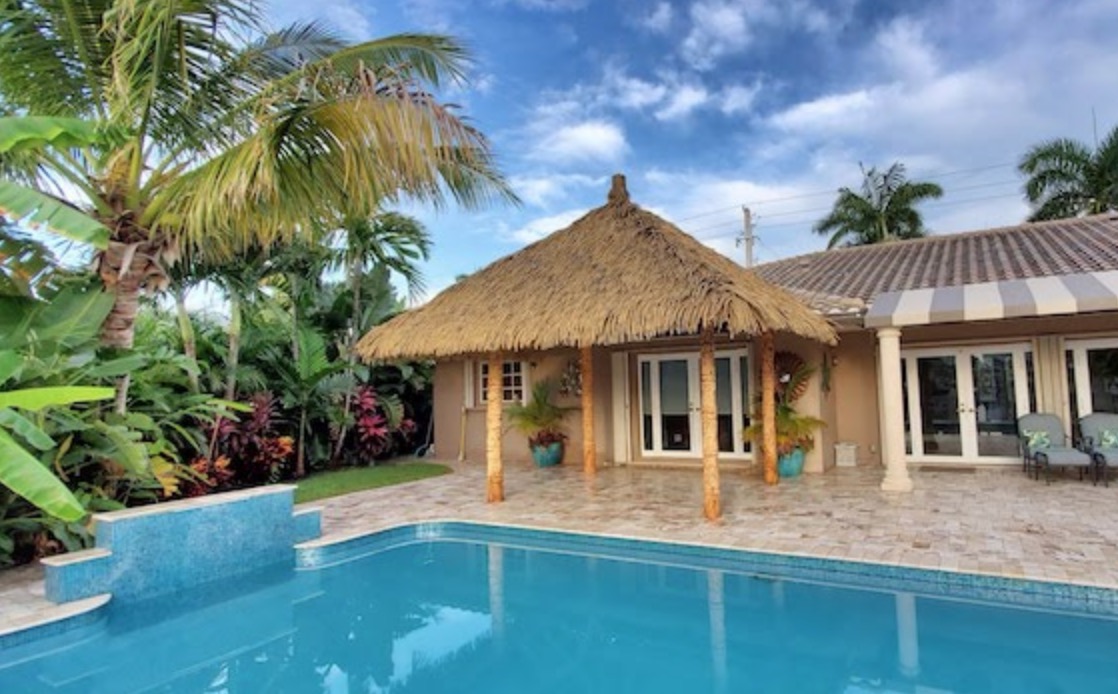
Tiki Mundo operates across Texas and the Gulf Coast region with experience in both residential backyard projects and commercial outdoor hospitality spaces. They work exclusively with synthetic thatch for clients in higher-humidity inland markets, where moisture management is the primary long-term concern for any thatch installation.
How the Standard Build Process Works Step by Step
- Initial site consultation — the builder assesses your property, discusses size and material options, and identifies any local code requirements that affect design
- Written proposal — you receive a detailed scope document, materials list, payment schedule, and itemized cost breakdown before any money changes hands
- Permitting — the builder pulls permits and submits engineered drawings where required by your municipality, handling all communications with the permit office
- Foundation and post setting — pressure-treated or concrete posts are installed first with concrete footings poured to the depth your soil and code conditions require
- Structural framing — rafters, purlins, and any ridge or hip framing are constructed, secured, and inspected before thatch work begins
- Thatch installation — panels or hand-tied thatch are applied from eave to peak in overlapping rows that direct water away from the structure efficiently
- Finishing and final inspection — electrical, fans, bar tops, or decorative elements are completed and a final inspection is scheduled to close the permit
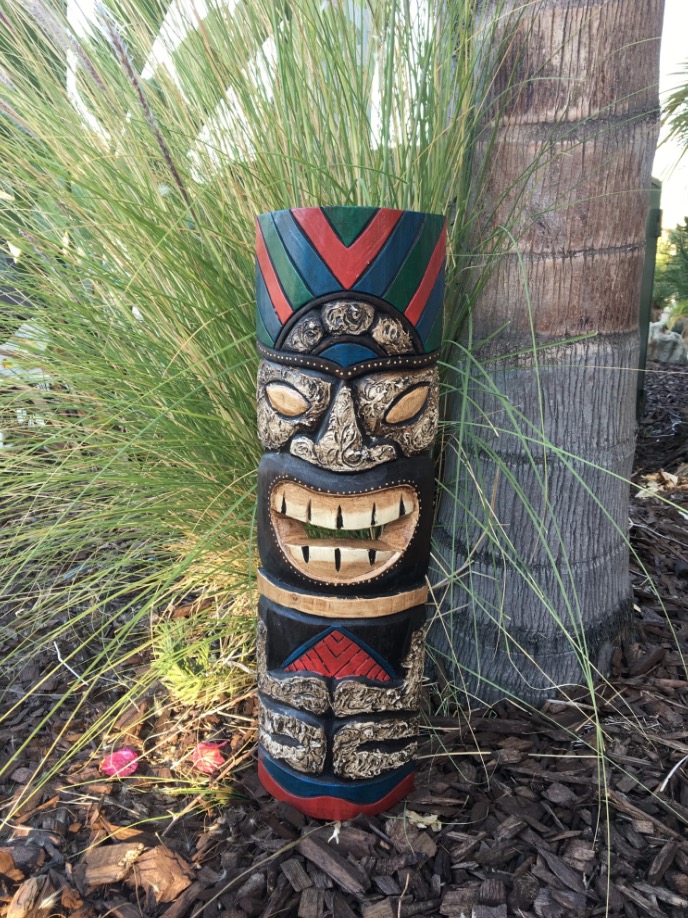
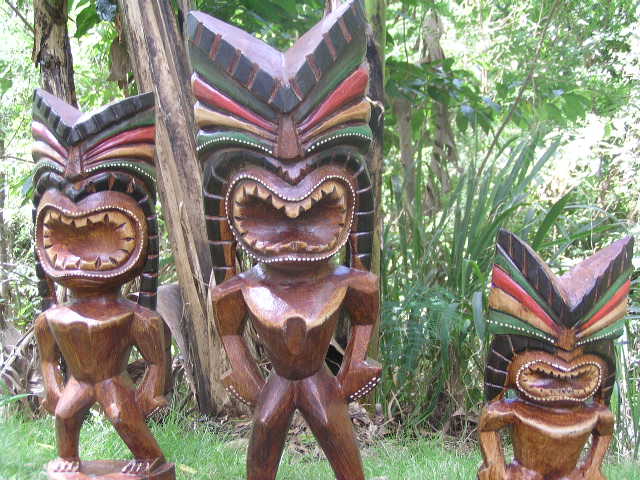
Once your structure is finished, authentic decorative elements complete the look — our guide on where to buy tiki sculptures covers the best shops for hand-carved tikis and outdoor art that fits the aesthetic without looking generic.
Natural Thatch vs. Synthetic: The Honest Strengths and Weaknesses
Choosing between natural and synthetic thatch is one of the most consequential decisions in any tiki hut build, and it affects cost, lifespan, maintenance burden, and visual character. Both options have genuine advantages — the right choice depends on your climate, budget, and how much ongoing maintenance you're actually willing to commit to over the life of the structure.

Natural African Thatch
Strengths:
- Unmatched authentic appearance with natural color variation, layered texture, and organic depth
- Excellent natural insulation — keeps the interior noticeably cooler than metal or hard-top alternatives in direct sun
- Biodegradable and sourced from sustainable palm harvests in sub-Saharan Africa when purchased from reputable suppliers
- Spot repairs are possible using patching techniques rather than requiring full panel replacement across the roof
Weaknesses:
- Higher fire risk without chemical treatment — fire retardant application is required in most US jurisdictions and adds to your upfront cost
- Shorter lifespan in high-humidity or consistently wet climates (5 to 8 years versus 10 to 15 in dry conditions)
- Heavier than synthetic alternatives, requiring more robust structural framing and deeper footings in many cases
- Susceptible to mold infiltration and pest activity without proper treatment and routine inspections
Synthetic Palm Thatch
Strengths:
- 20-plus year lifespan with minimal maintenance required across most US climate zones
- Built-in UV, mold, and moisture resistance — no annual treatment or chemical application needed after installation
- Lighter weight allows for more flexible structural designs and simpler framing in many residential applications
- Rated for hurricane-force wind loads when properly installed by a contractor following manufacturer specifications
Weaknesses:
- Less convincing visual texture up close compared with genuine hand-tied natural thatch on a well-built structure
- Higher upfront material cost than entry-level natural thatch, though total lifecycle cost typically favors synthetic
- Not biodegradable — end-of-life disposal is a legitimate consideration for buyers who prioritize eco-friendly choices

Pro insight: If your property is in a hurricane zone and you want maximum longevity with minimal upkeep, premium synthetic thatch from a reputable manufacturer is the smarter long-term investment for most residential buyers in the USA.

Pair your finished tiki hut with a quality fire element to extend evening use and make the space feel complete — our roundup of the best outdoor fireplaces includes options that complement a tropical outdoor aesthetic without competing with the tiki structure visually.
Final Thoughts
Finding the right residential tiki hut builder in the USA comes down to checking credentials carefully, comparing real portfolio work in projects similar to yours, and confirming that permits and engineered drawings are included in the scope before you commit to any contract. Request written proposals from at least three of the builders profiled here, ask each one directly about their thatch sourcing and warranty terms, and don't let a low quote override what the vetting process tells you about a company's reliability. Visit our complete tiki hut builders guide to explore more vetted specialists by region and get the additional resources you need to move from planning to a finished structure with confidence.


About William Murphy
William Murphy has worked as a licensed general contractor in Fremont, California for over thirty years, specializing in outdoor structures, green building methods, and sustainable design. During that career he has written about architecture, construction practices, and environmental protection for regional publications and trade outlets, bringing technical depth to subjects that most home improvement writers approach only from a consumer perspective. At TheBackyardGnome, he covers outdoor product reviews, backyard construction guides, and sustainable landscaping and building practices.
You can Get FREE Gifts. Receive Free Backyard Items here. Disable Ad Blocker to get them all now!
Once done, hit anything below