The Westmoreland Conservancy: Beyond Your Average Volunteer Organization
by William Murphy
What separates a Westmoreland Conservancy volunteer organization from the dozens of other environmental groups operating across Pennsylvania? The answer lies not in budget or staff size, but in the permanence of its land protection model — a system that has preserved thousands of acres of forests, wetlands, and working farmland, connecting communities to the natural environment in lasting, measurable ways.
The Westmoreland Conservancy operates as a certified nonprofit land trust, acquiring conservation easements and outright land ownership to shield critical natural areas from development pressure. Unlike single-issue advocacy groups that depend on legislative wins, this conservancy builds permanent legal protections directly into the land — agreements that survive changes in ownership, administration, and public policy.
Volunteers, donors, and landowners who understand the conservancy's structure contribute more effectively and extract more value from their involvement. This guide examines the organization's origins, stewardship programs, membership costs, volunteer pathways, and long-term conservation strategy — and compares it to regional counterparts like the Manada Conservancy and the Lancaster County Conservancy, both operating on comparable land trust frameworks across the state.
Contents
- Origins and Mission of the Westmoreland Conservancy Volunteer Organization
- Protected Landscapes and Active Stewardship Programs
- Who Joins and Why: New Supporters vs. Seasoned Conservationists
- Membership Costs and Financial Transparency
- Maximizing Participation in the Westmoreland Conservancy
- Westmoreland Conservancy vs. Similar Regional Organizations
- Building a Conservation Legacy That Outlasts Any Single Generation
Origins and Mission of the Westmoreland Conservancy Volunteer Organization
How the Organization Took Shape
The Westmoreland Conservancy was founded by a coalition of local landowners, naturalists, and civic leaders who recognized that voluntary conservation agreements offered more durable protection than regulatory advocacy alone. Based in Greensburg, Pennsylvania, the organization earned accreditation from the Land Trust Alliance, the national body that sets ethical and operational standards for land trusts across the United States.
Key milestones in the conservancy's institutional development include:
- Formation of a volunteer stewardship committee responsible for annual land monitoring visits
- Acquisition of the first conservation easements on agricultural parcels in the county's rural fringe
- Partnership with state agencies to align private land protection with public greenway corridors
- Formal Land Trust Alliance accreditation, confirming adherence to national standards for governance and conservation practice
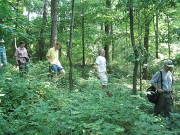
Geographic Focus and Core Commitments
The conservancy's primary territory encompasses Westmoreland County, though easements occasionally extend into adjacent counties where watershed boundaries demand coordinated protection. The stated mission rests on three pillars:
- Permanent land protection through voluntary legal agreements with willing private landowners
- Ongoing stewardship of conserved properties through annual monitoring and easement enforcement
- Community engagement through education programs, volunteer events, and public access initiatives on conservancy-owned lands
Protected Landscapes and Active Stewardship Programs
Forest and Watershed Preservation
Forests and riparian corridors represent the largest category of protected land in the conservancy's portfolio. Healthy forest cover directly supports water quality in streams feeding into the Youghiogheny and Monongahela river systems, both of which serve as downstream drinking water sources for regional communities.
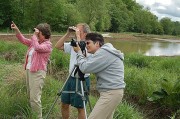
Stewardship volunteers conducting annual site visits document and report:
- Unauthorized structures, grading, or vegetation removal that violates easement terms
- Invasive species encroachment along forest edges and stream banks
- Evidence of illegal dumping or off-road vehicle intrusion on protected parcels
- Changes in wetland hydrology that may signal upstream land alterations
Farmland and Open Space Initiatives
Agricultural land under conservation easement retains its farming function while permanently restricting subdivision or industrial development. This model allows farm families to receive fair compensation for the development rights they relinquish, often enabling the next generation to inherit productive farmland without carrying an inflated tax burden. Community-oriented conservation networks like the Waterloo Gardeners Club employ parallel strategies to protect green space at the neighborhood and community scale, demonstrating the broad applicability of voluntary conservation models.
Who Joins and Why: New Supporters vs. Seasoned Conservationists
First-Time Volunteers and Casual Supporters
Entry points into the Westmoreland Conservancy volunteer organization include a range of accessible, low-commitment options:
- Trail maintenance days on conservancy-owned properties, typically requiring no prior experience
- Invasive plant removal events, scheduled primarily in spring and fall
- Annual membership contributions at the individual or household tier
- Attendance at conservation education programs, guided nature walks, and donor recognition events
Most hands-on events provide tools, instruction, and on-site supervision, keeping the barrier to entry deliberately low and participation rates high across diverse age groups.
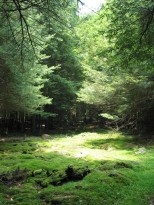
Long-Term Members and Land Donors
Experienced supporters advance into roles that carry greater responsibility and require specialized knowledge:
- Certified stewardship monitors who conduct annual easement compliance visits and submit formal documentation to staff
- Committee members serving on finance, land acquisition, or community outreach committees
- Landowners who negotiate conservation easements on their own properties, permanently protecting family land
- Major donors who fund specific acquisition projects, restoration initiatives, or endowment campaigns
Volunteers who complete at least two stewardship monitoring seasons report significantly stronger organizational commitment than those who participate only in single-day service events — depth of involvement drives retention.
Membership Costs and Financial Transparency
Annual Membership Tiers
Accredited land trusts structure membership dues across multiple tiers to accommodate supporters at every income level. The Westmoreland Conservancy follows a tiered model consistent with national land trust standards, approximated below based on comparable Pennsylvania organizations:
| Membership Level | Typical Annual Contribution | Primary Benefits | Best Suited For |
|---|---|---|---|
| Individual | $30–$50 | Newsletter, event invitations | Casual supporters, first-time members |
| Family | $50–$75 | Newsletter, all household members recognized | Households with multiple interested participants |
| Sustaining | $100–$249 | Annual report recognition, special event access | Regular volunteers and conservation advocates |
| Patron | $250–$499 | Named recognition, private tours of protected lands | Committed long-term supporters |
| Conservator | $500+ | Project-level updates, leadership event access | Major donors and legacy gift planners |
Where Dues and Donations Go
Accredited land trusts publish annual financial disclosures showing revenue allocation. For well-run conservancies operating at county scale, expenditure typically distributes as follows:
- Land acquisition and easement transaction costs: 45–55% of annual expenditures
- Stewardship monitoring and enforcement: 20–25%
- Administration and organizational operations: 15–20%
- Community outreach, education, and events: 8–12%
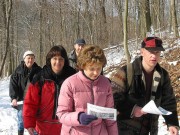
Maximizing Participation in the Westmoreland Conservancy
Making the First Volunteer Day Count
Volunteers who arrive prepared contribute more on their first visit and return at higher rates. Effective preparation follows a straightforward sequence:
- Contact the conservancy office before attending to confirm event logistics and any required gear
- Review the conservancy's newsletter or website for background on the specific site being worked
- Wear sturdy footwear and layered clothing suited to field conditions in the target season
- Bring adequate water, sun protection, and any personal medications — remote sites are often far from facilities
- Ask event leaders directly about pathways to advanced roles if sustained involvement is the goal
Advancing into Stewardship Roles
The progression from casual participant to certified stewardship monitor follows a structured path that conservancies across the region have refined over decades:
- Completion of a conservancy-led training session covering easement terms and field monitoring protocols
- Paired site visits alongside experienced monitors during the initial monitoring season
- Annual reporting responsibilities using standardized documentation forms and photographic records
- Ongoing communication with conservancy staff regarding any compliance concerns identified in the field
Conservation bodies like the Florida Native Plant Society and the Florida Defenders of the Environment operate comparable volunteer advancement frameworks, confirming that tiered engagement models represent an established best practice across regional conservation organizations nationwide.
Westmoreland Conservancy vs. Similar Regional Organizations
How It Compares to Other Pennsylvania Land Trusts
Pennsylvania hosts more than 60 accredited land trusts, placing it among the most active states for voluntary land conservation in the country. The Westmoreland Conservancy occupies a defined niche within that ecosystem — a county-scale organization with deep local landowner relationships and a sharply focused geographic mission. Key distinctions from comparable bodies:
- Geographic scope: County-focused versus statewide bodies like Natural Lands Trust, which operates across multiple counties and adjacent states
- Landowner relationships: Direct, long-term agreements with individual farm and forest landowners rather than institutional or governmental sellers
- Volunteer culture: Hands-on monitoring and active restoration work versus advocacy-first organizations that prioritize legislative engagement over field operations
- Accreditation status: Land Trust Alliance certification signals adherence to national governance and conservation standards that smaller or newer regional groups may not yet hold
The Lancaster County Conservancy, profiled in depth as a case study in Pennsylvanian preservation and land stewardship, presents a direct parallel — a county-focused land trust that grew into one of the state's most effective conservation bodies precisely by maintaining close relationships with local landowners and municipal planning authorities over multiple decades.
Building a Conservation Legacy That Outlasts Any Single Generation
Conservation Easements as Permanent Protections
The central instrument of the Westmoreland Conservancy's long-term impact is the conservation easement — a voluntary legal agreement that permanently restricts development on a parcel of land, regardless of future ownership changes. Essential characteristics of this tool include:
- Easements are recorded in the county deed record and encumber the land in perpetuity, surviving all subsequent sales
- Landowners retain ownership and many use rights, including farming, sustainable forestry, and private recreation
- The conservancy holds the legal obligation to monitor and enforce easement terms across every future ownership transfer
- Donated easements may qualify landowners for federal income tax deductions based on the appraised value of relinquished development rights
How Individual Actions Build Collective Impact
Single donations, individual volunteer days, and standalone easement agreements accumulate across decades into a protected landscape that fundamentally reshapes the character of an entire county. The conservancy's organizational role is to coordinate these dispersed individual actions into a coherent geographic strategy — prioritizing parcels that complete wildlife corridors, protect municipal drinking water sources, or preserve the last remaining agricultural buffers surrounding expanding suburban areas.
This long-view strategic model distinguishes mature land trusts from organizations focused on immediate, project-by-project outcomes. Supporters who understand that legacy is built incrementally — through consistent annual membership, sustained monitoring commitments, and occasional major gifts — contribute to conservation outcomes that will endure long after any individual participant has moved on.
Permanent conservation is not a single act — it is a sustained commitment that compounds quietly across generations until the landscape itself becomes the evidence.


About William Murphy
William Murphy has worked as a licensed general contractor in Fremont, California for over thirty years, specializing in outdoor structures, green building methods, and sustainable design. During that career he has written about architecture, construction practices, and environmental protection for regional publications and trade outlets, bringing technical depth to subjects that most home improvement writers approach only from a consumer perspective. At TheBackyardGnome, he covers outdoor product reviews, backyard construction guides, and sustainable landscaping and building practices.
You can Get FREE Gifts. Receive Free Backyard Items here. Disable Ad Blocker to get them all now!
Once done, hit anything below