A weekend trip to the Adirondack foothills once left a hiking group stranded at a mismarked trailhead with contradictory directions and unreliable cell service — a scenario that plays out with increasing regularity as demand for wild spaces grows faster than trail infrastructure budgets. The Champlain Valley hiking trails New York network has emerged as one corrective to that problem, offering a mapped and actively expanding trail system connecting farmland, forest, and lakeshore into navigable corridors. For readers engaged in outdoor environmental stewardship, the story behind this network is both instructive and worth understanding in detail.
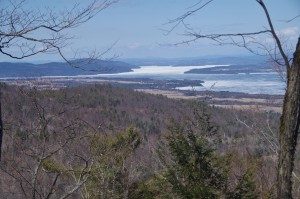
The organization driving this effort is Champlain Area Trails — known as CATS — a nonprofit dedicated to building and maintaining a connected trail network throughout the Champlain Valley. CATS coordinates land access agreements with private landowners, state agencies, and local municipalities, converting isolated patches of accessible land into a coherent system usable by hikers, snowshoers, and cross-country skiers. Lake Champlain, which defines the region's eastern boundary, provides both ecological context and dramatic scenery that distinguishes these trails from purely interior Adirondack routes.
The Champlain Valley occupies a geographic middle ground between the Adirondack High Peaks and the Vermont Green Mountains, producing a climate and terrain profile unlike either neighbor. Elevation changes are moderate rather than extreme, trail surfaces shift between clay-rich agricultural margins and rocky forest floors, and seasonal conditions vary widely enough to require careful planning. Understanding the system's structure, its genuine strengths, and its operational realities helps visitors make better decisions about where and when to go.
Contents
- Practical Strategies for Champlain Valley Hiking Trails in New York
- The Genuine Rewards and Real Challenges of the CATS Trail System
- Essential Equipment for Champlain Valley Trail Conditions
- How Different Visitors Use Champlain Valley Trails
- Persistent Myths About Champlain Area Trails Corrected
- Comparing Key Trails on the Champlain Valley Network
- Optimal Times to Visit — and Conditions That Warrant Staying Home
- Frequently Asked Questions
Practical Strategies for Champlain Valley Hiking Trails in New York
Trail Selection by Experience Level
The CATS network spans a wide spectrum of difficulty, from paved rail-trail corridors accessible to strollers and wheelchairs to rugged woodland paths demanding navigation skill and sustained physical conditioning. Matching trail difficulty to group capacity is the single most consequential decision a visitor makes before leaving the parking area. Beginner-friendly options cluster around the Boquet River Trail corridor and Point au Roche State Park, where grades remain gentle and surface conditions stay predictable across most of the year. Intermediate hikers find more challenge along the Gougeville Road network and forested sections approaching Poke-O-Moonshine Mountain, where roots, rocks, and elevation gain increase steadily with each mile.
Advanced visitors seeking technical terrain gravitate toward high-ridge connector trails that link CATS easements with adjacent Adirondack Forest Preserve land. These routes demand map literacy, physical fitness, and comfort with limited signage at transition zones between managed and wild territory. CATS publishes detailed difficulty ratings on official trail maps, and cross-referencing those ratings with recent trail condition reports — available through the organization's social channels — significantly reduces the likelihood of unwelcome surprises mid-route.
- Beginners: Boquet River Trail, Point au Roche lakefront path
- Intermediate: Gougeville Road network, Poke-O-Moonshine approach trails
- Advanced: Ridge connectors linking CATS easements with Forest Preserve land
- Download CATS trail maps before departure — cell service is unreliable throughout much of the forested interior
- Check condition reports via CATS social channels; clay surfaces degrade rapidly after rainfall
Seasonal Planning Essentials
The Champlain Valley's weather does not follow a clean seasonal script. Late spring snowfall at higher elevations remains common even when valley floors feel warm and dry. Hikers who build itineraries around a single elevation band consistently report more predictable conditions than those who mix lakeshore walks with ridge approaches in a single outing. Summer afternoon thunderstorms develop rapidly over the Adirondack uplands and track eastward into the valley with limited advance warning, making early morning starts a reliable defensive strategy during July and August.
The Genuine Rewards and Real Challenges of the CATS Trail System
What Draws Hikers Back Repeatedly
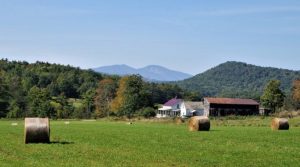
The landscape supplies the primary reward. Lake Champlain views from elevated trail sections rank among the most striking in northeastern New York, combining open water, distant mountain ridges, and broad agricultural valley floors into a single panorama rarely achievable in one outing. Biodiversity along the corridor is exceptional — the transition zone between Adirondack hardwood forest and Champlain Valley farmland supports species assemblages rarely found elsewhere in the state. Wildlife sightings including white-tailed deer, wild turkey, osprey, and occasional black bear are common enough to be expected rather than merely hoped for.
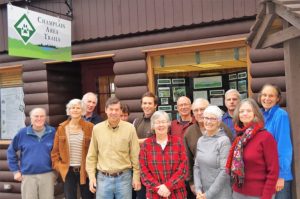
The social infrastructure CATS has built around trail use also distinguishes it from more passive land management approaches. Volunteer trail adoption programs, guided hikes led by naturalists, and seasonal events mixing education with recreation create a community of regular users who contribute actively to maintenance and advocacy. This model parallels conservation approaches documented in other regions, including the sustained work of the Big Thicket Association in Texas, where volunteer engagement has proved essential to long-term preservation success in a similarly fragmented landscape.
Where the System Still Falls Short
Connectivity remains the network's most significant structural limitation. Gaps between easement parcels force hikers onto road walks that interrupt the wilderness character of otherwise high-quality trail segments. Private landowner agreements, while numerous, remain subject to renegotiation, and a single withdrawn permission can sever a corridor that took years to establish through patient negotiation and relationship-building.
- Strengths: Exceptional scenery, strong biodiversity, active volunteer community, steadily growing network length
- Limitations: Connectivity gaps requiring road walks, inconsistent parking, signage variation between older and newer segments
- Trailhead parking at many access points consists of informal pullouts rather than designated facilities
- Trail condition reporting is improving but not yet systematic across all network sections
- Landowner agreement fragility creates long-term uncertainty for specific corridor segments
Essential Equipment for Champlain Valley Trail Conditions
Footwear and Layering in a Variable Climate
The Champlain Valley's clay-heavy soils become exceptionally slippery when wet, making waterproof trail footwear with aggressive lugged soles a practical necessity rather than an optional upgrade. Lightweight trail runners adequate for dry Adirondack conditions frequently fail on the valley's waterlogged agricultural margins, particularly during spring and fall when soil moisture content remains elevated for extended periods. Mid-weight waterproof hiking boots with ankle support represent the appropriate baseline for most CATS trail conditions across three full seasons of use.
Layering strategy matters more here than on strictly high-elevation or strictly low-elevation routes. A hike beginning at lake level and climbing to a forested ridge can pass through a 15-degree temperature differential in under two miles, especially during shoulder seasons. Synthetic or wool moisture-wicking base layers, a packable insulating mid-layer, and a waterproof shell stored at the top of a daypack address the full range of conditions encountered on most CATS routes. Cotton in any layer is a documented risk factor in wet, cool conditions and warrants the same avoidance it receives in alpine hiking guides.
Navigation Tools Worth Carrying
Cell service reliability drops sharply once hikers move away from the lakefront corridor and into the forested interior sections of the CATS network. Downloaded offline maps — through a dedicated GPS device or a smartphone application with pre-cached tiles — are standard practice among regular users familiar with the region. A printed CATS trail map serves as a reliable backup and remains available at the organization's Elizabethtown headquarters throughout the hiking season.

- GPS device or offline smartphone app with pre-cached CATS trail data loaded before arrival
- Printed CATS map as a paper backup for signal-free interior sections
- Compass — useful at trail junctions where signage transitions between management zones
- Emergency whistle and basic first aid kit rated for day hikes in a remote setting
- Trekking poles — particularly valuable on wet clay slopes where footing becomes unpredictable
Experienced hikers carry a physical map even when using GPS — digital navigation fails more often in the Champlain Valley's forested interior than most anticipate, and the clay trail surfaces that become treacherous after rain make retreating without bearings a genuinely serious situation.
How Different Visitors Use Champlain Valley Trails
Families and Casual Recreationists
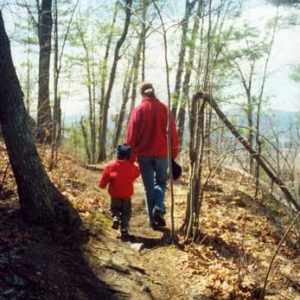
Families with children represent a substantial share of CATS trail users, drawn by the network's flatter lake-level routes and the organization's programming orientation toward inclusive outdoor recreation. The Point au Roche State Park connection and Boquet River sections provide loop options short enough for young children, with sufficient visual interest — water features, farm panoramas, and abundant wildlife — to sustain attention across the full distance without manufactured diversions. After returning from a day on the trail, families who enjoy outdoor living often extend that time outside at home; a quality outdoor fireplace or a well-positioned chiminea provides a natural gathering point for post-hike evenings in the backyard.
Birders, Naturalists, and Researchers
The Champlain Valley's position along the Atlantic Flyway makes it a premier birding destination during spring and fall migration. The CATS trail network provides ground-level access to forest interiors, wetland edges, and agricultural hedgerows that concentrate migrating species in numbers rarely seen on more heavily trafficked routes. Cornell Lab of Ornithology researchers and independent birding groups regularly use CATS corridors for systematic survey work, treating the network as a monitoring platform as much as a recreational resource. Similar volunteer-driven conservation infrastructure supports wildlife access along the Gulf Coast, as documented in coverage of the Friends of Brazoria Wildlife Refuges in Texas — where the parallels to CATS's community-based model are striking.
Persistent Myths About Champlain Area Trails Corrected
The "Too Remote" Misconception
A persistent assumption among hikers based in Albany or Burlington holds that the Champlain Valley trail network requires a full day of driving to access. This assumption does not survive geographic scrutiny. Elizabethtown, the de facto hub of CATS trail activity, sits approximately 60 miles from Plattsburgh and under 90 miles from Burlington via the Champlain Bridge. Most CATS trailheads fall within a two-hour drive of both cities, placing the network firmly within day-trip range for residents throughout northeastern New York and northwestern Vermont. Proximity to Interstate 87 further reduces effective travel time for visitors approaching from the Capital Region or New York City metro area.
The "No Infrastructure" Assumption
A related misconception suggests that the CATS network is an unmanaged wilderness without practical visitor support. In fact, the organization maintains a physical headquarters, produces detailed trail maps updated regularly, runs a volunteer trail adoption program providing ongoing maintenance coverage, and coordinates with Essex County tourism infrastructure for lodging and resupply. The Vialls Crossing pedestrian bridge project — connecting previously separated trail segments across a stream corridor — exemplifies the durable capital investment CATS makes in long-term physical infrastructure. The network does not match the finish level of a full state park system, but characterizing it as unmanaged wildland misrepresents the sustained commitment CATS volunteers and staff have made over more than a decade of continuous operation.
Comparing Key Trails on the Champlain Valley Network
Trail-by-Trail Overview
The CATS network includes trails at different stages of development, with varying difficulty ratings, surface types, and ecosystem character that suit different visitor profiles. The table below synthesizes publicly available information on a selection of representative routes, helping prospective visitors identify the best match for their priorities before committing to a specific trailhead and access point. Hikers planning multi-day itineraries often combine several segments, using Elizabethtown as a central base for overnight logistics.
| Trail / Corridor | Difficulty | Approx. Length | Surface Type | Primary Feature | Best Season |
|---|---|---|---|---|---|
| Boquet River Trail | Easy | 4–6 miles | Gravel, packed earth | Riverside scenery, flat grade | Spring–Fall |
| Point au Roche State Park | Easy–Moderate | 8+ miles of loops | Natural surface, boardwalk sections | Lake Champlain access, wetlands | Year-round |
| Gougeville Road Network | Moderate | 5–9 miles | Forest floor, clay margins | Hardwood forest, farm views | Late Spring–Fall |
| Poke-O-Moonshine Approach | Moderate–Difficult | 3–5 miles | Rocky, rooted | Summit views, cliff faces | Summer–Fall |
| Ridge Connector Trails | Difficult | Variable | Forest and open ridge | Panoramic valley and lake views | Summer–Early Fall |
The forest ecology encountered along each of these corridors varies considerably by elevation and aspect. Sugar maple, yellow birch, and American beech dominate mid-elevation slopes, while white pine and hemlock appear in cooler, moister drainages near stream crossings. Visitors interested in northeastern tree species composition can find useful context in resources covering forest trees of the broader northeastern region, where many of the same native species appear in both conservation and landscape planting contexts relevant to home property owners.
Optimal Times to Visit — and Conditions That Warrant Staying Home
Peak Seasons and Their Trade-Offs
Late summer and early autumn deliver the most reliable combination of stable weather, manageable insect pressure, and excellent visibility on open ridgelines throughout the network. September and early October represent the consensus peak window among experienced CATS trail users, offering fall foliage color alongside firm trail surfaces and lower humidity than the preceding summer months. Spring brings earlier openings of lower-elevation routes but extends mud season well into May at forest-interior locations, creating conditions that damage clay trail surfaces when visitation is heavy.
Summer represents the highest-use period overall, with July generating the greatest competition for trailhead parking at Point au Roche and other primary access sites. Winter use via snowshoe and cross-country ski is documented and actively supported by CATS, with select corridors designated for winter travel and periodic guided snowshoe programming. Conditions prove sufficiently consistent in most winters for reliable snowshoe use between January and mid-March, though freeze-thaw cycles produce hazardous ice surfaces that microspikes address effectively.
Weather and Mud Season Warnings
Mud season in the Champlain Valley typically runs from snowmelt through early May and warrants genuine avoidance on the clay-dominated trails characterizing a significant portion of the CATS network. Foot traffic on saturated clay soils creates ruts that persist through dry summer months and degrade trail quality for months after the original damage occurs. CATS actively requests that hikers avoid clay-surface trails during this period, treating compliance as a matter of stewardship rather than individual preference.
The organization occasionally closes specific segments following significant rainfall events, communicating those closures through the CATS website and social media channels. Flash flooding risk at stream crossings — particularly after the rapid snowmelt events common in April — warrants checking water levels before committing to routes that cross the Boquet River or its tributaries. Hikers who time their visits correctly and prepare appropriately find a trail network that rewards careful planning with outstanding scenery and genuine backcountry character within a surprisingly accessible distance of major regional population centers.
Frequently Asked Questions
What is Champlain Area Trails (CATS) and how does it operate?
Champlain Area Trails is a nonprofit organization based in Elizabethtown, New York, dedicated to building and maintaining a connected trail network throughout the Champlain Valley. CATS secures voluntary land access agreements with private landowners and works in partnership with state agencies and local governments to link isolated parcels into a coherent system. The organization funds operations through memberships, donations, and grants, relying heavily on a volunteer trail adoption program for ongoing maintenance across the network.
Are the Champlain Valley hiking trails in New York free to access?
Most CATS trails are free to access, consistent with the organization's mission of providing broad public recreational access to the Champlain Valley landscape. Point au Roche State Park, which connects with the CATS network, may charge a seasonal vehicle use fee during peak summer months. CATS encourages hikers to support the network through membership or volunteer contributions to sustain ongoing trail development, bridge construction, and maintenance programming.
What is the best beginner trail in the Champlain Valley CATS network?
The Boquet River Trail and the lake-level sections of Point au Roche State Park consistently receive recommendations as the most accessible entry points for first-time visitors and beginner hikers. Both routes offer gentle grades, predictable surface conditions across most of the season, and sufficient visual interest — water features, wildlife, and open views toward Lake Champlain — to make them genuinely rewarding without requiring technical experience or specialized equipment beyond comfortable waterproof footwear.
Can visitors hike or snowshoe the CATS trails in winter?
Winter use of select CATS corridors is actively supported and encouraged by the organization, which designates specific routes for snowshoe and cross-country ski travel. Conditions are sufficiently consistent in most winters for reliable snowshoe use from January through mid-March. CATS runs guided snowshoe events during winter months, providing both access and practical instruction for visitors new to winter trail conditions. Microspikes are strongly recommended during freeze-thaw cycles when ice surfaces develop beneath otherwise snow-covered trails.
How can trail users support the CATS conservation mission?
The most direct forms of support include membership, financial donations, and participation in the volunteer trail adoption program, which assigns ongoing maintenance responsibility for specific trail segments to individual volunteers or small groups. Hikers also support the mission by observing trail closures during mud season, packing out all waste, and reporting trail damage or signage issues through the CATS website. Advocacy for land conservation policy at the county and state level extends the organization's reach beyond what direct operational resources alone can achieve.
The wilderness closest to home exists only because someone chose stewardship over indifference — and every maintained mile on the Champlain Valley trail network is evidence that the choice is still being made.


About William Murphy
William Murphy has worked as a licensed general contractor in Fremont, California for over thirty years, specializing in outdoor structures, green building methods, and sustainable design. During that career he has written about architecture, construction practices, and environmental protection for regional publications and trade outlets, bringing technical depth to subjects that most home improvement writers approach only from a consumer perspective. At TheBackyardGnome, he covers outdoor product reviews, backyard construction guides, and sustainable landscaping and building practices.
You can Get FREE Gifts. Receive Free Backyard Items here. Disable Ad Blocker to get them all now!
Once done, hit anything below