How the North Cascades Conservation Council Protects Ecosystem Health
by William Murphy
The North Cascades Conservation Council protects ecosystem health through scientific monitoring, policy advocacy, and strategic litigation — and it has been doing so since 1957. North Cascades ecosystem protection is the organization's defining mission, making it one of the Pacific Northwest's oldest and most consequential grassroots conservation bodies. Like the work documented at The Open Land Conservancy of Chester County, which shields green spaces from suburban encroachment, the NCCC operates on the conviction that wild landscapes require active, sustained defense to endure.
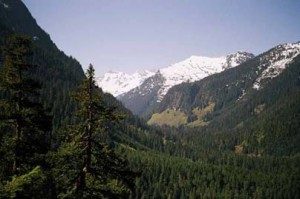
The North Cascades span roughly 9,500 square miles of rugged terrain across Washington State and southern British Columbia, harboring glaciers, old-growth forests, and wildlife corridors that support species from gray wolves to grizzly bears. Within that landscape, the NCCC tracks glacier retreat, monitors wildlife populations, and intervenes in federal land-use decisions that could compromise the ecological integrity of the range. The council publishes technical comments during public review periods, retains legal specialists to challenge inadequate environmental assessments, and maintains longitudinal data sets documenting ecological change across decades.
Established before North Cascades National Park existed, the NCCC played a central role in lobbying Congress for the park's creation in 1968. That legislative legacy distinguishes the organization from purely scientific bodies — it combines rigorous field research with direct policy intervention, translating ecological data into enforceable land protections and modified timber management decisions that affect millions of acres.
Contents
Funding the Fight — What Conservation Work Actually Costs
Membership and Individual Giving
The NCCC operates on membership dues, individual donations, and occasional foundation grants rather than public appropriations. That funding structure grants the organization independence from the political pressures that constrain agency budgets, but it also means that every monitoring program, legal filing, and field survey depends on consistent donor participation. Membership tiers range from nominal annual contributions to sustaining-level gifts, with the majority of operational revenue coming from individuals giving under $500 per year. The council's lean model directs the bulk of its resources toward direct conservation activities rather than administrative overhead.
Legal and Advocacy Expenditures
Legal challenges against harmful timber sales, inadequate environmental impact statements, or improperly issued grazing permits represent the NCCC's largest single expenditure category. Retaining environmental law specialists to file substantive comments during public review periods — and to pursue litigation when agencies disregard statutory obligations — demands sustained financial commitment. Scientific consulting fees add to that burden when independent hydrological or wildlife assessments are needed to counter agency projections. A single legal intervention can cost tens of thousands of dollars, yet the resulting modifications to a timber sale may protect thousands of acres for decades.

Where North Cascades Ecosystem Protection Delivers Measurable Results
Old-Growth Forest Defense
The NCCC's most consistently documented victories involve blocking or significantly modifying timber sales in old-growth forest stands. Old-growth ecosystems in the North Cascades provide irreplaceable habitat for northern spotted owls, marbled murrelets, and the complex mycorrhizal networks that underpin forest regeneration across the range. By submitting detailed scientific comments during National Environmental Policy Act review processes, the council has secured meaningful modifications to dozens of proposed sales, reducing canopy removal in ecologically sensitive zones. Old-growth defense is where the council's combination of scientific credibility and legal standing produces its clearest return on investment.
Wildlife Corridor Monitoring
Grizzly bear recovery in the North Cascades ranks among the most contested wildlife management questions in the region, and the NCCC has consistently advocated for federal reintroduction efforts by submitting formal comments supporting U.S. Fish and Wildlife Service recovery planning. The council's position is grounded in corridor ecology — the scientific understanding that grizzlies require vast, connected landscapes to maintain genetically viable populations across generations. Without sustained advocacy pressure, reintroduction timelines slip, recovery benchmarks go unmet, and the window for meaningful intervention narrows with each passing season.

Conservation organizations achieve the most durable outcomes when scientific data is paired with formal legal standing — comments submitted by credentialed researchers carry significantly more weight in agency decision-making than general public opposition alone.
Glacier and Watershed Tracking
The NCCC maintains longitudinal records on glacier extent across the range — data that feeds directly into downstream water quality and agricultural water availability assessments that no federal program currently replicates at equivalent resolution. As glaciers retreat, they expose mineral-rich bedrock that alters stream chemistry in ways affecting aquatic ecosystems, municipal water supplies, and the riparian habitats that salmon and wildlife depend on. The council's monitoring fills an analytical gap that underfunded federal programs leave open, providing baseline data necessary for credible environmental impact assessments in the decades ahead.
When Advocacy Makes a Difference — and When It Doesn't
When Conservation Councils Are Most Effective
Conservation councils exert maximum leverage during formal public comment periods mandated by NEPA and the National Forest Management Act. These statutory windows require agencies to respond substantively to technical objections from qualified commenters, giving well-resourced advocacy organizations genuine procedural power. The NCCC is also most effective when litigation rests on clear statutory violations — cases where an agency demonstrably failed to consult required specialists, ignored its own scientific findings, or bypassed mandated consultation timelines. In those circumstances, courts have consistently ruled in favor of conservation plaintiffs, and the resulting legal precedents shape subsequent agency decisions across the broader region.
Where the Limits Appear
The NCCC's influence diminishes sharply in situations governed by political discretion rather than statutory mandate. Presidential executive orders, congressional budget riders exempting specific projects from environmental review, or emergency timber sale designations can move faster than any nonprofit organization's legal response capacity. Transboundary issues — such as Canadian mining operations discharging upstream of protected U.S. watersheds — fall entirely outside the council's jurisdictional reach, requiring diplomatic channels that no conservation nonprofit can access unilaterally.

Groups focused on environmental stewardship across many regions face these same structural constraints. Organizations like the Friends of Salt Springs Park encounter analogous limits when state-level decisions override local conservation priorities — a consistent reminder that no single advocacy body can fully shield an ecosystem from every political or jurisdictional variable beyond its reach.
Conservation Council vs. Federal Agency — A Direct Comparison
Structural Differences
The NCCC and federal land management agencies like the U.S. Forest Service or National Park Service occupy fundamentally different roles in the conservation landscape. Federal agencies hold statutory authority — they issue permits, conduct environmental reviews, enforce regulations, and manage public lands under a mandate that encompasses competing uses, from recreation to resource extraction. The NCCC holds no such authority; its influence derives entirely from advocacy, litigation, and the sustained application of scientific and legal expertise to agency decision-making processes. The table below maps those differences across six operational dimensions.
| Attribute | NCCC (Conservation Council) | U.S. Forest Service / NPS |
|---|---|---|
| Legal Authority | None — advocacy and litigation only | Full statutory authority over permits and enforcement |
| Funding Source | Membership dues and private donations | Federal congressional appropriations |
| Decision-Making Power | Indirect — public comments and court challenges | Direct — permits, management plans, enforcement actions |
| Geographic Scope | North Cascades focused | Nationally distributed with regional field offices |
| Political Independence | High — insulated from administration changes | Low — subject to executive branch direction |
| Scientific Capacity | Contracted specialists and volunteer researchers | In-house agency scientists and resource managers |
Complementary, Not Competing
Despite those structural differences, conservation councils and federal agencies function most effectively as counterweights rather than adversaries. Federal agencies, subject to political pressure and cyclical budget constraints, benefit from consistent outside scrutiny that keeps their decisions aligned with scientific and legal standards across changing administrations. The NCCC's role is to provide that scrutiny reliably, across budget cycles and political shifts — a function that no federal agency can perform on itself. The record across the North Cascades shows that the presence of a technically credible advocacy organization correlates with stronger environmental review outcomes and greater agency responsiveness to emerging ecological data.
Frequently Asked Questions
What is the North Cascades Conservation Council?
The North Cascades Conservation Council is a grassroots nonprofit organization founded in 1957 and dedicated to protecting the ecological integrity of the North Cascades mountain range through scientific monitoring, public advocacy, and strategic legal intervention against harmful land-use decisions.
How does the NCCC fund its North Cascades ecosystem protection work?
The council operates primarily on membership dues and individual donations, supplemented by occasional foundation grants, and it does not receive federal appropriations — a structure that maintains organizational independence from the political pressures affecting agency budgets.
Did the NCCC help establish North Cascades National Park?
The NCCC played a central role in lobbying Congress for the establishment of North Cascades National Park, which was created in 1968 more than a decade after the council's founding, and that legislative achievement remains its most prominent historical milestone.
What ecosystems does North Cascades ecosystem protection cover?
North Cascades ecosystem protection encompasses old-growth forests, glaciated alpine terrain, wildlife corridors, riparian habitat, and the downstream watersheds supplying water to communities across Washington State and British Columbia — a system spanning roughly 9,500 square miles.
How can individuals support the NCCC's conservation mission?
Individuals can support the council by joining as dues-paying members, submitting formal comments during federal agency public review periods, volunteering for field monitoring programs, and tracking the council's alerts on active land-use proposals affecting the North Cascades range.
Key Takeaways
- The North Cascades Conservation Council has advanced North Cascades ecosystem protection since 1957 through scientific monitoring, advocacy, and litigation that carries real procedural weight during federal agency review periods.
- The council's influence is strongest during NEPA public comment windows and cases with clear statutory violations, but diminishes against politically discretionary decisions and transboundary environmental threats beyond its jurisdictional reach.
- Federal agencies and conservation councils serve complementary roles — independent advocacy organizations provide consistent scientific scrutiny across changing administrations that agency self-governance cannot replicate internally.
- Sustained individual support through membership dues and formal public comment participation remains the most direct way to strengthen the council's capacity to defend the range over the long term.


About William Murphy
William Murphy has worked as a licensed general contractor in Fremont, California for over thirty years, specializing in outdoor structures, green building methods, and sustainable design. During that career he has written about architecture, construction practices, and environmental protection for regional publications and trade outlets, bringing technical depth to subjects that most home improvement writers approach only from a consumer perspective. At TheBackyardGnome, he covers outdoor product reviews, backyard construction guides, and sustainable landscaping and building practices.
You can Get FREE Gifts. Receive Free Backyard Items here. Disable Ad Blocker to get them all now!
Once done, hit anything below