Waterloo Gardeners Club: 100+ Years of Community, History, and Horticulture
by Simmy Parker
A neighbor once mentioned that the most enduring gardens in any town are rarely the product of a single gardener's vision — they belong to a community, tended across generations with shared knowledge, seasonal labor, and collective pride. The Waterloo Gardeners Club community history offers exactly that kind of story: more than a century of organized horticulture in one of Ontario's most historically rich cities, drawing members from across the region who share a commitment to horticultural excellence and civic beautification. For anyone invested in the environment and outdoor living, the trajectory of this club provides a compelling case study in how local garden organizations sustain relevance across multiple generations of committed membership.
The Waterloo Horticultural Society — the formal institutional body behind the Waterloo Gardeners Club community — was formally established in the late 19th century, placing it among the oldest continuously operating horticultural organizations in the province of Ontario. According to Wikipedia's overview of horticultural societies, these civic organizations emerged primarily during the 1800s as improvement bodies that combined scientific plant research with community beautification mandates, and Waterloo's chapter reflects that founding spirit with remarkable fidelity across its long operational history.
Much like the Connemara Conservancy, which has sustained 37 years of natural activism in Texas, the Waterloo club demonstrates that community-driven horticulture thrives when anchored in local identity, volunteer leadership, and a clear civic mission. The organization's programming — spanning annual flower shows, expert speaker series, youth outreach initiatives, and sustained public garden maintenance — reflects the kind of comprehensive horticultural education infrastructure that distinguishes durable clubs from those that fade within a decade of founding.
Contents
- Historical Roots: Origins of a Century-Old Horticultural Community
- Sustained Growth: How the Club Built a Long-Term Institutional Strategy
- Joining and Participating: A Step-by-Step Engagement Guide
- Immediate Rewards: Quick Wins from Club Engagement
- Maximizing Value: Practical Tips for Long-Term Members
- Next Steps
Historical Roots: Origins of a Century-Old Horticultural Community
The Waterloo Gardeners Club community history begins in an era when public green space was understood as both a civic right and a municipal responsibility. Founded in the late 19th century, the Waterloo Horticultural Society was part of a broader wave of garden clubs that swept across Ontario and the rest of Canada during that period, driven by the same civic improvement instincts that built parks, libraries, and public schools in growing industrial towns.
Formation and Early Membership
The society's founding membership drew from Waterloo's established professional class — merchants, educators, and civic leaders who understood that organized horticulture carried social as well as botanical significance. Early records indicate that membership was structured around annual dues, elected officers, and a formal constitution, giving the club the institutional framework it needed to survive leadership transitions across the following century of operation.
- Founding members included civic leaders, educators, and business owners united by a shared interest in plant cultivation and civic beautification
- Annual dues structures provided financial stability independent of municipal grants or private donations, creating operational resilience from the outset
- Elected officer roles — president, secretary, treasurer — established accountable leadership succession that transferred institutional knowledge across generations
- The club aligned its mission with Ontario's provincial horticultural society network, gaining access to regional resources, programming templates, and affiliated membership benefits
Pro insight: Clubs that establish formal governance structures in their founding years dramatically outlast those run on informal goodwill — documented bylaws and elected roles create accountability that transcends individual personalities and survives leadership turnover.
Victorian-Era Flower Shows and Public Exhibitions
Annual flower shows served as the club's primary public-facing events throughout its early decades, drawing competitive entries from members in categories ranging from cut flower arrangements to vegetable displays and potted plant collections. These exhibitions were not merely competitive events — they functioned as public education platforms, demonstrating to the broader Waterloo community what organized horticulture could achieve and recruiting new members through visible, well-attended civic spectacle.
The tradition of competitive flower shows remains one of the club's most enduring programmatic contributions, connecting present-day members to a Victorian-era civic ritual that proved remarkably durable across successive generations of horticultural interest and changing public tastes.
Sustained Growth: How the Club Built a Long-Term Institutional Strategy
Surviving a century of operation requires more than enthusiasm — it demands deliberate organizational strategy, financial planning, and an adaptive approach to evolving community interests. The Waterloo Gardeners Club community history reveals a consistent pattern of institutional self-renewal that kept the organization relevant through economic recessions, two world wars, and dramatic shifts in how urban residents relate to green space, food growing, and horticultural practice.
Organizational Structure and Volunteer Leadership
The club's longevity rests substantially on its volunteer-driven governance model, which distributes responsibility across a committee structure rather than concentrating authority in a single paid administrator. This distribution creates organizational redundancy — when key leaders step down, institutional knowledge transfers through committee continuity rather than departing with the individual, which is the structural advantage that separates enduring clubs from short-lived ones.
- Executive committee: President, vice-president, secretary, and treasurer handle governance, financial oversight, and external institutional relationships
- Program committee: Plans and books the monthly speaker series, educational workshops, and garden tour schedule throughout the year
- Show committee: Organizes the annual flower and garden show from call-for-entries through judging, awards, and post-event wrap-up
- Civic beautification committee: Manages the club's contributions to public plantings and green space initiatives across the city
- Youth outreach committee: Coordinates school garden programs, junior membership initiatives, and educational partnerships with local institutions
Funding, Partnerships, and Civic Support
The club's financial model combines member dues with event revenues, municipal partnerships, and selective private sponsorships, creating a diversified income base that insulates the organization from single-source dependency. The table below outlines the primary funding streams and their approximate contributions to overall organizational revenue:
| Funding Source | Revenue Type | Approximate Contribution | Notes |
|---|---|---|---|
| Annual Member Dues | Recurring | 30–40% | Foundation of operating budget; scales directly with membership count |
| Flower Show Entry Fees & Gate | Event-based | 20–30% | Largest single event revenue driver in the annual calendar |
| Plant Sales and Fundraisers | Event-based | 15–20% | Spring plant sales are consistently the highest-yield fundraising activity |
| Municipal Grants and Partnerships | Variable | 10–15% | City of Waterloo civic beautification program support and occasional project grants |
| Private Sponsorships | Variable | 5–10% | Local nurseries, garden centers, and landscape firms providing event or program support |
Warning: Clubs that rely on a single funding source — typically dues alone — face structural fragility when membership declines; diversifying revenue streams is as essential to organizational survival as diversifying a planting scheme is to long-term garden resilience.
Similar to the Columbia Land Conservancy, which protects farmland and natural areas in New York's Hudson Valley through a combination of grants, memberships, and donor partnerships, the Waterloo club's financial architecture reflects a mature understanding of institutional sustainability across multi-decade time horizons.
Joining and Participating: A Step-by-Step Engagement Guide
New members often underestimate how accessible formal horticultural club membership is — and how quickly active participation delivers tangible gardening knowledge and community benefit. The following process describes how prospective members typically engage with a club modeled on the Waterloo Horticultural Society's well-established structure and programming approach.

Membership Application Process
- Attend a guest meeting. Most horticultural societies allow prospective members to attend one or two sessions as guests before committing to dues, providing a low-risk introduction to the club's culture, membership character, and programming calendar.
- Complete a membership application. Applications typically request basic contact information, gardening interests, and a commitment to volunteer for at least one committee — most clubs require some contribution from all members as a condition of membership.
- Pay annual dues. Dues structures commonly offer individual, household, and senior rates, and typically run from $20 to $60 annually, making horticultural club membership one of the most affordable community investments available to home gardeners anywhere in Ontario.
- Register for the program calendar. Upon joining, members receive access to the full-season program schedule, including guest speaker evenings, hands-on workshops, member garden tours, and the annual show entry process with its associated judging criteria.
- Connect with a committee. New members extract the most immediate value by joining one standing committee early in their membership — the show committee provides rapid hands-on engagement with the club's signature event and accelerates introduction to experienced, long-tenured members.
Seasonal Programming and Event Participation
The Waterloo Horticultural Society's programming calendar follows a seasonal rhythm that mirrors the agricultural calendar of southern Ontario, with indoor programming filling the winter months and outdoor activities intensifying from spring through early autumn in a structured rotation of events.
- Winter (January–March): Monthly speaker evenings featuring horticulturists, landscape designers, and master gardeners; seed-starting workshops and spring garden planning sessions for members
- Spring (April–May): Annual plant sale — the club's highest-attendance public event; garden tour planning begins; civic beautification planting initiatives launch across the city
- Summer (June–August): Member property garden tours and public landscape visits; the annual flower and garden show; judging certification workshops for members seeking officiating credentials
- Autumn (September–November): Fall garden show; seed saving and bulb exchange events among members; year-end recognition dinner and election of incoming officers for the following season
Immediate Rewards: Quick Wins from Club Engagement
Most new members report tangible gardening knowledge gains within their first two or three meetings, well before they have invested significant time in committee work or show participation. The Waterloo Gardeners Club community designs its educational programming to deliver value from the first point of contact rather than requiring a lengthy initiation period before meaningful learning begins.
Plant Knowledge from Day One
Guest speaker evenings — which typically run monthly from September through May — bring credentialed horticulturists and landscape professionals to present on topics ranging from native plant selection and soil health to integrated pest management and garden design principles. New members gain exposure to expert-level knowledge at a pace that would take years to accumulate through independent reading and trial-and-error gardening alone.
- Plant identification skills develop rapidly through show judging observation and direct engagement with the plant sale's curated inventory
- Soil amendment and composting knowledge transfers directly from club workshops to home garden practice within the same growing season
- Integrated pest management strategies — reducing chemical dependency through biological and cultural controls — are standard curriculum across reputable horticultural clubs affiliated with Ontario's provincial network
- Seasonal timing guidance from experienced members demonstrably improves planting success rates for new gardeners, particularly for cold-sensitive crops and late-season perennials
Community Connections and Networking
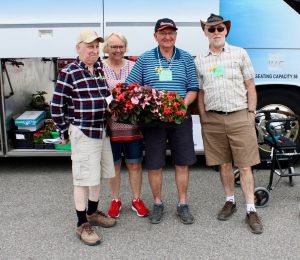
Beyond plant knowledge, club membership opens access to a peer network of experienced gardeners who generously share divisions, seeds, cuttings, and site-specific advice that no book or website can replicate. This informal exchange economy — where established members freely give plant material and practical expertise to newer participants — is among the most undervalued benefits of horticultural club participation at any level of experience.
- Plant exchanges at meetings and shows provide free, locally adapted plant material that commercial nurseries rarely stock and cannot match in provenance or cold-hardiness verification
- Member garden tours create direct access to design inspiration drawn from real gardens operating in the same climate zone and soil conditions as prospective members' own properties
- Informal mentoring relationships develop naturally and organically when new members engage consistently with committee work over a full season of participation
- Vendor connections — local nurseries and garden centers that sponsor or partner with the club — give active members access to trade pricing, pre-sale opportunities, and direct relationships with professional growers
Maximizing Value: Practical Tips for Long-Term Members
Members who extract the greatest long-term value from horticultural clubs share a consistent behavioral pattern: they participate across multiple programming streams rather than attending sporadically, and they apply club-sourced knowledge to their home gardens with deliberate intention rather than passive, undocumented absorption of information.
Leveraging Speaker Events and Workshops
Monthly speaker evenings deliver the highest educational return per hour of any club programming, and members who attend consistently — and take structured notes — build a substantial applied knowledge base over even a single full programming season. Several specific practices maximize the value of these events for both new and experienced members alike.
- Prepare questions in advance. Reviewing the speaker's announced topic before the meeting allows members to ask more specific, actionable questions during Q&A rather than the generic queries that take up most of the discussion time at poorly prepared club events.
- Network before and after the presentation. The informal conversation periods at the start and end of meetings are where practical, site-specific advice circulates most freely among experienced members who rarely speak during formal programming.
- Request recommended resources directly. Most guest speakers maintain reading lists, websites, or personal blogs; asking for these references extends the educational value of a single evening's presentation across many subsequent weeks of independent study.
- Volunteer for speaker hospitality. Members who handle speaker introductions and post-event coordination spend unstructured time with visiting experts that deepens the knowledge exchange considerably beyond what a formal 45-minute presentation allows.
Tip: Arriving 15 minutes early to horticultural club meetings consistently positions members near the most experienced gardeners who arrive first — the informal conversations before meetings begin are often more instructive than the formal presentations that follow.
Applying Club Knowledge to the Home Garden
The practical test of horticultural club membership is what members implement in their own outdoor spaces, and those who document club-sourced recommendations in a dedicated garden journal — recording what they learned, from whom, and when they plan to apply it — consistently report faster measurable improvement in their gardens than those who rely on memory alone. The discipline of documentation transforms passive attendance into an active learning system with cumulative compound returns across multiple seasons.
- Apply soil amendment and composting techniques from workshops to established beds during the autumn cleanup season while the recommendations are still fresh and actionable
- Test native plant substitutions recommended by speakers in at least one border each season, tracking their performance against existing conventional plantings across a full growing cycle
- Use the club's show schedule as a personal deadline system — preparing competitive entries forces disciplined garden management and close attention to plant condition throughout the growing season
- Report results at subsequent meetings: sharing what worked or failed from a speaker's recommendations earns credibility among experienced members and invites detailed reciprocal advice that generic attendees rarely receive
For home gardeners looking to extend their outdoor living investment beyond the garden bed itself, resources like the 9 Inspiring Slate Patio Design Ideas guide demonstrate how hardscape choices integrate with planting schemes to create cohesive, functional backyard environments — a design connection that horticultural club members with landscape design exposure are particularly well positioned to execute with confidence.
Next Steps
- Locate the Waterloo Horticultural Society's current meeting schedule and attend one session as a guest to assess whether the club's programming, culture, and membership character align with specific gardening interests and personal goals.
- Review the club's annual show schedule and identify one entry category — cut flowers, potted plants, or vegetables — that matches existing garden production, then plan plantings deliberately with a competitive entry in mind from the start of the growing season.
- Connect with at least one standing committee — start with the program or show committee — and commit to attending all meetings for a full season before evaluating whether deeper volunteer involvement in additional committees is warranted.
- Document three specific plant or technique recommendations from the first three speaker evenings attended, and schedule each recommendation's implementation in the home garden within the same growing season while the context is still fresh.
- Research affiliated provincial and national horticultural organizations accessible through Waterloo club membership, including the Ontario Horticultural Association, which provides additional programming, publications, judging certification, and regional show opportunities beyond what the local club offers independently.


About Simmy Parker
Simmy Parker holds a Bachelor of Science in Civil Engineering from Sacramento State University and has applied that technical background to outdoor structure design, landscape planning, and backyard improvement projects for over a decade. Her love for the outdoors extends beyond design — she regularly leads nature hikes and has developed working knowledge of native plants, soil conditions, and sustainable landscaping practices across Northern California. At TheBackyardGnome, she covers backyard design guides, landscaping ideas, and eco-friendly outdoor living resources.
You can Get FREE Gifts. Receive Free Backyard Items here. Disable Ad Blocker to get them all now!
Once done, hit anything below