The San Juan Islands encompass more than 170 named islands, yet fewer than 20 percent of that landmass currently holds formal protection — a statistic that places San Juan Islands conservation among the most urgent ecological priorities in the Pacific Northwest. The San Juan Preservation Trust (SJPT), founded in 1979, has become the primary nonprofit institution dedicated to permanently preserving this archipelago's forests, shorelines, meadows, and farmland. For those committed to environmental stewardship and eco-conscious living, the Trust's model offers a rigorous blueprint applicable far beyond Washington State.

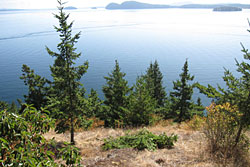
The San Juan Islands sit at the intersection of multiple ecological systems — temperate rainforest, arid rain shadow, rocky shoreline, and open meadow — within a remarkably compressed geography. Orca pods transit these channels seasonally, bald eagles nest in old-growth Douglas fir canopies, and rare prairie plant communities cling to exposed bluffs. This density of biodiversity makes the islands a conservation priority of national significance. Development pressure, however, has intensified steadily as the islands' real estate appeal has grown, placing irreplaceable habitat directly in the path of subdivision and clearing.
Since its founding, the SJPT has protected more than 15,000 acres through a combination of outright land acquisition and conservation easements. Its strategic approach mirrors the work of organizations like the North Cascades Conservation Council, which similarly combines legal tools, community engagement, and long-range planning to defend ecologically sensitive terrain against permanent loss.
Contents
- Why San Juan Islands Conservation Matters
- The San Juan Preservation Trust's Long-Term Vision
- Conservation Easements: When They Work and When They Do Not
- Understanding Conservation Funding and Costs
- Common Mistakes Landowners Make in Conservation Efforts
- Practical Tips for Supporting San Juan Islands Conservation
- Key Takeaways
Why San Juan Islands Conservation Matters
Ecological Significance of the Archipelago
The San Juan Islands occupy a rain shadow created by the Olympic Mountains, producing a microclimate unlike anywhere else in Washington State. This unusual climatic pocket supports ecological communities that are critically rare across the broader Pacific Northwest:
- Garry oak woodlands — one of the most imperiled ecosystem types in the region, reduced to a fraction of their historical range
- Rocky headland prairies harboring plant species found in very few other locations statewide
- Kelp forest systems that function as nursery habitat for multiple commercially and ecologically significant fish species
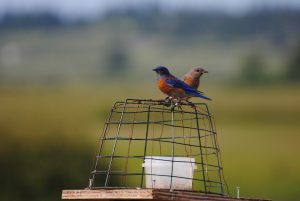
- Old-growth forested shorelines actively used by nesting bald eagles and great blue heron colonies
- Eelgrass meadows in protected bays that support juvenile salmon and forage fish populations
According to documented ecological surveys of the San Juan Islands, the archipelago supports more than 70 rare and sensitive species — a biodiversity density that rivals ecosystems far larger in total geographic scale.
The Threat of Development Pressure
Real estate values across the San Juan Islands rank consistently among the highest in Washington State. That economic reality translates directly into land conversion pressure. Agricultural parcels give way to residential subdivision. Forested ridgelines are cleared for view lots. Shoreline vegetation buffers diminish as waterfront demand intensifies. Without active conservation intervention, ecologically significant parcels disappear permanently from the natural land base — a loss that no future program can reverse.
Pro Insight: Conservation easements, once recorded against a property's deed, survive all future sales and ownership transfers in perpetuity — meaning a single transaction can protect a parcel against development pressure indefinitely.
The San Juan Preservation Trust's Long-Term Vision
Strategic Priorities and Target Landscapes
The SJPT does not pursue conservation opportunities opportunistically. It operates from a defined conservation plan that identifies priority landscape categories based on ecological function, connectivity, and threat level. Current strategic priorities include:
- Shoreline corridors — protecting riparian buffers and the transition zones between terrestrial and marine habitat
- Garry oak and prairie ecosystems — among the archipelago's most ecologically distinctive and threatened landscape types
- Contiguous forest blocks — canopy areas large enough to support interior-nesting bird species requiring disturbance-free core habitat
- Working agricultural land — active farms and pastures that provide open space, habitat connectivity, and food system value simultaneously
- Ridge and headland parcels — prominent landscapes that serve critical raptor foraging and nesting functions
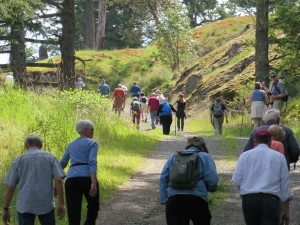
This focus on connectivity — protecting parcels that link existing conservation lands into functional corridors — parallels the strategy employed by the Open Land Conservancy of Chester County, which similarly concentrates resources on parcels that expand the effective protected area rather than creating isolated ecological islands.
Community Engagement and Stewardship
Land protection alone does not guarantee lasting ecological outcomes. The SJPT invests substantially in ongoing stewardship — monitoring easement properties annually, managing invasive species on Trust-owned preserves, and partnering with volunteer groups for hands-on habitat restoration. Community engagement programs bring island residents, landowners, and visitors into direct contact with the land under protection, building the social foundation that conservation outcomes require over the long term.
Warning: Conservation easements impose a legal obligation on the land trust to conduct annual monitoring visits — a condition that property owners must accommodate in perpetuity as part of the recorded easement agreement.
Conservation Easements: When They Work and When They Do Not
When Easements Are the Right Tool
A conservation easement is a voluntary legal agreement between a landowner and a qualified land trust that permanently restricts certain uses of the property while keeping it in private ownership. Easements represent the SJPT's most commonly used protection mechanism. They work best under the following conditions:
- The landowner wishes to retain ownership and continue existing uses — farming, forestry, or residential occupation
- The parcel contains documented ecological, agricultural, or scenic values that qualify it under IRS and state standards
- Estate planning objectives align with the potential tax benefits of a donated easement
- The property connects to or provides a buffer for existing protected land, amplifying conservation impact
- Long-term family stewardship, rather than sale, is the landowner's primary goal
When Easements Fall Short
Easements are not universally appropriate. Alternative tools — including outright acquisition by the Trust or transfer to a public agency — serve conservation goals more effectively in specific circumstances:
- Parcels facing immediate development threat requiring rapid response faster than easement negotiation allows
- Properties where guaranteed public access is a core conservation objective, not merely a landowner option
- Land with severe invasive species problems or restoration needs requiring active management authority beyond what easements confer
- Situations where ownership complexity — multiple heirs, unresolved title issues, or existing liens — complicates or blocks easement execution
In those cases, direct acquisition by the SJPT or conveyance to Washington State Parks, the Bureau of Land Management, or San Juan County provides more complete protection and unrestricted management capacity.
Understanding Conservation Funding and Costs
Key Funding Sources
San Juan Islands conservation work draws from multiple revenue streams. No single source sustains the full scope of land protection, stewardship, and community engagement the SJPT requires. The Trust actively maintains a diversified funding base:
| Funding Source | Typical Use | Notes |
|---|---|---|
| Individual Member Donations | Operations, stewardship, outreach | Core base for annual operating budget |
| Private Foundation Grants | Land acquisition, restoration projects | Competitive; requires strong ecological documentation |
| Washington Wildlife and Recreation Program (WWRP) | Acquisition matching funds | State-administered; biennial legislative cycle |
| USDA Agricultural Conservation Easement Program | Farmland easements | Federal co-funding; requires landowner match |
| Bargain Sales and Donated Easements | Reduces acquisition cost; landowner receives tax deduction | Requires IRS-qualified independent appraisal |
| Bequests and Planned Gifts | Endowment and future land protection capacity | Critical for long-term institutional stability |
Typical Cost Breakdown
The true cost of protecting a single parcel extends well beyond the purchase price or appraised easement value. Conservation organizations must account for the full transaction and stewardship cost cycle:
- Appraisal fees — legally required for any donated easement or bargain sale transaction; costs vary by parcel complexity
- Title insurance and legal fees — typically 2–5 percent of total transaction value
- Baseline documentation — ecological surveys, photography, mapping, and legal description preparation required before recording
- Stewardship endowment contribution — funds set aside to cover the cost of perpetual annual monitoring and easement enforcement
- Restoration expenditures — invasive species removal, native revegetation, or erosion stabilization on priority parcels
Common Mistakes Landowners Make in Conservation Efforts
Planning and Documentation Errors
Conservation transactions fail — or produce outcomes far weaker than intended — when landowners approach them without adequate preparation. The most frequent planning errors observed across land trust transactions nationally include:
- Initiating contact with a land trust without first conducting a baseline ecological or agricultural assessment of the property
- Failing to document existing conservation values before development occurs on adjacent parcels, which weakens the legal case for protection
- Underestimating transaction timelines — most easements require 12–24 months from initial contact to a recorded document
- Assuming that IRS deductions for donated easements are straightforward and low-risk; federal scrutiny of syndicated and inflated easement transactions has intensified markedly
Organizations such as the Friends of Salt Springs Park demonstrate that even smaller-scale conservation initiatives require systematic documentation, community coordination, and realistic timeline planning to achieve durable outcomes.
Legal and Financial Oversights
The single most consequential mistake is proceeding without qualified legal counsel experienced specifically in conservation transactions. Common oversights with serious financial and legal consequences include:
- Failing to obtain an independent qualified appraisal — required by IRS regulations for any donation valued above $5,000
- Not consulting an estate attorney when the easement intersects with inheritance or succession planning objectives
- Neglecting to negotiate retained rights with precision — what uses remain permitted after the easement is recorded must be explicitly defined, not assumed
- Overlooking the impact of existing mortgages — lender subordination agreements are required before any conservation easement can be recorded against an encumbered property
- Skipping title review, which can surface historic encumbrances, easements, or boundary disputes that complicate or block the transaction entirely
Practical Tips for Supporting San Juan Islands Conservation
Individual Actions That Create Impact
Conservation of island landscapes is not exclusively the domain of large landowners or major institutional donors. Individual residents, seasonal visitors, and remote supporters can contribute meaningfully through targeted, sustained actions:
- Become an annual member of the San Juan Preservation Trust — membership revenue directly funds baseline monitoring, stewardship staff, and community outreach programs
- Participate in volunteer stewardship events — trail maintenance, invasive plant removal, and habitat restoration days provide essential labor at no cost to the Trust
- Make a planned gift or charitable bequest — modest endowment contributions compound over time and sustain perpetual stewardship capacity long after the original donor
- Advocate publicly for conservation-supportive local land use policies at San Juan County planning and council meetings
- Purchase locally produced agricultural products — supporting island farming operations maintains working farmland as a viable economic alternative to subdivision
Tip: Volunteering directly with a land trust's stewardship program provides firsthand knowledge of which parcels face the most immediate ecological threats — making any subsequent financial contribution far more targeted and impactful.
Connecting Backyard Ecology to Island Conservation
The principles underlying San Juan Islands conservation apply at every scale, including residential properties throughout the Pacific Northwest. Homeowners can reinforce regional biodiversity through deliberate landscaping choices:
- Plant regionally native species — Garry oak, red-flowering currant, camas, and native fescues support pollinators and songbirds while requiring minimal water once established
- Eliminate invasive ornamentals — English ivy, Scotch broom, and butterfly bush displace native vegetation and spread aggressively beyond property lines into adjacent natural areas
- Install bird-supportive landscaping layers — dense shrub plantings, brush piles, and native berry-producing species provide nesting cover and food resources through multiple seasons
- Reduce impervious surface — permeable paving, rain gardens, and bioswales reduce stormwater runoff that degrades the marine and freshwater systems conservation organizations work to protect
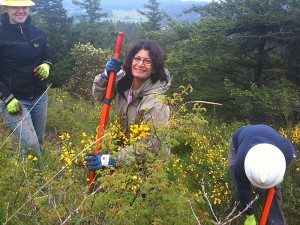
The Scotch broom invasion visible across many San Juan Island roadsides and disturbed meadows illustrates precisely why individual residential planting decisions aggregate into landscape-scale ecological outcomes. Every property owner's choices either reinforce or erode the ecological fabric that conservation organizations invest decades of effort to protect.
Key Takeaways
- The San Juan Preservation Trust has protected more than 15,000 acres through conservation easements and land acquisition, establishing it as the central institution driving San Juan Islands conservation across the archipelago.
- Conservation easements are the most widely used protection tool, but they require qualified legal counsel, independent appraisals, lender subordination agreements, and a realistic 12–24 month transaction timeline to execute properly.
- Conservation funding draws from multiple streams — state WWRP grants, federal agricultural programs, private philanthropy, and planned gifts — because no single source is sufficient to sustain land acquisition, stewardship, and community engagement at the necessary scale.
- Individual actions — from native planting in residential landscapes to SJPT membership and volunteer stewardship — contribute meaningfully to the broader conservation mission and reinforce the professional work of the Trust at every level of scale.


About William Murphy
William Murphy has worked as a licensed general contractor in Fremont, California for over thirty years, specializing in outdoor structures, green building methods, and sustainable design. During that career he has written about architecture, construction practices, and environmental protection for regional publications and trade outlets, bringing technical depth to subjects that most home improvement writers approach only from a consumer perspective. At TheBackyardGnome, he covers outdoor product reviews, backyard construction guides, and sustainable landscaping and building practices.
You can Get FREE Gifts. Receive Free Backyard Items here. Disable Ad Blocker to get them all now!
Once done, hit anything below