The Big Thicket Association: Preserving a Natural Treasure Against the Odds
by William Murphy
What if one of North America's most biologically diverse ecosystems remained largely unknown to the outdoor-minded public, tucked away in the pine-scented forests of East Texas? The answer takes shape along the Big Thicket National Park Texas trails, where dense old-growth corridors give way to carnivorous plant bogs, cypress swamps, and longleaf pine savannas within the span of a short walk. This singular landscape — often called the "American Ark" by ecologists — owes its survival to the tireless advocacy of the Big Thicket Association, an organization that has protected this irreplaceable wilderness against extraordinary industrial and political pressure, advancing a model of environmental stewardship that resonates far beyond the borders of Texas.
The Big Thicket Association was established in 1964 during a period when industrial timber operations and petroleum extraction were systematically dismantling the Thicket's old-growth corridors at an alarming rate. Its founders — a coalition of naturalists, scientists, and civic advocates — understood that without federal protection, the region would continue to shrink toward ecological irrelevance. Their sustained campaign ultimately produced the landmark legislation of 1974, establishing Big Thicket National Preserve under the National Park Service's jurisdiction and securing the first federally designated units of what now spans more than 100,000 acres across Southeast Texas.
Those who hike, paddle, and observe wildlife along the preserve's trail systems today benefit directly from that foundational advocacy. The landscape they encounter — extraordinarily rich, biologically complex, and unlike any other in North America — represents the cumulative result of more than six decades of sustained conservation work by an organization that refused to accept the destruction of a national ecological treasure.
Contents
- A Wilderness Unlike Any Other: The Origins and Ecology of Big Thicket
- Walking the Big Thicket National Park Texas Trails: Immersive Ecosystems Underfoot
- Translating Big Thicket Principles Into Outdoor Living and Backyard Design
- Clearing the Record: Misconceptions About Big Thicket and Its Conservation
- Frequently Asked Questions
- Key Takeaways
A Wilderness Unlike Any Other: The Origins and Ecology of Big Thicket
The Remarkable Convergence of Ecosystems
The Big Thicket's reputation for biological richness derives from its position at the intersection of four major North American ecosystems. Eastern deciduous forests, Gulf coastal plains, Midwest prairies, and Appalachian upland communities converge here in a configuration shaped by ancient glacial migrations and the region's distinctive topography. According to the National Park Service, the preserve shelters more than 1,000 plant species, 300 bird species, and nearly 50 orchid species — densities that rival tropical environments far closer to the equator.
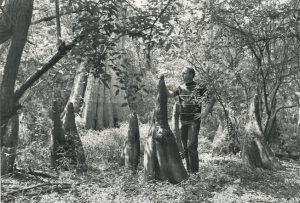
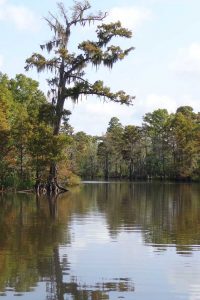
The ecological logic of this convergence mirrors principles that gardeners and landscape designers encounter at a much smaller scale. Just as the selection of trees appropriate to a specific regional climate determines long-term garden success, the Thicket's extraordinary diversity reflects millions of years of species adapting with precision to local soil chemistry, hydrology, and light conditions. Longleaf pines dominate dry sandy uplands; bald cypress anchor the swampy lowlands; pitcher plants and sundews colonize acidic wetland margins. Each species occupies its niche with evolutionary authority.
The Association's Founding and Political Battles
The Big Thicket Association's founders faced formidable opposition from timber companies whose lease holdings overlapped with proposed preservation boundaries. Industry representatives actively lobbied against federal designation, warning of economic disruption to East Texas communities dependent on logging revenues. The association countered with rigorous scientific testimony, guided legislative tours of threatened old-growth stands, and sustained media campaigns that gradually shifted public opinion. Their persistence across more than a decade of legislative effort produced the 1974 legislation that established the preserve under federal stewardship — a victory measured in decades of collective determination.
Walking the Big Thicket National Park Texas Trails: Immersive Ecosystems Underfoot
Trail Systems and Ecological Diversity
The Big Thicket National Park Texas trails deliver visitors into distinctly different habitat communities within compact geographic distances, making the preserve unusually accessible for ecological education. The Kirby Nature Trail — widely regarded as the preserve's most instructive route — transitions through beech-magnolia forest, cypress-tupelo slough, arid sandylands, and baygall swamp habitats within its 2.4-mile loop. The Turkey Creek Trail extends seventeen miles through the preserve's largest land unit, accommodating multi-day backcountry excursions for experienced wilderness travelers.
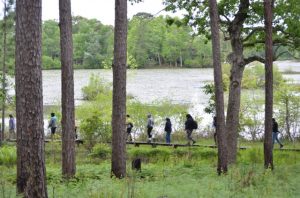
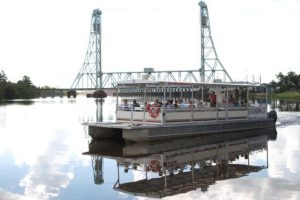
Water trails navigating the preserve's bayous and sloughs attract paddlers seeking an immersive perspective on the Thicket's wetland communities. The dynamics of these interior waterways — where understanding water ecosystems at any scale illuminates the same hydrological principles — reveal the critical connections that sustain biological communities across the preserve's fragmented land units.
Pro Tip: Schedule visits between October and April to avoid peak humidity and the dense mosquito populations of summer months — conditions that challenge even seasoned naturalists accustomed to demanding field environments.
Wildlife and Avian Diversity
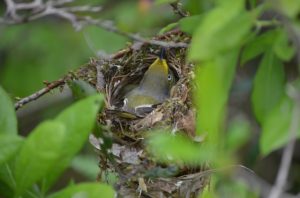
The preserve's avian diversity draws ornithologists and enthusiast birders from across the continent. The Thicket is historically associated with the Ivory-billed Woodpecker, a species long considered functionally extinct, whose periodic reported sightings continue to fuel scientific inquiry and public fascination. The region's intact canopy and extensive wetland corridors support diverse migratory and year-round resident populations, establishing the preserve as one of the premier birding destinations in the American South. Observers equipped with appropriate optical instruments — including a well-configured spotting scope set up for terrestrial wildlife viewing — can identify remarkable species without venturing far beyond established trailheads.
Translating Big Thicket Principles Into Outdoor Living and Backyard Design
Native Plants and Ecological Landscaping
The Big Thicket's plant communities function as a comprehensive living catalog of species adapted to Gulf Coast and southeastern climates, offering direct inspiration for homeowners pursuing ecologically coherent outdoor landscapes. Carnivorous pitcher plants, native azaleas, and fire-adapted longleaf pine seedlings demonstrate how evolutionary pressure produces elegant functional solutions — a principle directly applicable to residential native plant gardens. Outdoor spaces designed around native communities demand fundamentally different care philosophies than conventional landscaping. Specifically, selecting naturally durable wood species for outdoor furniture and structures aligns with an ecological design approach that minimizes chemical treatment in spaces intended to support native biodiversity.
Practical maintenance of native landscapes also rewards attentive tool selection. A well-chosen leaf blower calibrated for yard debris management enables efficient handling of fallen material from native canopy trees — organic matter best redirected to compost rather than waste streams — supporting the closed-loop nutrient cycling that native plant communities naturally produce and depend upon across seasons.
Extending the Outdoor Experience Beyond the Preserve
Visitors spending extended periods in and around the preserve discover that thoughtful equipment selection transforms the overall experience. Wilderness photographers and birders who spend long hours stationed at observation points rely on zero-gravity reclining chairs as ergonomic alternatives to traditional camp seating, providing essential support during sustained sessions along the Turkey Creek Trail corridor and adjacent wetland margins. Evening hours at campgrounds surrounding the preserve — where contained fire features are permitted — create ideal conditions for reflection after full days on the trails; a portable outdoor fireplace extends comfortable outdoor time well into cooler evening hours without sacrificing warmth or atmosphere.
Clearing the Record: Misconceptions About Big Thicket and Its Conservation
Misconception One: The Thicket Is a Single Contiguous Forest
The most persistent public misconception portrays Big Thicket as one unbroken wilderness, when the preserve actually comprises twelve separate land units connected by four water corridors and surrounded by private timber holdings, highways, and agricultural operations. This fragmented structure creates substantial management complexity, as wildlife movement between units depends on corridors that traverse private land entirely beyond the National Park Service's direct jurisdiction. Habitat connectivity across these private parcels remains one of the association's central advocacy priorities.
Misconception Two: National Preserve Status Equals Strict Protection
Unlike National Parks, National Preserves permit regulated hunting within certain units — a designation distinction that surprises visitors who encounter posted hunting zones along otherwise pristine trailheads. The table below clarifies the key differences between federal land management categories that frequently generate public confusion among first-time visitors to the Big Thicket National Park Texas trails system.
| Designation | Hunting Permitted | Mineral Extraction | Primary Management Goal |
|---|---|---|---|
| National Park | Prohibited | Prohibited | Strict ecological preservation |
| National Preserve | Regulated | Limited and permitted | Preservation with multiple-use access |
| National Forest | Permitted | Permitted under lease | Sustainable resource management |
| State Wildlife Management Area | Permitted | Varies by site | Wildlife management and recreation |
Misconception Three: The Conservation Battle Has Been Won
The Big Thicket Association remains actively engaged because the preserve's ecological health depends on decisions made far beyond its official boundaries. Upstream agricultural runoff, groundwater extraction affecting wetland hydrology, and adjacent land development all exert measurable influence on species populations within the preserve. The association continues to pursue federal acquisition of privately held parcels that would reconnect fragmented habitat units — a campaign that reflects the enduring reality that conservation is an ongoing process, not a fixed historical achievement. This truth resonates with anyone invested in the long-term health of outdoor and natural spaces, from national preserves to the managed ecosystems of a residential backyard.
Frequently Asked Questions
What makes the Big Thicket National Park Texas trails unique compared to other hiking destinations?
The Big Thicket National Park Texas trails pass through multiple distinct ecosystem types within remarkably short distances, allowing hikers to experience beech-magnolia forest, cypress swamps, carnivorous plant bogs, and pine savannas in a single outing — a biological convergence found nowhere else in North America at this density.
When is the best time of year to visit Big Thicket National Preserve?
The optimal visiting window runs from October through April, when moderate temperatures, lower humidity, and reduced mosquito activity make extended trail use genuinely comfortable; spring months additionally offer exceptional wildflower displays across the preserve's diverse plant communities.
What is the Big Thicket Association and what does it do today?
The Big Thicket Association is a nonprofit conservation organization founded in 1964 that originally campaigned for federal preserve status, and now focuses on boundary expansion advocacy, ecological monitoring, public education, and engagement with regulatory agencies on threats originating outside the preserve's official boundaries.
How does Big Thicket National Preserve differ from a National Park in terms of allowed activities?
National Preserves permit regulated hunting within designated units and may allow limited mineral extraction under existing leases, whereas National Parks prohibit both activities; this distinction means visitors to the Big Thicket will encounter hunting zones within portions of the preserve that would be fully restricted in a traditional National Park.
Key Takeaways
- The Big Thicket National Park Texas trails traverse one of North America's most ecologically complex convergence zones, where four major ecosystem types intersect within a compact geographic footprint.
- The Big Thicket Association's decades of sustained advocacy produced federal preserve designation in 1974, protecting more than 100,000 acres from the unchecked industrial extraction that had threatened the region for generations.
- National Preserve status differs meaningfully from National Park designation, permitting regulated hunting and limited mineral extraction within certain units — a distinction that shapes both management priorities and visitor expectations.
- Conservation of the Big Thicket remains an active and unfinished endeavor, dependent on boundary expansion, cross-boundary land use policy, and the ongoing work of dedicated advocacy organizations operating beyond the preserve's official limits.


About William Murphy
William Murphy has worked as a licensed general contractor in Fremont, California for over thirty years, specializing in outdoor structures, green building methods, and sustainable design. During that career he has written about architecture, construction practices, and environmental protection for regional publications and trade outlets, bringing technical depth to subjects that most home improvement writers approach only from a consumer perspective. At TheBackyardGnome, he covers outdoor product reviews, backyard construction guides, and sustainable landscaping and building practices.
You can Get FREE Gifts. Receive Free Backyard Items here. Disable Ad Blocker to get them all now!
Once done, hit anything below