Last summer, a neighbor casually mentioned she'd been using her leaf blower to speed up bath time for her golden retriever. The dog bolted across the yard and wedged himself under the deck for two solid hours. It sounds funny until you realize what unfiltered, high-velocity air actually does to a wet dog's ears, skin, and nervous system. If you're searching for safe ways to dry your dog after a bath, you're already asking the right question — and this guide gives you everything you need to do it properly.

Dogs don't process temperature, pressure, or sudden loud noise the way we do. A leaf blower that feels like a light gust to you delivers an overwhelming sensory assault to a sixty-pound labrador. Their ear canals are especially vulnerable — water and debris can be pushed deep inside, creating the conditions for painful infections that take weeks to resolve. Beyond the physical risks, the noise and pressure trigger a fight-or-flight response in most dogs, turning future bath time into a battle you didn't sign up for.
You don't need a professional groomer's setup or expensive equipment to dry your dog safely at home. What you need is a clear process, the right tools, and a little patience. If you have a covered outdoor space — like a backyard gazebo or shelter — that can actually become your ideal grooming station. And for more seasonal tips on keeping your outdoor companion comfortable year-round, the pet care guide collection here at TheBackyardGnome is worth bookmarking.
Contents
Safe Ways to Dry Your Dog: A Step-by-Step Approach
The biggest mistake most dog owners make is reaching for a dryer before removing enough water by hand. The more moisture you pull off with a towel first, the less work — and less heat exposure — your dog needs from any electrical tool. Sequence matters here as much as the tools themselves.
Start With a High-Absorbency Towel
Regular bath towels work, but a microfiber towel designed specifically for pets pulls significantly more water in the same amount of time. Wrap the towel around your dog's body and press firmly — don't rub aggressively, especially on long-coated breeds, because friction against wet fur causes matting. Work from the back of the neck down toward the tail, then tackle the legs and underbelly. Save the face for last: blot gently around the eyes and ear flaps without pushing anything into the ear canal.
For dogs with thick double coats, plan on two towels before you even think about turning on a dryer. The undercoat holds water like a sponge. Blasting heat into a saturated undercoat too early causes discomfort, uneven drying, and dramatically extends the whole process.
Using a Pet Dryer Correctly
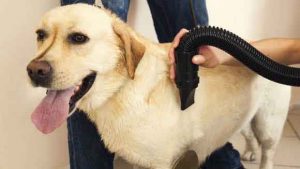
Once you've done a thorough towel pass, a handheld pet dryer on the lowest heat setting is your best tool. Hold it six to eight inches from the skin, keep it moving constantly, and use a slicker brush to lift the fur so warm air reaches the undercoat. Never hold the dryer in one spot — concentrated heat on wet skin causes burns even at settings that feel mild to your hand. Work in sections: hindquarters first, then back and sides, then chest and legs, and finally the head.
According to the general principles of dog grooming, proper drying is one of the most overlooked factors in preventing chronic skin and ear conditions. Rushing through it consistently builds up problems over time that are expensive and painful to treat.
Pro tip: Before directing any dryer at your dog, test the airflow temperature against the inside of your wrist. If it feels uncomfortable to you, it's already too hot for them.
Dangerous Ideas That Sound Reasonable But Aren't
Plenty of well-meaning advice floats around about dog drying. Some of it ranges from mildly ineffective to genuinely dangerous. The leaf blower is the most dramatic example, but it's far from the only one worth addressing directly.
Why a Leaf Blower Is Never the Answer
Leaf blowers are engineered to move debris — leaves, grass clippings, dirt — off hard surfaces and into piles. They generate unfiltered air that often carries particulates, dust, and yard debris you'd never want near your dog's eyes, nose, or ear canal. The airflow is completely unregulated and varies dramatically between models, with some generating wind speeds high enough to strip bark. These machines are built for outdoor yard tasks like mulching and bagging leaves with a lawnmower — engineered without any consideration for animal skin or tissue sensitivity.
Beyond the debris problem, the pressure can force water deeper into the ear canal rather than drying it. Breeds already prone to ear infections — cocker spaniels, basset hounds, poodles — face serious risk from any practice that pushes moisture inward instead of drawing it out. A single session with a leaf blower can trigger an infection that takes three to four weeks of medication to clear.
The Human Hair Dryer Problem
Human hair dryers are calibrated for human scalp temperatures and human hair density. They produce heat at levels that can become dangerous within seconds when held close to a dog's thinner, more sensitive skin — especially on the face, ears, and paw pads. Dogs cannot tell you when something is getting too hot. By the time they pull away or yelp, the thermal damage is already done.
If a pet-specific dryer isn't in your budget yet, a human hair dryer on the cool setting only — not warm, never hot — is a viable interim measure. It takes longer, but it eliminates the burn risk entirely. Treat it as a temporary workaround, not a permanent solution.
The Tools That Actually Get the Job Done
There's a meaningful gap between what's marketed to pet owners at big-box stores and what professional groomers actually rely on. Understanding that difference helps you spend money where it matters and skip what it doesn't.
Handheld Pet Dryers
Handheld pet dryers are the most accessible option for most households. A quality model runs quieter than a human hair dryer, offers multiple heat settings including a cool or no-heat option, and usually ships with nozzle attachments for precise airflow direction. They're effective for small to medium dogs and shorter-coated breeds. For large dogs or dogs with heavy double coats, expect to spend more time and keep a backup towel ready — but they'll get the job done with patience.
Force Dryers for Thick Coats
Force dryers — also called high-velocity dryers — move large volumes of air without relying heavily on heat. They work by physically blasting water droplets off the coat rather than evaporating them with warmth. Professional groomers use these almost exclusively for double-coated breeds like huskies, golden retrievers, and German shepherds. Force dryers are not for beginners — the airflow is intense, and a dog that hasn't been gradually desensitized to one will panic. Start at the lowest setting, introduce it from a distance, and build up across multiple sessions over days or weeks.
| Tool | Best For | Heat Risk | Avg. Price Range | Noise Level |
|---|---|---|---|---|
| Microfiber Pet Towel | All dogs — always the first step | None | $10–$30 | Silent |
| Handheld Pet Dryer | Small to medium dogs, short coats | Low (use cool/low setting) | $25–$80 | Moderate |
| Force Dryer (High-Velocity) | Large breeds, double coats | Very low (mostly moving air) | $80–$250 | High |
| Stand Dryer | Hands-free finishing work | Low | $100–$300 | Moderate |
| Human Hair Dryer (cool only) | Emergency/temporary use | High if misused | Already owned | Moderate |
| Leaf Blower | Yard debris — never pets | Extreme | N/A | Very high |
Warning: Never use a leaf blower, shop vac in reverse, or any unfiltered high-pressure air source on your pet — not even briefly, not even on the lowest setting. The risks to ears, eyes, and skin are real and immediate.
What Safe Dog Drying Actually Costs
One reason people reach for a leaf blower is that proper grooming tools seem expensive at first glance. In reality, the upfront investment in doing it right is far lower than a single vet visit for an ear infection or a heat burn — both of which are entirely preventable.
DIY at Home
A solid at-home drying setup requires very little. Two or three high-absorbency microfiber towels run between $10 and $30 total. A quality handheld pet dryer lands between $30 and $80. If you have a large or double-coated dog and want a force dryer, budget $100 to $200 for a reliable model. Most households spend under $120 total — spread over years of weekly or biweekly baths, the per-use cost is negligible compared to the alternative.
When Professional Grooming Makes Sense
For dogs with dense double coats — huskies, malamutes, chow chows — professional grooming every six to eight weeks is money well spent. A professional bath and blow-dry typically runs $50 to $100 depending on size and coat condition. But even between professional appointments, you're still drying your dog at home after muddy yard sessions and rainy-day walks. Just like understanding the safety rules around outdoor water features in your backyard, knowing how to handle your dog safely around water is about preventing problems before they have a chance to develop into costly ones.
Simple Habits That Speed Up Drying Without the Risk
You don't need a complete overhaul of your routine to get meaningfully better results. A few targeted changes in how you approach the process cut both time and risk at the same time.
Get More From Your Towel
Pressing and squeezing removes more water than rubbing does. Wrap the towel around a limb and squeeze the full length before moving on. For the body, lay the towel flat across your dog's back and apply firm downward pressure for ten to fifteen seconds before repositioning. This takes thirty extra seconds compared to frantic rubbing but removes substantially more water — which means your dryer finishes the job in half the time and at a lower heat setting.
Use Your Outdoor Space Strategically
A covered outdoor area is ideal for bath and drying sessions — sheltered from wind, easy to hose down, and warm enough in good weather to prevent chilling. If you're considering adding a permanent covered structure to your yard, something like the right gazebo setup on grass, concrete, or pavers creates a dedicated outdoor grooming zone that works year-round. A hardtop structure in particular handles weather without sagging or pooling — check out how something like the Sunjoy Chatham Steel Hardtop Gazebo holds up as a permanent outdoor station. For families thinking bigger about their backyard setup, DIY outdoor project guides can help you design a functional space where dogs have room to move freely and shake off naturally after a rinse.
Quick win: Schedule baths for early afternoon on warm days so your dog can air-dry in a shaded, wind-free spot after you've handled the towel and dryer work — you'll cut your total active drying time nearly in half.
What Actually Happens When People Get It Wrong
The stories from veterinary offices aren't rare. Pet owners with good intentions cause real injuries every year by reaching for the wrong tools or skipping steps that feel optional but aren't. Understanding what vets and groomers see regularly puts the stakes in clear perspective.
Injuries Vets See Regularly
Heat burns from human hair dryers are among the most frequently reported grooming-related injuries. They concentrate on the belly, inner thighs, and face — areas with the thinnest skin. Ear infections caused by improper drying are even more common. A wet ear canal that doesn't get gently blotted with a cotton ball becomes a breeding ground for bacteria and yeast within 24 to 48 hours. In dogs already prone to ear problems, this cascades into chronic infections requiring months of treatment and hundreds of dollars in vet bills.
Anxiety-related injuries happen too. Dogs that panic during loud or forceful drying bolt — jumping off grooming tables, crashing into furniture, or pulling muscles in the scramble to escape. These injuries are entirely preventable with a patient, gradual introduction to the tools involved.
What Professional Groomers Know That Most Owners Don't
Professional groomers work with nervous dogs every single day. The consistent lesson they share is that desensitization always takes priority over efficiency. Introducing a dryer gradually — letting the dog sniff it while it's off, running it nearby without directing it at them, then building up to low airflow from a distance — transforms a chaotic bath experience into a calm one within just a few sessions. Rushing past this step costs far more time in the long run than it saves on any given bath day. For a comprehensive look at keeping your pet safe in every aspect of outdoor living, browse the full pet care section for more practical guidance.
Frequently Asked Questions
Can I use a regular hair dryer on my dog?
You can use a human hair dryer on the cool setting only — never warm or hot. Human dryers reach temperatures that burn a dog's skin quickly, especially on the face, ears, and belly where the skin is thinnest. A pet-specific dryer is always the safer and more practical long-term choice.
Why is a leaf blower dangerous for drying dogs?
Leaf blowers push unfiltered air carrying dust, debris, and particulates directly toward your dog's eyes, nose, and ear canals. The unregulated pressure can force water deeper into the ear canal rather than drying it, which leads directly to painful infections. These tools are designed for yard work — nothing about their engineering accounts for animal physiology.
How long should it take to dry a dog after a bath?
With a thorough towel session followed by a pet dryer, most small to medium dogs dry in 10 to 20 minutes. Large dogs with thick double coats can take 30 to 45 minutes or more. Skipping the towel step dramatically increases dryer time and unnecessary heat exposure.
Is it okay to let my dog air-dry completely?
Air drying is fine in warm, dry conditions but comes with real risks. A dog that stays damp for hours — especially in skin folds, ears, and between the toes — creates ideal conditions for yeast and bacterial growth. In cold or humid weather, prolonged dampness also increases the risk of chilling and muscle stiffness.
What's the safest drying method for puppies?
Towel drying is the safest option for puppies. Their skin is more delicate, they startle more easily, and they haven't yet built any tolerance for dryer noise. If you need to use a dryer, use the lowest heat setting, keep it at least a foot away, and limit sessions to five minutes at a time until they're comfortable.
How do I dry my dog's ears safely?
Use a soft cotton ball to gently blot the outer ear flap and the visible entrance to the canal. Never insert cotton swabs into the ear canal — this pushes moisture and debris deeper, making the problem worse. If your dog shakes their head repeatedly after a bath, consult your vet to rule out water trapped deep in the canal.
Do force dryers work for short-haired dogs?
Force dryers work on short-haired dogs but are generally overkill. Because short coats have less volume to dry, a thorough towel pass followed by a standard handheld pet dryer is usually more than sufficient. Force dryers deliver their real value with double-coated and long-haired breeds where penetrating the undercoat is the main challenge.
How can I help an anxious dog tolerate the drying process?
Introduce the dryer gradually over several sessions before you need it for a full dry. Let your dog sniff it while it's off, then run it in the same room without directing airflow at them, then work up to low airflow from a distance. Pair every step with high-value treats and keep sessions short. Most dogs adapt within a week of consistent, low-pressure exposure.
Final Thoughts
Your dog trusts you to make smart calls on their behalf, and the drying routine is one of the clearest places to demonstrate that care in action. Pick up a quality microfiber towel and a pet-specific dryer, commit to the gradual desensitization process, and you'll save yourself years of stressful bath days — and your dog a lot of unnecessary discomfort. Head over to the pet care guide section for more practical, no-nonsense advice on keeping your four-legged backyard companion healthy through every season.


About William Murphy
William Murphy has worked as a licensed general contractor in Fremont, California for over thirty years, specializing in outdoor structures, green building methods, and sustainable design. During that career he has written about architecture, construction practices, and environmental protection for regional publications and trade outlets, bringing technical depth to subjects that most home improvement writers approach only from a consumer perspective. At TheBackyardGnome, he covers outdoor product reviews, backyard construction guides, and sustainable landscaping and building practices.
You can Get FREE Gifts. Receive Free Backyard Items here. Disable Ad Blocker to get them all now!
Once done, hit anything below