More than 7 million American households own a hot tub or portable spa — yet the majority of first-time buyers spend hours researching jets and heaters while barely glancing at shape. That's a costly oversight. Understanding hot tub shapes and types is the foundation of every buying decision you'll make, from how many people can soak at once to whether the tub even fits through your backyard gate. Browse our full collection of hot tub guides to see how shape connects to sizing, installation, and long-term care.

Shape is not just an aesthetic preference. It determines seating arrangement, how efficiently the tub uses your available space, what kind of cover you'll need, and how difficult installation and eventual removal will be. Get the shape right, and your hot tub becomes a backyard centerpiece. Get it wrong, and it becomes an expensive obstacle.
This guide covers every major hot tub shape — round, square, rectangular, triangular, and custom — with realistic pricing, placement advice, and the most common selection mistakes homeowners make. By the end, you'll know exactly which shape fits your backyard and your life.
Contents
Hot Tub Shapes and Types: A Complete Breakdown
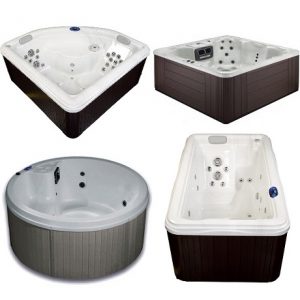
Walk into any hot tub showroom and you'll encounter round, square, rectangular, triangular, and custom shapes. Each one is engineered around a different use case. Knowing those differences upfront saves you from returning a 600-pound acrylic shell.
Round Hot Tubs
Round tubs are the most common shape on the market — especially in inflatable and entry-level portable models. Every seat faces the center, which makes them naturally social. No one is stuck in a corner.
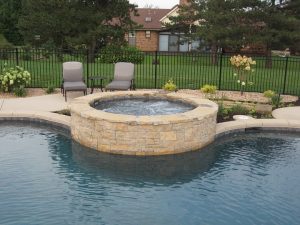
- Typical seating: 2–6 people
- Common diameter: 5 to 8 feet
- Easy to position on most existing patios or decks
- Curved edges mean you can't tuck it flush into a corner
- Covers and accessories are the easiest to source of any shape
Best for: couples, small families, or anyone who wants a relaxed, conversation-friendly soak every evening.
Square Hot Tubs
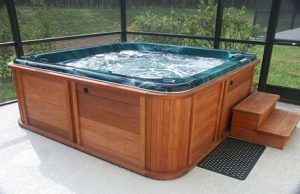
Square tubs maximize seating for their footprint. Every edge is usable, and they tuck neatly against a wall or fence. If entertaining is your priority, square is one of the most efficient shapes you can choose.
- Typical seating: 4–8 people
- Footprint: usually 7×7 to 8×8 feet
- Strong visual symmetry — looks intentional in almost any backyard layout
- Corner seat positions can feel tight for taller or larger bathers
Rectangular Hot Tubs
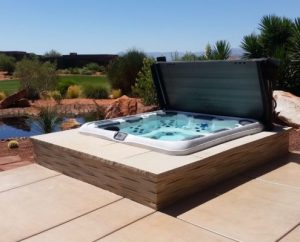
Rectangular tubs are the go-to for families who want room to stretch out, and they're the only shape that works as a swim spa. Swim spas (portable pools with a resistance current for swimming in place) almost exclusively come in a rectangular format, often stretching 12 to 19 feet.
- Typical seating: 5–8+ people
- Length: 6 to 19+ feet depending on model
- Aligns naturally along fence lines, deck edges, and exterior walls
- Heavier than round or square equivalents — confirm your deck can handle the load
Before you commit to a rectangular model, check out our hot tub sizes buying guide — it explains exactly which dimensions work for different yard configurations.
Triangular and Corner Hot Tubs
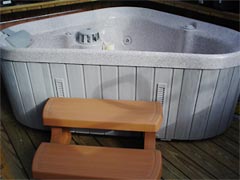
Triangular tubs are purpose-built for corners. If your patio has a wasted corner that nothing else fills cleanly, a triangular spa fits perfectly. They're less common than round or square, but they solve a genuine space problem with elegance.
- Typical seating: 2–5 people
- Ideal for L-shaped decks, small patios, or side-yard installations
- Fewer jet positions due to angled walls
- Often priced lower than round or square equivalents of similar capacity
Unusual and Custom Shapes
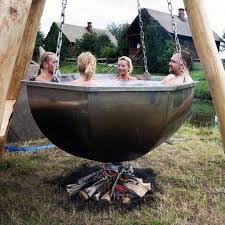
Pentagon, hexagon, oval, and fully freeform designs exist at the premium end of the market. These shapes are almost purely aesthetic — they don't deliver additional hydrotherapy benefits. But in a carefully landscaped backyard, a custom shape can look extraordinary.
- Lead times run 8–16 weeks for made-to-order shapes
- Replacement covers and parts are harder to source
- Expect to pay 20–40% more than a comparable standard shape
- Best suited to permanent, built-in installations rather than portable setups
What Each Hot Tub Shape Will Cost You
Shape is one of the strongest predictors of price. Here's a realistic look at what your budget buys across the full range of hot tub shapes and types.
| Shape | Typical Seating | Price Range (Installed) | Best For |
|---|---|---|---|
| Round (inflatable) | 2–4 | $400–$900 | First-time buyers, renters |
| Round (acrylic) | 4–6 | $3,000–$8,000 | Couples, small families |
| Square | 4–8 | $4,000–$10,000 | Entertaining, medium patios |
| Rectangular | 5–8+ | $5,000–$15,000 | Families, swim spa users |
| Triangular / Corner | 2–5 | $3,500–$9,000 | Tight or corner spaces |
| Custom / Freeform | Varies | $12,000–$40,000+ | High-end landscaped builds |
Entry-Level Options
Inflatable round tubs — like the Intex PureSpa featured at the top of this page — start around $400 and represent the lowest-risk way to test whether hot tub ownership suits your lifestyle. They heat water, produce jets, and seat 4 adults. If you decide it's not for you, they're also the easiest to deflate and store.
Mid-Range Picks
Acrylic round and square tubs in the 4–6 person range typically cost $3,000–$8,000 installed. This tier gets you real hydrotherapy jets, proper foam insulation, and a shell that should last 15–20 years with routine maintenance. Most homeowners land in this range and find it hits the sweet spot of performance and value.
Premium and Custom Shapes
Rectangular swim spas start around $10,000 and climb past $30,000 for dual-temperature models with separate swim and soak zones. Custom freeform shapes add a 20–40% premium on top of the base price. At this level, also budget for a dedicated 240V electrical circuit and potential deck reinforcement — costs that rarely appear in the sticker price.
Shape Selection Mistakes That Come Back to Haunt You
Most regrets about hot tub ownership trace back to shape — not jets, not features, not brand. Here are the three mistakes buyers make most often, and how to avoid every one of them.
Ignoring Your Space Dimensions
Measure your available area twice and add at least 2 feet of clearance on every side for maintenance access. A round tub that looks compact on a showroom floor can devour your entire small patio. Before you sign anything, lay out the footprint with painter's tape and live with it for a day.
- Check gate and pathway widths — you need to get the tub in before worrying about using it
- Review local zoning codes: many municipalities require setbacks from property lines and structures
- Account for the cover lifter mechanism, which adds 18–24 inches of clearance behind the tub
- Verify your deck's weight capacity — a filled hot tub can weigh 3,000–6,000 lbs
If you're planning a built-in or in-ground installation, our guide on how to install a hot tub in your backyard walks you through the site preparation steps in detail.
Overlooking Seating Capacity vs. Actual Use
Manufacturers rate capacity at maximum squeeze, not comfortable socializing. A "7-person" square tub seats 5 adults comfortably. Always subtract 1–2 from the rated capacity to get a realistic headcount for how your household actually uses the tub.

- Lounge seats (full-recline positions) reduce standard upright seating count by one or two spots
- Kids take up less space — factor that in if the tub is family-focused
- Before letting children soak regularly, review hot tub safety rules and guidelines for age, temperature, and time restrictions
Forgetting About Access and Future Removal
A tub that's hard to deliver is also hard to remove when it's time to replace it. Custom and oversized rectangular tubs sometimes require crane delivery, fence disassembly, or excavation. According to Wikipedia's hot tub overview, a standard portable spa weighs 500–1,000 lbs empty. Plan 5 years ahead — if the shape creates a logistics problem on delivery day, it creates the same problem on removal day.
- Portable and inflatable tubs: relatively easy to relocate or remove
- Acrylic shells: need a clear path at least 3–4 feet wide all the way from the street to the installation site
- Gunite (concrete-built) spas: functionally permanent — treat the decision like a home addition
Best Practices for Setup, Landscaping, and Long-Term Care
Choosing the right shape is only step one. Where you place the tub and how you care for it determines whether you'll love it a decade from now or wish you'd never bought it.
Placement and Landscaping
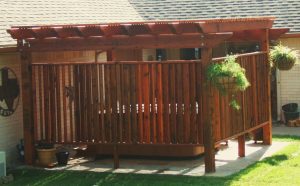
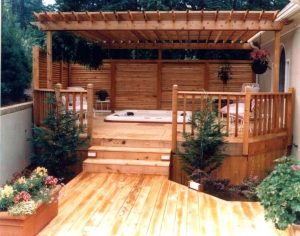
Let the shape guide your landscaping decisions. Round tubs look natural with circular paver surrounds or curved garden borders. Rectangular and square tubs align cleanly with linear deck boards, fence lines, and raised garden beds.
- Plant tall ornamental grasses, bamboo, or arborvitae for natural privacy screens without a fence
- Add low-voltage landscape lighting around the perimeter — it transforms evening soaks
- Keep plantings at least 3 feet back from the tub to limit leaf and debris in the water
- Level the ground or surface before installation — even a 1-inch slope causes long-term stress on the shell
For ideas on integrating your tub into a patio redesign, our slate patio design ideas article covers material choices that complement every hot tub shape beautifully.
Covers and Maintenance
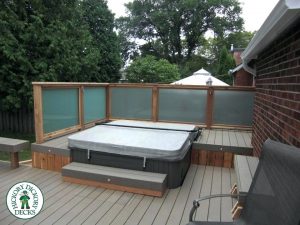
Every hot tub shape needs a fitted, insulated cover. It retains heat, blocks debris, and cuts your monthly energy cost noticeably. Round covers are the easiest to find and cheapest to replace. Custom shape covers take 4–6 weeks to order and typically run $300–$700 or more.
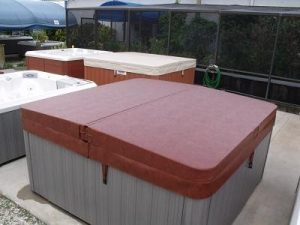
- Replace covers every 5–7 years — waterlogged foam loses its insulating value and adds serious dead weight
- Invest in a cover lifter for any tub over 80 inches across — lifting a soaked cover solo is a reliable way to hurt your back
- Wipe the shell and waterline weekly; drain and deep-clean every 3–4 months
- Test water chemistry 2–3 times per week when the tub is in regular use
If you ever decide a different shape suits you better, our guide on how to remove a hot tub or spa from your backyard makes the whole process far less daunting.
Safety and Family Considerations
Shape affects safety more than most buyers realize. Round tubs with no sharp corners are the safest choice when children are in the picture. Square and rectangular tubs with clearly defined bench seats make entry and exit easier for elderly or mobility-limited users.
- Add non-slip steps to any tub elevated above ground — our hot tub steps building guide walks you through a sturdy DIY option
- Install a locking cover or a perimeter fence if young children will be in the yard unsupervised
- Keep a phone and a first-aid kit within reach of the tub at all times
- Post water temperature and soak time limits where guests can see them
Frequently Asked Questions
What is the most popular hot tub shape?
Round is the most common shape overall, particularly for portable and inflatable models. It encourages face-to-face conversation and fits on almost any patio. Among buyers who prioritize seating and entertaining, square tubs are the top choice because they use their footprint more efficiently.
Which hot tub shape is best for a small backyard?
A triangular or corner tub makes the most of tight spaces by filling a corner that would otherwise go to waste. Compact round inflatable models are another strong option — they're lightweight, easy to position, and don't require permanent installation.
Does hot tub shape significantly affect the price?
Yes — shape is one of the biggest cost variables. Inflatable round tubs start under $1,000, while custom freeform shapes installed with professional landscaping can exceed $40,000. Rectangular swim spas fall in the middle but require the most structural preparation and the highest electrical load.
Key Takeaways
- Hot tub shapes and types fall into five main categories — round, square, rectangular, triangular, and custom — and each one is optimized for a different space and lifestyle.
- Always measure your available space and allow at least 2 feet of clearance on every side before you commit to any shape.
- Shape is a primary price driver: round inflatables start under $1,000 while custom freeform builds can top $40,000 installed.
- Match the shape to your actual use — round for socializing, rectangular for families and swim spas, triangular for tight corner spaces.


About Simmy Parker
Simmy Parker holds a Bachelor of Science in Civil Engineering from Sacramento State University and has applied that technical background to outdoor structure design, landscape planning, and backyard improvement projects for over a decade. Her love for the outdoors extends beyond design — she regularly leads nature hikes and has developed working knowledge of native plants, soil conditions, and sustainable landscaping practices across Northern California. At TheBackyardGnome, she covers backyard design guides, landscaping ideas, and eco-friendly outdoor living resources.
You can Get FREE Gifts. Receive Free Backyard Items here. Disable Ad Blocker to get them all now!
Once done, hit anything below