What's the point of buying a hot tub if it barely fits two people when your family needs space for five? Knowing how to choose hot tub size is the single most important decision you'll make before spending thousands of dollars on an outdoor spa. Get it right, and your backyard becomes a genuine retreat. Get it wrong, and you're left with a tub that overwhelms your space, drains your budget, or leaves guests perched on the deck waiting their turn. This guide — part of our broader hot tub resource library — covers every size category and every factor that should shape your final decision.

Hot tubs range from compact 2-person plug-and-play inflatables to sprawling 8-person lounging spas that rival a small pool. The difference isn't just footprint — it's heating costs, installation requirements, jet count, and how the tub actually feels when you use it every week. Understanding those distinctions before you shop puts you firmly in control of the outcome.
Whether you're working with a tight corner patio or a wide-open deck, whether you soak solo on weeknights or host gatherings every weekend, the size you choose should match your real life. Not an idealized version of it. Let's break it all down.
Contents
- Understanding Hot Tub Sizes: What the Market Actually Offers
- How to Choose Hot Tub Size: A Practical Framework
- Smart Sizing Tips Most Buyers Miss
- When Smaller Is Smarter (and When It Isn't)
- What Each Size Will Actually Cost You
- Sizing Mistakes You Don't Want to Make
- Setting Up Your Tub for Long-Term Enjoyment
- Frequently Asked Questions
- Key Takeaways
Understanding Hot Tub Sizes: What the Market Actually Offers
Before you can make the right choice, you need to know what's available. The industry generally divides hot tubs into three broad categories based on seating capacity. These aren't rigid rules — one manufacturer might call a 4-person tub "medium" while another labels it "compact" — but the framework is consistent enough to be genuinely useful when you're comparing models.
Small Hot Tubs (2–3 Seats)
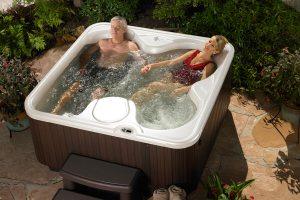
Small tubs typically measure between 5×5 and 6×6 feet, seat 2 to 3 people, and start around $3,000 for acrylic hard-shell models. Inflatable options bring that entry point down to a few hundred dollars. Small tubs heat up faster and cost significantly less to run each month — a real advantage if you're the primary user. They're also far easier to install on compact patios or decks with weight limitations.
Medium Hot Tubs (4–5 Seats)
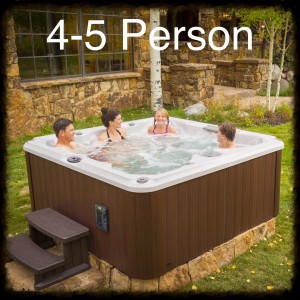
The 4-to-5-person range is where most residential buyers end up. These tubs usually span 7×7 to 7.5×7.5 feet and hit the sweet spot between usable seating and manageable operating costs. You get enough jets to feel like a genuine spa experience while keeping monthly energy bills reasonable. If you're buying your first hard-shell tub and have a household of 2 to 4 people, this is the category worth exploring first.
Large Hot Tubs (6–8 Seats)
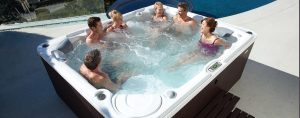
Large tubs seat 6 to 8 and typically measure 8×8 feet or larger. Some lounge-style models stretch to 9×9 feet. These are entertainment-focused tubs built for large families or frequent social gatherings. They require more structural support, a dedicated 240V electrical circuit, and noticeably higher monthly energy costs. But when you regularly have five or six people wanting to use the tub at once, no smaller model will serve you well.
How to Choose Hot Tub Size: A Practical Framework

The question of how to choose hot tub size sounds simple enough, but most buyers make this decision on gut feel or showroom aesthetics rather than a deliberate process. That's exactly how you end up with a tub that's either too cramped to enjoy or too expensive to keep running. A clear framework prevents that.
Start With Your Real Usage Pattern
Ask yourself honestly: how many people will actually use this tub at the same time, most of the time? Not at your holiday party. Not at the cookout you throw once a year. On a regular Tuesday night. For most households, that number is 1 to 3 people. Buy for your typical use case, not your peak use case. A 4-person tub handles the occasional extra guest without the overhead of a 7-person model you only fill to capacity twice a year.
Measure Your Space Before You Browse
Your backyard determines as much as your budget does. Measure the area where you plan to install the tub, then add at least 2 feet of clearance on every side for maintenance access. A hot tub sits on a concrete pad, reinforced deck, or compacted gravel base — all of which need to support roughly 100 pounds per square foot when the tub is full of water and people. Read our full guide on how to install a hot tub in your backyard before committing to any footprint.
Pro tip: Mark out the tub's exact footprint with painter's tape on your patio before you buy. Living with that outlined space for a few days reveals whether it actually works with your outdoor layout.
Smart Sizing Tips Most Buyers Miss
Rated Capacity vs. Comfortable Capacity
Manufacturer capacity ratings are optimistic by design. A tub marketed for 6 people often means 6 people crammed shoulder-to-shoulder with no elbow room. The practical rule is to subtract one from whatever the manufacturer lists. A "6-person" tub comfortably seats 5. A "4-person" tub is genuinely comfortable for 3. Keep that mental adjustment with you as you browse — it changes the math significantly.
If you enjoy accessories like the Hydro Hammock hot tub water hammock, factor that into your space planning as well. Floating accessories consume real interior room and can make a 4-person model feel claustrophobic quickly.
Jets, Pumps, and What They Actually Demand
Bigger tubs carry more jets. More jets require more pumps. More pumps draw more electricity and create more heat loss. A high-jet-count large tub can cost $75 to $150 per month to operate versus $20 to $50 for a well-insulated small model. Don't let jet count be a selling point unless you actually sit near all of them. Quality of jet placement matters far more than raw quantity — fifteen precisely positioned jets outperform fifty scattered ones every time.
Warning: Never buy a tub based on jet count alone. Poorly aimed high-volume jets deliver less therapeutic value than a modest, well-designed jet layout.
When Smaller Is Smarter (and When It Isn't)

Go Smaller When...
A compact tub is the right call when your household has 1 to 2 regular users, your yard is tight, or your monthly budget for operating costs is limited. Smaller tubs also work well in rental properties or vacation homes where the tub gets intermittent use. You're not sacrificing the experience — you're matching the tool to the job. A well-built 3-person tub with quality jets beats a mediocre 7-person tub every single time.
It's also worth thinking ahead. If you ever need to replace or remove the tub, a smaller model is dramatically easier to deal with. The process for a large tub is surprisingly involved — our guide on how to remove a hot tub from your backyard walks through exactly how complicated that gets for larger models.
Size Up When...
Go larger when you have 4 or more regular users, when you entertain frequently, or when you're installing in a family home where multiple people will compete for time in the tub. Large models also make sense when the hot tub is the central feature of a dedicated spa deck rather than a backyard add-on. In those situations, undersizing leads to frustration within the first year. Crowded seats and inadequate jet coverage will drive usage down fast.
What Each Size Will Actually Cost You
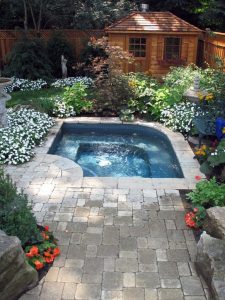
Purchase and Installation Costs
The table below gives you a realistic picture of what different hot tub sizes cost from purchase through installation. These are ranges — actual prices vary based on brand, feature set, and local labor costs.
| Size Category | Seats | Tub Price Range | Est. Installation Cost | Electrical Requirement |
|---|---|---|---|---|
| Inflatable / Portable | 2–4 | $400–$1,500 | Minimal (plug-in) | 120V standard outlet |
| Small Hard-Shell | 2–3 | $3,000–$6,000 | $500–$1,500 | 240V dedicated circuit |
| Medium Hard-Shell | 4–5 | $6,000–$10,000 | $1,000–$2,500 | 240V dedicated circuit |
| Large Hard-Shell | 6–8 | $9,000–$18,000+ | $2,000–$5,000 | 240V, often dual-circuit |
Ongoing Operating Costs
Purchase price is only part of the equation. A large tub running through cold winters can add $100 or more per month to your electricity bill. Insulation quality has more impact on monthly operating costs than size alone — a well-insulated medium tub routinely costs less to run than a poorly insulated large one. Ask manufacturers for certified energy consumption figures rather than estimates. According to Wikipedia's overview of hot tub technology, full-foam insulation systems have dramatically improved energy efficiency in modern hard-shell models.
Budget reminder: Factor in $50–$150 per month for chemicals, filter replacements, and electricity when calculating true ownership costs — not just the sticker price on the showroom floor.
Sizing Mistakes You Don't Want to Make
The most common error buyers make is going too large because a bigger tub felt more impressive in the showroom. Real-world use is almost always more intimate than buyers anticipate. A tub that's too big for your household sits cold most of the time — wasting energy to hold temperature for nobody.
The second mistake is ignoring the delivery path. Hot tubs arrive as a single assembled unit and must be moved into your yard through a side gate or around the house. Measure every clearance point before you buy. A tub that doesn't fit through your gate stays on the driveway — and the removal process is even more involved than delivery. Get the placement right before the delivery crew leaves.
Third: underestimating electrical work. Every hard-shell tub requires a 240V GFCI-protected circuit installed by a licensed electrician. That's a cost many buyers don't account for until they're already committed to a model. Budget $500 to $1,500 for the electrical work alone, and get that quote before you finalize your purchase decision.
Setting Up Your Tub for Long-Term Enjoyment
The best hot tub is one you'll still be using years from now — not just in the first excited months of ownership. That means thinking through access, maintenance, and safety before you finalize your size selection.
Entry steps are a small upgrade that dramatically improves daily usability. Larger, deeper models in particular have a steep entry profile that becomes genuinely inconvenient without the right steps. Our guide on how to build hot tub steps covers DIY options that complement any size without cluttering the surrounding space.
Safety is non-negotiable regardless of which size you choose. Children and pets around a hot tub represent real risks that demand deliberate planning. Review our full breakdown of hot tub safety rules and guidelines to make sure your setup includes locking covers, proper fencing, and the right temperature limits. A smaller tub doesn't carry fewer risks — it just has a smaller footprint.
Finally, think about how the tub integrates into your backyard as a whole. A well-placed hot tub elevates the entire outdoor space. A poorly placed one becomes an eyesore that dominates every sightline. Consider privacy screening, ambient lighting, and landscape buffers when planning the installation area. The size you choose affects all of these elements — a larger tub requires a larger visual context to feel intentional rather than imposed on the yard.
Frequently Asked Questions
What is the most popular hot tub size?
The 4-to-5-person medium hot tub is the most popular size for residential buyers. It balances seating capacity, operating costs, and available yard space for the majority of households, making it the starting point for most first-time buyers.
How do I know if my deck can support a hot tub?
A full hot tub weighs roughly 100 pounds per square foot. Most residential decks are built to support 40–60 pounds per square foot, which means you'll likely need structural reinforcement before placing a hot tub on an elevated deck. Consult a structural engineer or licensed contractor before committing to any deck location.
Can a 2-person hot tub actually fit 3 people?
Technically yes, but it won't be comfortable. Manufacturer ratings are consistently generous — a tub marketed as a 2-seater is a genuinely tight fit for 2 average-sized adults. As a rule, subtract one from the rated capacity to get the real comfortable number.
How much does it cost to run a hot tub monthly?
Monthly running costs depend on tub size, insulation quality, climate, and how often you use it. A small well-insulated model runs $20–$40 in electricity. A large tub in a cold climate can exceed $150 per month. Add another $30–$60 for chemicals and filter maintenance on top of electricity costs.
Is a bigger hot tub harder to maintain?
Yes. Larger tubs hold more water, requiring more chemicals to balance. Filters work harder, heating cycles are longer, and greater surface area accelerates heat loss. That said, consistent maintenance habits make even a large tub manageable — the workload scales proportionally with the size, not exponentially beyond it.
Key Takeaways
- Buy for your typical use case — not the largest gathering you might host once or twice a year.
- Subtract one from any manufacturer capacity rating to get the comfortable real-world number of seats.
- Measure your space, confirm your electrical infrastructure, and check the delivery path before committing to any size.
- Monthly operating costs — electricity, chemicals, and maintenance — often matter more than purchase price over the full life of the tub.


About Simmy Parker
Simmy Parker holds a Bachelor of Science in Civil Engineering from Sacramento State University and has applied that technical background to outdoor structure design, landscape planning, and backyard improvement projects for over a decade. Her love for the outdoors extends beyond design — she regularly leads nature hikes and has developed working knowledge of native plants, soil conditions, and sustainable landscaping practices across Northern California. At TheBackyardGnome, she covers backyard design guides, landscaping ideas, and eco-friendly outdoor living resources.
You can Get FREE Gifts. Receive Free Backyard Items here. Disable Ad Blocker to get them all now!
Once done, hit anything below