According to home improvement industry data, adding an outdoor structure like a gazebo or shade shelter can boost residential property value by as much as 20 percent — and custom tiki gazebo kits have become one of the fastest-growing backyard upgrade choices. Our team has spent real time evaluating these kits across a range of price points, climates, and lot sizes. The appeal is straightforward: a well-built tiki hut delivers a tropical, resort-style atmosphere that standard aluminum or wood gazebos simply cannot replicate. For anyone beginning to map out options, our tiki huts guide covers the full landscape of what's available today.
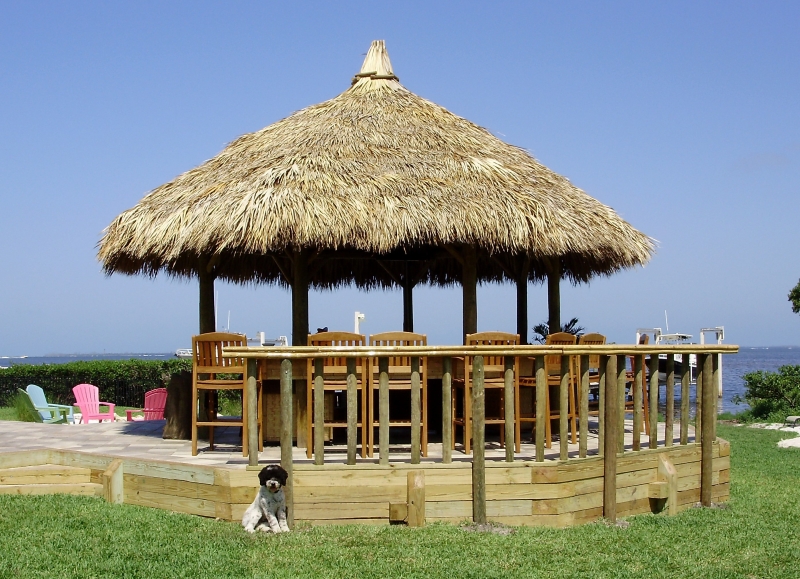
Tiki huts trace their roots to Polynesian and Mesoamerican thatched roof traditions, but today's kit versions are engineered for modern suburban backyards. Most ship with pre-cut posts, rafters, and thatch panels — either natural palapa (dried palm fronds) or synthetic alternatives — that clip or tie together on-site. A standard 10x10 kit typically takes one to two weekends to assemble, even for first-time builders. That's a meaningful time advantage over hiring a full custom construction crew from scratch.
The range of available kits has expanded dramatically. Homeowners now have access to compact 8-foot bar canopies, mid-size 12x16 patio covers, and sprawling 20x30 entertainment structures with built-in benches and counters. Understanding what separates a quality kit from a flimsy one is exactly where our team focuses in this post.
Contents
Tiki Hut Setups Worth Studying Up Close
Real-world installs teach more than any spec sheet. Our team has reviewed dozens of backyard tiki builds across different climates and lot sizes, and a handful of standout setups come up repeatedly as reference points for what actually works at home.
Poolside and Patio Installs
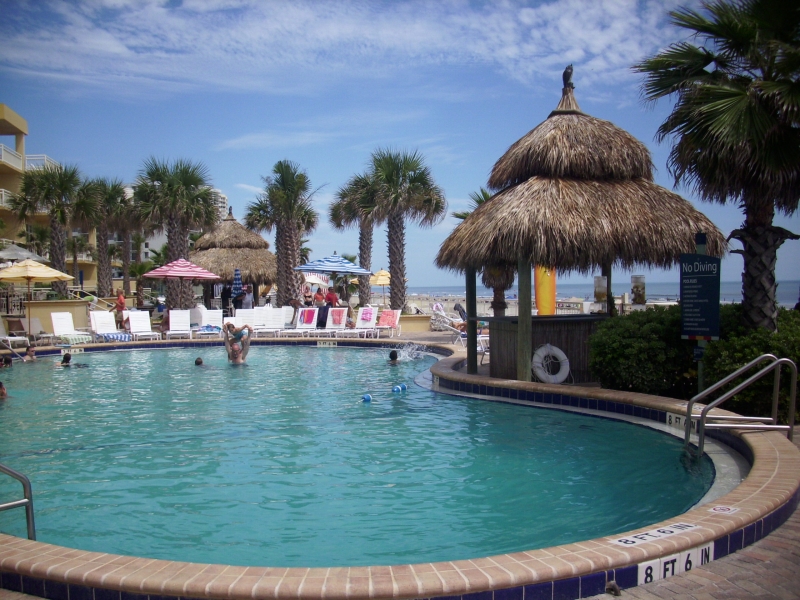
Poolside tiki huts are, without question, the most popular application our team encounters. A 12x16 hut positioned at the far end of a pool creates a shaded lounge zone that anchors the entire outdoor space. Builds that use Suncoast-style kits — featuring pressure-treated cypress posts and thick natural thatch — consistently deliver the best long-term results in humid climates. The structural framing holds up, and the aesthetic ties the whole backyard together.
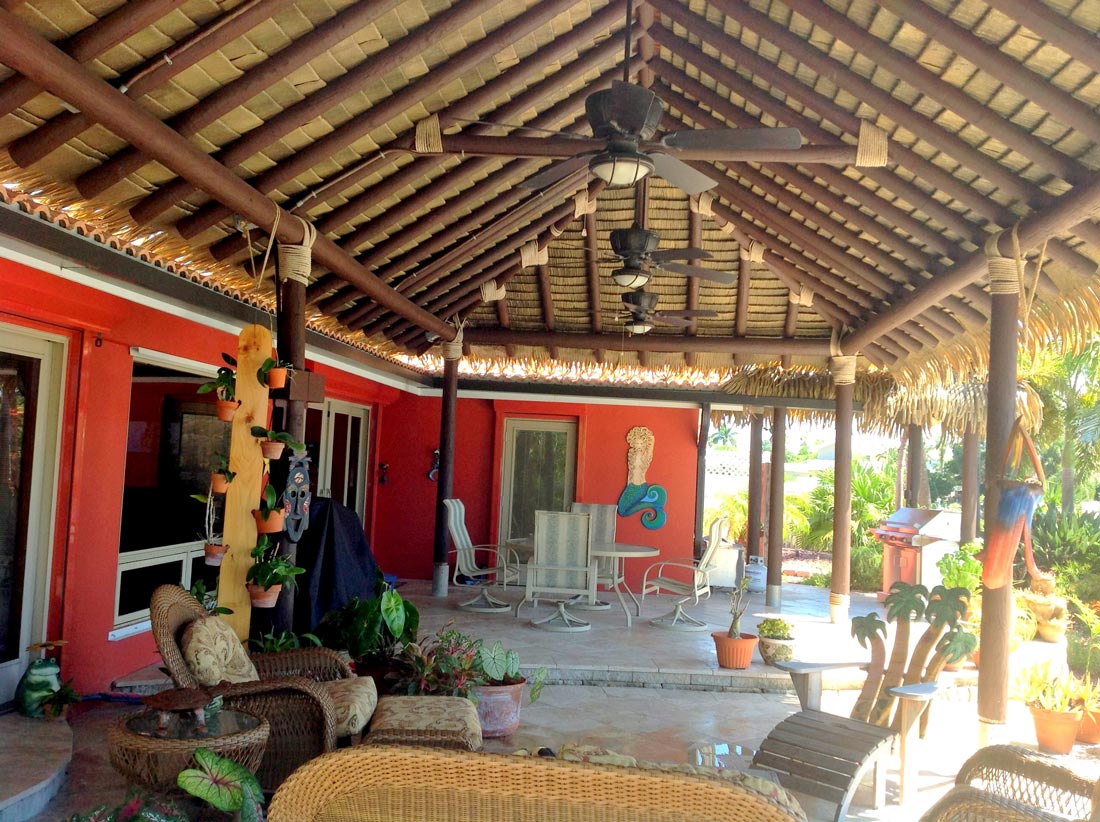
Patio installs are a close second. Many homeowners attach a tiki kit to an existing concrete slab, which cuts foundation costs significantly. The key is using post anchor hardware rated for the local wind load — skipping this step leads to structural problems within the first storm season, and our team has seen it happen more than once.
Backyard Bar Stations
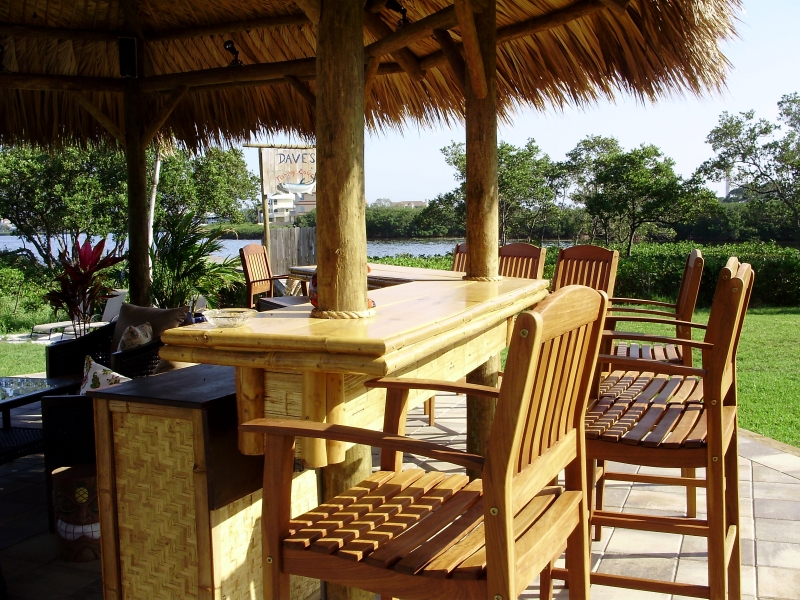
Tiki bar installs have become their own distinct category. Our team has reviewed builds where homeowners pair a compact 8x10 kit with a full outdoor bar counter, mini fridge, and string lighting for a complete entertainment station. For anyone who wants a deeper look at how outdoor tiki bars come together — including layouts and bar counter options — our post on outdoor tiki huts and bars covers the setup logistics in full detail.
The bar setup works best when the tiki structure has at least a 9-foot peak height. Lower ceilings trap heat and feel cramped when multiple people gather underneath. Sizing for at least one foot of clearance above head height is the minimum our team recommends for bar applications.
How to Choose Custom Tiki Gazebo Kits the Smart Way
Not all kits are created equal. Our team has seen beautiful-looking kits fall apart in two seasons and modest-looking ones stand strong for fifteen years. The difference almost always comes down to two factors: sizing and material selection. Getting both right from the start eliminates most of the regret we hear about from homeowners after the fact.
Sizing the Footprint
Most people underestimate how much covered space a backyard setup actually needs. Our general rule: take the seating area being planned for and add at least 30 percent. A dining table for six needs considerably more room than it looks like on paper once chairs, natural movement space, and a small bar cart are factored in.
- Small gatherings of 2–4 people: 10x10 or 10x12 kits are appropriate
- Mid-size entertaining for 4–8 people: 12x16 to 14x20 is the practical sweet spot
- Large backyard bars or full outdoor kitchens: 20x20 and up with commercial-grade framing
Pro tip from our team: Laying out the full footprint with stakes and string before ordering — then physically walking the space — reveals sizing issues that product page dimensions consistently hide.
Material Breakdown
Material choice determines longevity, maintenance load, and total cost over the life of the structure. Here is our team's breakdown of the most common options on the market:
| Material | Lifespan | Maintenance Level | Best Climate | Relative Cost |
|---|---|---|---|---|
| Natural Palapa Thatch | 3–5 years | High | Dry climates only | Low |
| Synthetic Thatch | 10–20 years | Low | All climates | Medium–High |
| Bamboo Frame | 5–10 years | Medium | Dry regions | Low |
| Pressure-Treated Wood | 15–25 years | Medium | Most climates | Medium |
| Aluminum Frame + Synthetic Thatch | 25–30 years | Very Low | All climates, coastal | High |
For anyone in a coastal or high-humidity region, our team's position is clear: synthetic thatch over natural palapa every single time. The difference in maintenance burden and lifespan is too significant to overlook. Our overview of tiki hut building materials goes deeper on each option for those who want a more thorough side-by-side comparison before committing.
Mistakes That Cost Time and Money
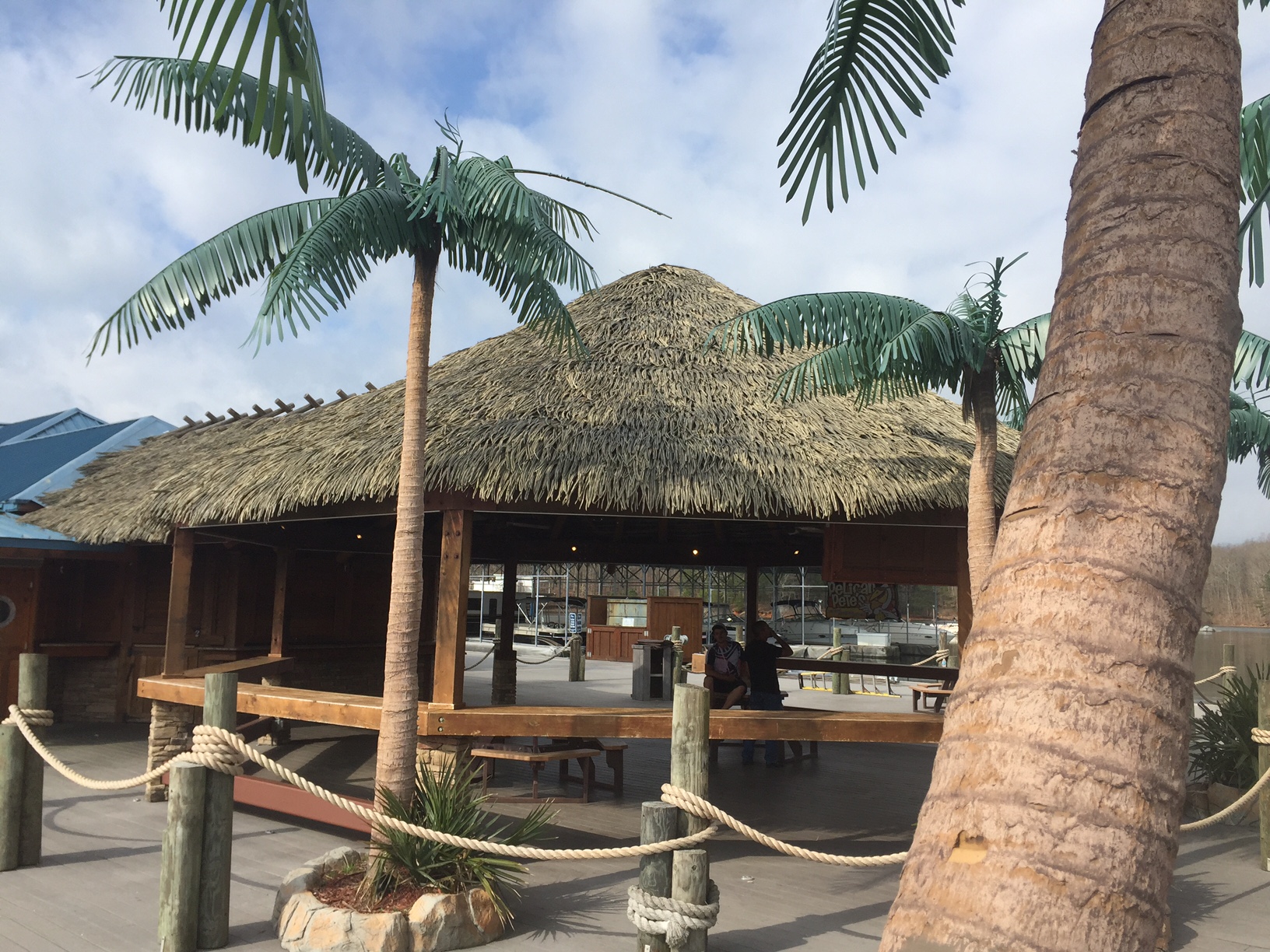
Our team has tracked the same errors repeat across dozens of tiki hut projects. Most are entirely avoidable. Here are the ones that consistently cause the most financial pain and project delays.
Skipping the Permit Step
This is the single most common and most costly mistake we document. Many homeowners assume a backyard structure under a certain square footage doesn't need a permit. In reality, most municipalities require permits for any permanent outdoor structure, and tiki huts with concrete footings or attached electrical absolutely qualify. Getting caught mid-build — or being ordered to tear down a finished structure — runs far more expensive than a simple permit application ever would have.
- Check local zoning laws before ordering any kit
- Verify setback requirements (minimum distances from property lines and fences)
- Confirm HOA rules if applicable — some explicitly prohibit thatch roofing materials
- Ask the kit supplier whether they provide documentation for local code compliance; reputable ones do
Choosing Price Over Material Quality
The cheapest custom tiki gazebo kits on the market use undersized posts, low-grade bamboo, and natural thatch rated for two seasons at best. Our team has tracked multiple cases where buyers spent $800 on a bargain kit and then spent $1,200 replacing it within three years. A mid-range synthetic thatch kit priced between $2,500 and $4,000 routinely outperforms discount alternatives across a 10-year window. Spending more at the outset is almost always the smarter financial decision once total cost of ownership is considered.
Designing a Backyard That Ages Well
A tiki hut shouldn't be treated as a standalone purchase. Our team approaches every install recommendation with the broader backyard ecosystem in mind — how the structure will age, what additions will inevitably come later, and how the whole space evolves over years of use.
Planning for Future Additions
The best tiki setups our team has reviewed share a single design trait: they were built with future expansion in mind from the start. Oversizing the concrete footer by even 20 percent allows for post additions later. Choosing a kit with modular framing makes it possible to extend the roofline without tearing down the existing structure.
- Leave clearance on at least one side for a future pergola extension or covered walkway connection
- Run electrical conduit underground during initial installation — retrofitting it later multiplies the cost
- Consider roughing in a water line if an outdoor sink or misting system is on the wish list
- Use pressure-treated lumber even for non-structural pieces — the cost difference is minimal, the rot resistance is not
Vetting the Right Supplier
Our team's standard vetting process for custom tiki gazebo kits covers three things: warranty length, post dimension specs relative to stated load ratings, and reviews specifically about long-term durability rather than just ease of assembly. Suppliers like Palmex have built strong reputations by offering both natural and synthetic options with documented UV resistance ratings. Ordering from a supplier with a physical showroom or established distributor network is a meaningful reliability signal that separates serious manufacturers from low-quality importers.
Keeping Thatch and Structure in Top Shape
Tiki huts need more consistent attention than most backyard structures. Our honest assessment: the maintenance requirements are entirely manageable if handled on a schedule, but neglect accelerates decay faster than it does with traditional wood gazebos. The thatch is always the most vulnerable component.
Annual Inspection Basics
Our team recommends a full visual inspection at the start of each outdoor season, before heavy use begins. The checklist should cover:
- Look for thinning thatch or bare patches — these allow water to infiltrate the roof structure below
- Inspect post bases for rot or moisture intrusion, especially where wood meets concrete or soil
- Check framing connectors for looseness after any storm season — wind works hardware free over time
- Re-apply UV-resistant wood sealant to all exposed lumber surfaces every two to three years
- Trim any overhanging vegetation — debris accumulation on the thatch accelerates decomposition significantly
Pest and Rot Prevention
Natural thatch creates an inviting habitat for insects, nesting birds, and moisture-driven mold. Applying a borate-based wood preservative (a salt compound that penetrates wood fibers and prevents insect and fungal damage) to framing lumber at installation time is one of the most effective long-term pest prevention steps available. For the thatch itself, a diluted copper sulfate spray once per season meaningfully reduces mold and fungal growth in humid climates. Our team consistently observes this routine extend natural thatch life by one to two seasons beyond the typical replacement window — a real return on a small investment of time.
Frequently Asked Questions
What is the average cost of a custom tiki gazebo kit?
Most custom tiki gazebo kits range from $1,500 to $8,000 depending on size and materials. Entry-level bamboo kits with natural thatch start around $1,500 for a 10x10 footprint. Premium aluminum-frame kits with synthetic thatch and full accessory packages run $6,000 to $8,000 or more. Our team considers the $2,500–$4,500 mid-range to offer the most sensible balance of durability and upfront cost for the average home installation.
How long does a tiki hut kit typically last?
Lifespan depends almost entirely on materials. Natural palapa thatch lasts three to five years in most climates and requires periodic re-thatching. Synthetic thatch mounted on an aluminum or pressure-treated wood frame reliably lasts 15 to 25 years with basic annual maintenance. For most homeowners, our team's recommendation is synthetic thatch — the reduction in ongoing maintenance alone justifies the higher upfront price.
Do tiki hut kits require a building permit?
In most municipalities, yes — particularly for permanent installations with concrete footings or any attached electrical wiring. Permit requirements vary significantly by location, so our team always advises checking with the local building department before placing a kit order. Unpermitted structures can result in fines or a mandatory removal order, which far exceeds the cost and inconvenience of the permit process itself.
A custom tiki gazebo kit built from honest materials, sized for real use, and maintained on a consistent schedule will outlast a dozen bargain replacements — and that's the only math that matters.


About William Murphy
William Murphy has worked as a licensed general contractor in Fremont, California for over thirty years, specializing in outdoor structures, green building methods, and sustainable design. During that career he has written about architecture, construction practices, and environmental protection for regional publications and trade outlets, bringing technical depth to subjects that most home improvement writers approach only from a consumer perspective. At TheBackyardGnome, he covers outdoor product reviews, backyard construction guides, and sustainable landscaping and building practices.
You can Get FREE Gifts. Receive Free Backyard Items here. Disable Ad Blocker to get them all now!
Once done, hit anything below